
Last updated October 15, 2026
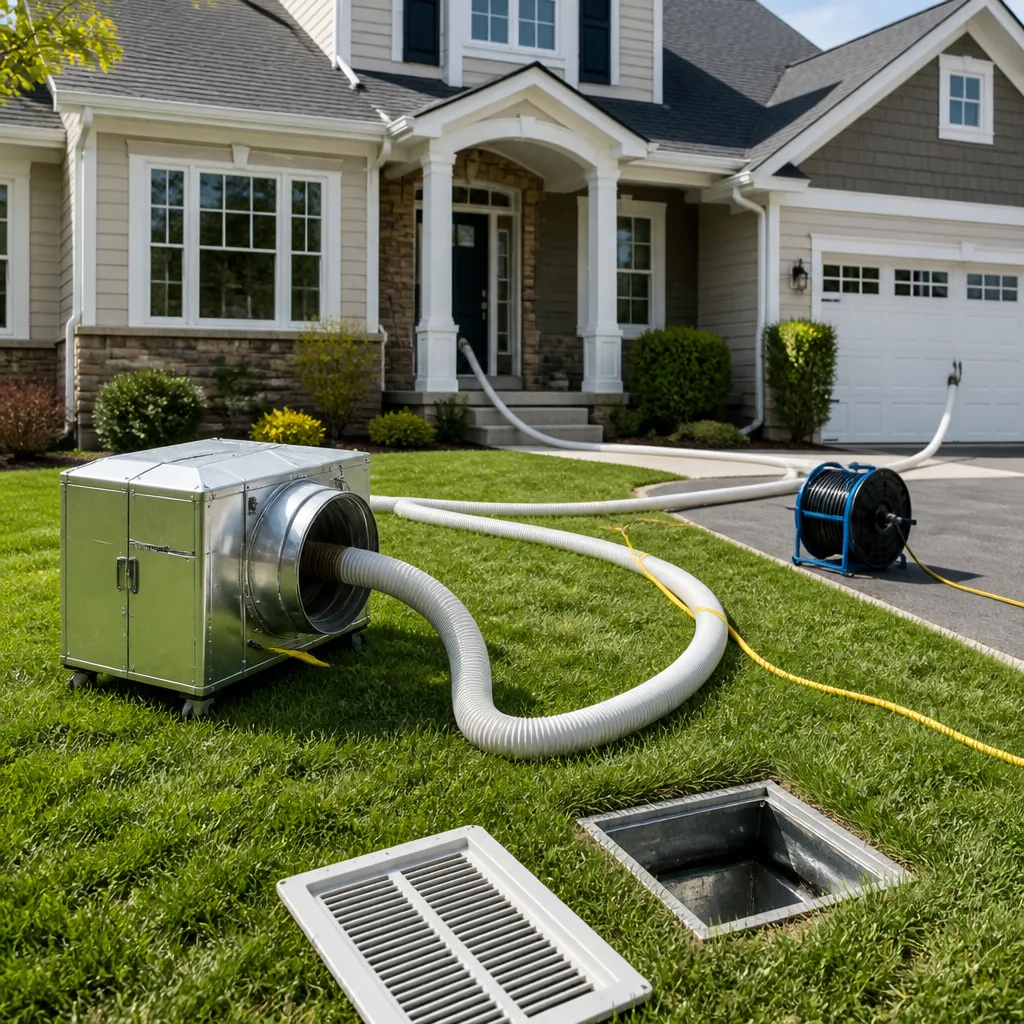 Whole-home duct cleaning
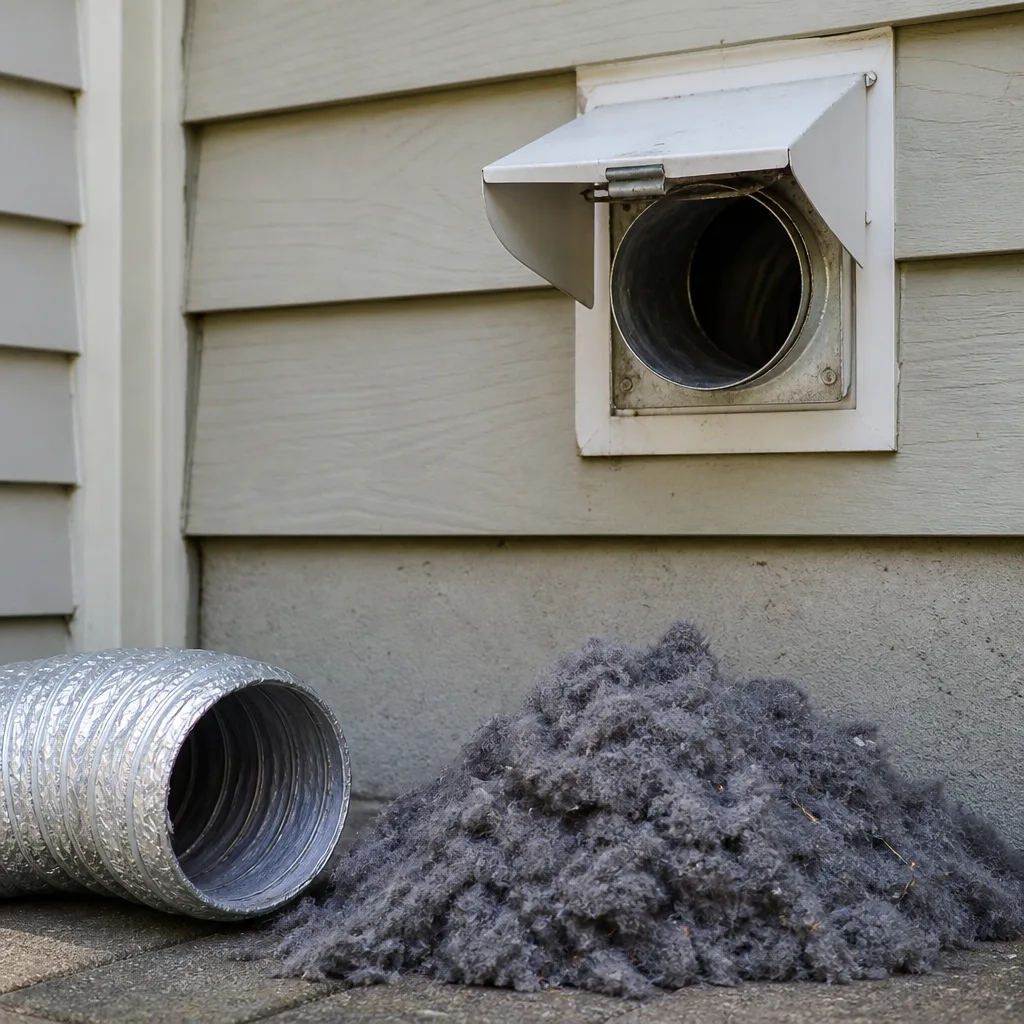 Dryer vent cleaning
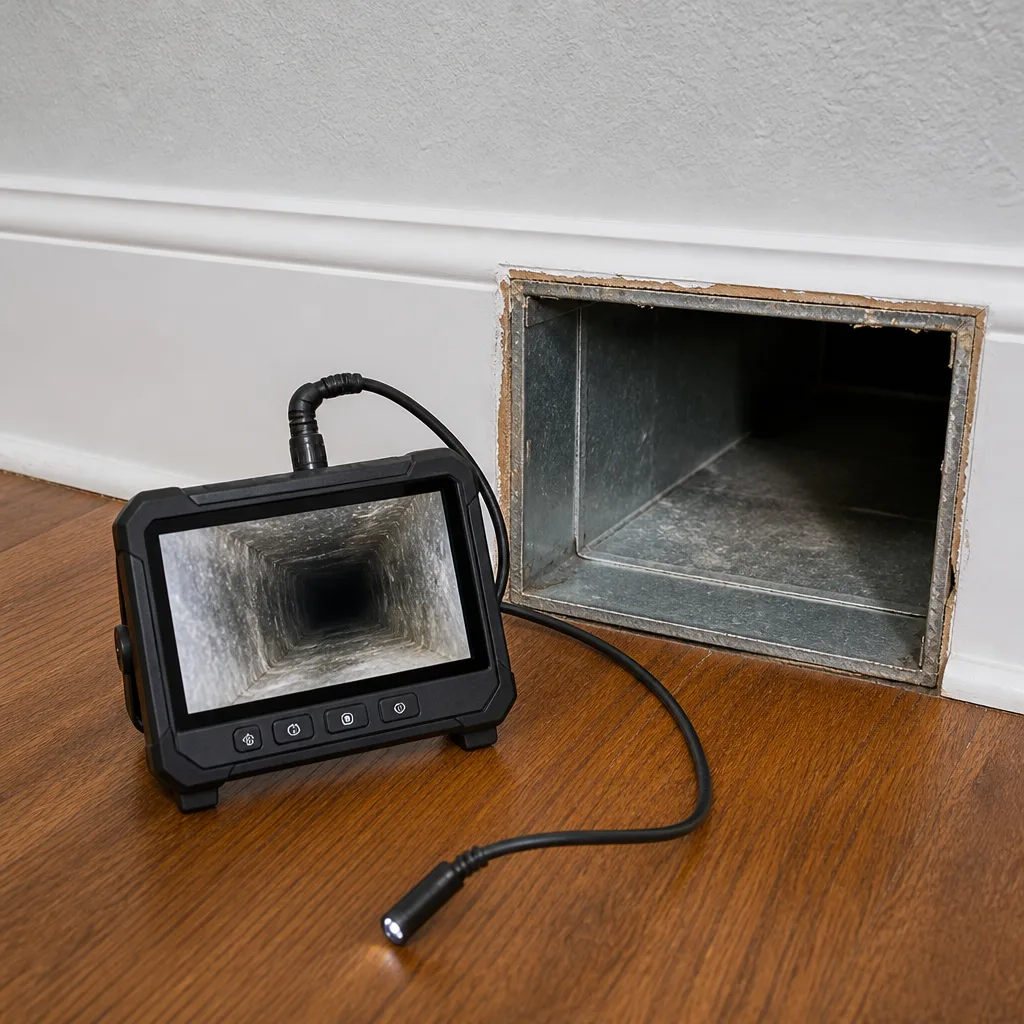 Camera inspection
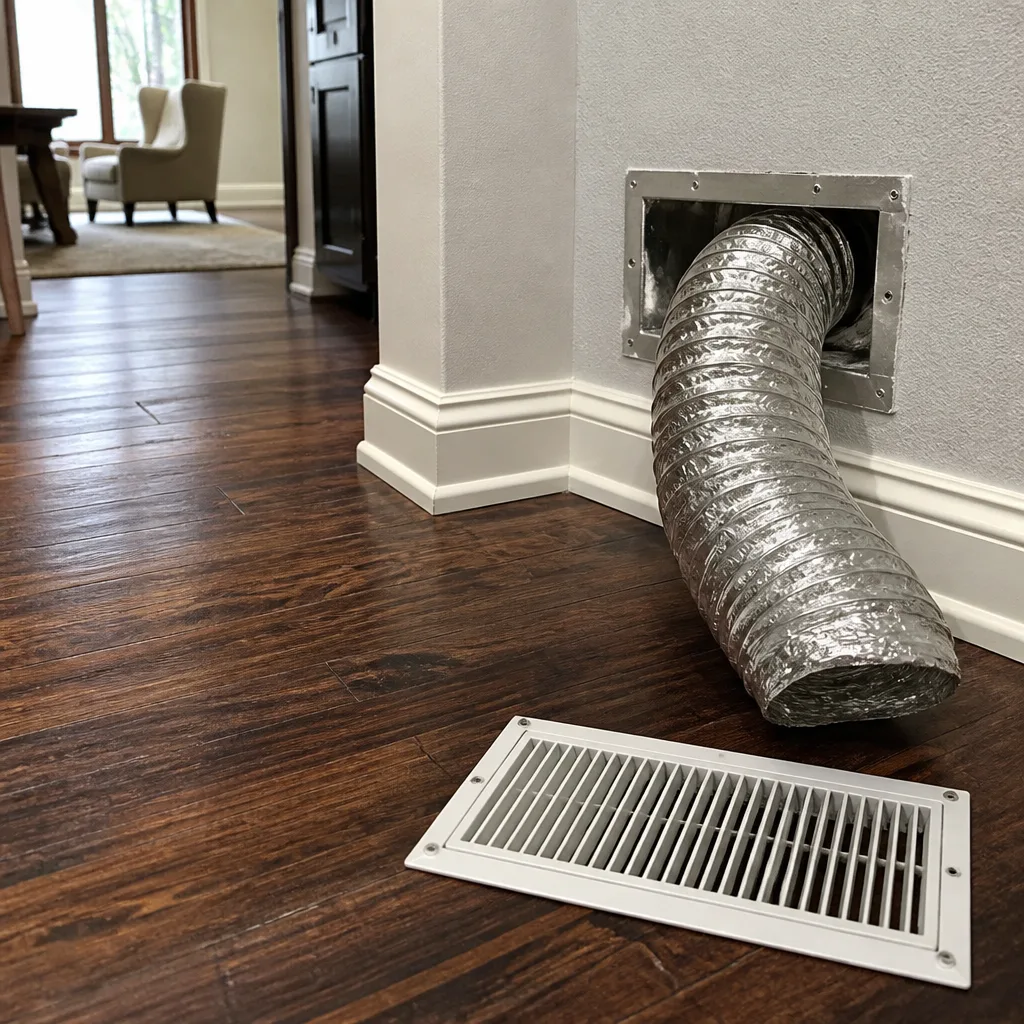 Sanitizing & deodorizing
Whole-system duct and dryer vent check with before-and-after photos - you see exactly what came out of your vents
That "$99 whole-house special" is a bait ad - the real number appears once they are in your hallway, or the "clean" is a shop-vac at the register. We photograph the inside of your ducts before and after instead.
Air Duct Cleaning Maintenance Checklist for Santa Clarita Homeowners
Here’s something that surprises most Santa Clarita homeowners: the single most skipped item on any air duct maintenance checklist is verifying that your supply and return grille counts actually match your home’s original HVAC design. That one oversight causes more pressure imbalances, more accelerated dust accumulation, and more premature system wear in Santa Clarita’s tract-home layouts than nearly anything else, and almost nobody talks about it. This guide walks through a 12-month inspection sequence built for the actual conditions we deal with here: Santa Ana wind season, wildfire smoke windows, summer heat cycles that push systems hard, and winter condensation risk in older Saugus and Canyon Country homes.
Styles & brands we work with
Quick Answer
For Santa Clarita homeowners, air duct maintenance breaks down into a seasonal rhythm: inspect filters monthly during wildfire and Santa Ana wind season, check supply and return grilles every quarter for airflow restriction, verify diffusers are open and unobstructed before each summer and winter cycle, and schedule our Air Duct Cleaning services every 3 to 5 years, or sooner if you’re seeing visible dust buildup around registers, unexplained allergy symptoms, or uneven room temperatures. The full 12-month checklist below covers what to do yourself, what to document, and when to bring in a trained crew with negative-air equipment.
Table of Contents
- Why Santa Clarita Needs Its Own Duct Maintenance Calendar
- How to Inspect a Filter the Right Way (Beyond Surface Color)
- Grille and Register Inspection Steps That Catch Airflow Problems Early
- The 12-Month Santa Clarita Duct Maintenance Calendar
- What You Can Do Yourself vs. What Requires Equipment and Training
- How to Document Duct Condition So You Have a Factual Baseline
- Common Mistakes to Avoid
- When to Call a Professional
- Frequently Asked Questions
- The Bottom Line
Why Santa Clarita Needs Its Own Duct Maintenance Calendar
National duct maintenance checklists miss what actually happens here. Santa Clarita sits in a valley that channels wind through specific corridors, and those winds carry fine particulate that national templates simply don’t account for. Homeowners in Valencia, Newhall, Saugus, and Canyon Country all deal with the same recurring pattern: October through January brings Santa Ana wind events that push dust and debris against homes and into return ducts; wildfire smoke season can spike airborne particulates dramatically during late summer and fall; and summer heat cycles force HVAC systems to run continuously for weeks, pulling whatever is in the air through the return side of the system. The result is ductwork that accumulates material faster than homes in coastal climates.
What this means in practical terms is that a maintenance schedule written for, say, Seattle or Chicago does not fit Santa Clarita. Those calendars often put filter changes at 90 days year-round. In Santa Clarita, we recommend inspecting filters monthly from July through January, when wildfire smoke, Santa Ana winds, and continuous system runtime converge. A filter that looks fine in March can be loaded with fine gray particulate by November. If you’ve noticed a faint dusty smell when the system kicks on, that’s often the first warning that the ducts themselves are holding material that the filter alone can’t address. For a deeper look at what to watch for, see Air Duct Cleaning Warning Signs: A Santa Clarita Homeowner’s Reference Guide.
Pool equipment exhaust is another local factor that almost never appears on generic checklists. Many Santa Clarita homes have pool pumps and heaters located near return-air paths or in enclosed equipment areas that share ventilation with the home. Pool chemical storage and heater exhaust can introduce fine corrosive particulates into the air your system pulls in. A quick quarterly check of where your return pulls from relative to pool equipment is worth adding to your routine.
How to Inspect a Filter the Right Way (Beyond Surface Color)
Most homeowners glance at a filter, see gray, and swap it. That’s fine as far as it goes, but it misses three specific failure points that actually matter for duct health. Surface color tells you the filter caught particulate; what it doesn’t tell you is whether the filter is sealing correctly, whether the media is developing bypass channels, or whether the frame itself has warped.
Here’s the inspection sequence we use on every job in Santa Clarita:
- Hold the filter up to a light source. A filter that’s loaded will block light unevenly across its face. If you see clear bright patches while other areas are dark, air is channeling through those clear spots and bypassing filtration. That means unfiltered air is moving into your system, depositing material directly in the ductwork.
- Check the frame seal at the return box. Run your fingers around the filter frame where it seats. If you feel gaps, air is sneaking around the filter entirely. A dollar bill should drag slightly when you close it in the filter slot. If it slides out with no resistance, the filter isn’t sealing.
- Inspect the corner joints of the filter frame. Cheap filters, and even quality ones after a few months of Santa Clarita heat, can develop small gaps at the cardboard corners. These gaps are invisible from the front but let unfiltered air slip past.
- Note the date on the filter frame with a permanent marker when you install it. This gives you a factual runtime record. If a filter that should last 90 days is loading up in 45, that’s useful diagnostic information about what’s in your air and how your duct system is performing.
For homes in Canyon Country or Saugus where older construction often means tighter return plenums and older filter slots, we consistently see frame-seal failures being the root cause of dust accumulation in ducts, not the filter media itself. A good MERV 8 or MERV 11 filter that doesn’t seat properly is doing less for your ducts than a basic filter that seals tight. If you haven’t verified seal integrity in the last year, start there.
As part of the Garrison Standard, our Air Duct Cleaning in Santa Clarita services always include a filter-seat inspection, because a cleaning that doesn’t confirm the filter is seating correctly won’t last. The air that bypasses a poorly seated filter re-loads the ducts within months.
Grille and Register Inspection Steps That Catch Airflow Problems Early
Supply and return grilles are often treated as furniture, something to be vacuumed when company’s coming and otherwise ignored. In practice, they’re diagnostic instruments. The pattern of dust accumulation on a grille, the way air moves through it, and the condition of its damper all tell you things about your duct system that you can’t see behind drywall.
Run through this sequence quarterly in Santa Clarita:
- Count your supply registers and return grilles, and check them against the HVAC design count. This is the skipped item we mentioned at the top. If you have 10 supply registers but only 2 return grilles, and your home’s original design called for 3 returns, someone along the way may have closed one off or buried it behind furniture. Missing returns force the system to pull negative pressure from wherever it can, which accelerates dust infiltration and makes the system work harder to move air.
- Walk each room and feel the airflow from each register with the system running. Rooms that used to get good air and now don’t are flagging a restriction somewhere: a collapsed flex duct, a damper that slipped closed, or a duct that’s separated at a junction. You don’t need instruments to notice that one room went from comfortable to stuffy.
- Remove the grille cover and shine a flashlight into the boot. Look for a visible ring of dust or debris at the boot-to-duct connection. This is where air leaks most commonly occur in Santa Clarita’s attic duct runs, and where fine particulate tends to accumulate first.
- Check each damper lever or knob. If a damper feels loose, slips, or won’t stay where you set it, that’s a small mechanical failure that has an outsized effect on room balancing. Many homes have one or two dampers that no longer hold position, and the rooms those dampers serve have become permanently imbalanced.
In our experience, homes in Valencia and Stevenson Ranch with higher-end finishes often have decorative register covers that restrict airflow by design. Those narrow-slot designer grilles look good but can cut effective airflow by 20 to 30 percent compared to standard stamped grilles. If you’ve upgraded register covers for aesthetics, factor that into your airflow expectations, and consider whether the look is worth the system strain during August.
The 12-Month Santa Clarita Duct Maintenance Calendar
This calendar is built for Santa Clarita’s specific rhythm, not a generic national template. Use it as a baseline and adjust based on what your own documentation tells you about your home’s particular dust load.
January and February: Post-Wind Season Duct Assessment
- Inspect the filter. Santa Ana season is peaking, and this is usually when we see the heaviest filter loading of the year in Santa Clarita.
- Check all supply registers for dust streaking on walls or ceilings near the grille. Streaking indicates air is moving around the register, not through it.
- Walk the exterior of your home and note where wind-driven debris has accumulated near any outside air intake or crawlspace vent. These are future sources of duct contamination.
March and April: Transition Season Inspection
- Remove and clean all grille covers. Vacuum the visible interior of each boot. This is a legitimate DIY task that doesn’t require professional equipment.
- Run the system in fan-only mode for 15 minutes and walk the house. Listen for whistling, rattling, or any sound that wasn’t there before. New sounds often flag a damper issue or a duct joint that’s worked loose.
- If you have a whole-home humidifier or an ERV/HRV, check its filter media. Santa Clarita’s low ambient humidity means these systems run less often, but their media still loads with particulate during wind season.
May and June: Pre-Summer Load Check
- Replace the filter even if it looks okay. Going into summer with a clean filter means the system isn’t starting its hardest work behind a partially loaded filter.
- Verify that all supply dampers are set where you actually want them for cooling season. A damper that was adjusted for winter heating may not be right for summer cooling, and this is the least expensive airflow correction you can make.
- Check the condensate drain line. A clogged drain line has nothing to do with ducts directly, but a backed-up pan adds moisture to the air stream, which changes what sticks to duct surfaces.
July through September: Peak Load Monitoring
- Inspect the filter monthly. This is the highest particulate-load period for Santa Clarita homes, especially during wildfire smoke events.
- If wildfire smoke is present, consider running the system in fan-on mode during smoke events rather than auto. This keeps air moving through the filter continuously rather than letting particulate settle in the ducts during off cycles.
- Watch for new dust accumulation around returns. During peak runtime, return grilles pull harder, and any gaps in the return path become more active. New dust halos around returns are early warnings of return-side leaks.
October through December: Wind and Holiday Season
- Santa Ana winds return. Inspect filters every two weeks if wind events are frequent. Fine wind-blown dust in Santa Clarita is extremely fine, closer to powder than sand, and it loads filters fast.
- Holiday cooking adds aerosolized grease to the indoor air. If you cook heavily, consider inspecting the filter after major holiday meals. Grease vapor deposits on duct surfaces and creates a sticky layer that captures other particulate.
- Do a full grille count and airflow walk-through to confirm nothing changed during the year. Rooms that slowly lost airflow over the year are often unnoticed until a holiday gathering puts people in every room.
If you want a deeper discussion of how our cleaning process works in local homes, our Hollis Air Duct Santa Clarita home page provides a full walkthrough of what to expect from a professional cleaning, including the negative-air method we use to keep particulate from re-entering living spaces during the job.
What You Can Do Yourself vs. What Requires Equipment and Training
There’s a real line between homeowner maintenance and professional duct cleaning, and knowing where it sits saves you money and protects your system. Here’s how we draw it.
Legitimate DIY Tasks (Safe and Effective)
- Filter inspection and replacement. This is the highest-leverage maintenance task you control, and it costs you nothing beyond the filter itself.
- Grille and register cover removal, cleaning, and reinstallation. A vacuum and warm water handle this. Just make sure the covers are fully dry before reinstalling.
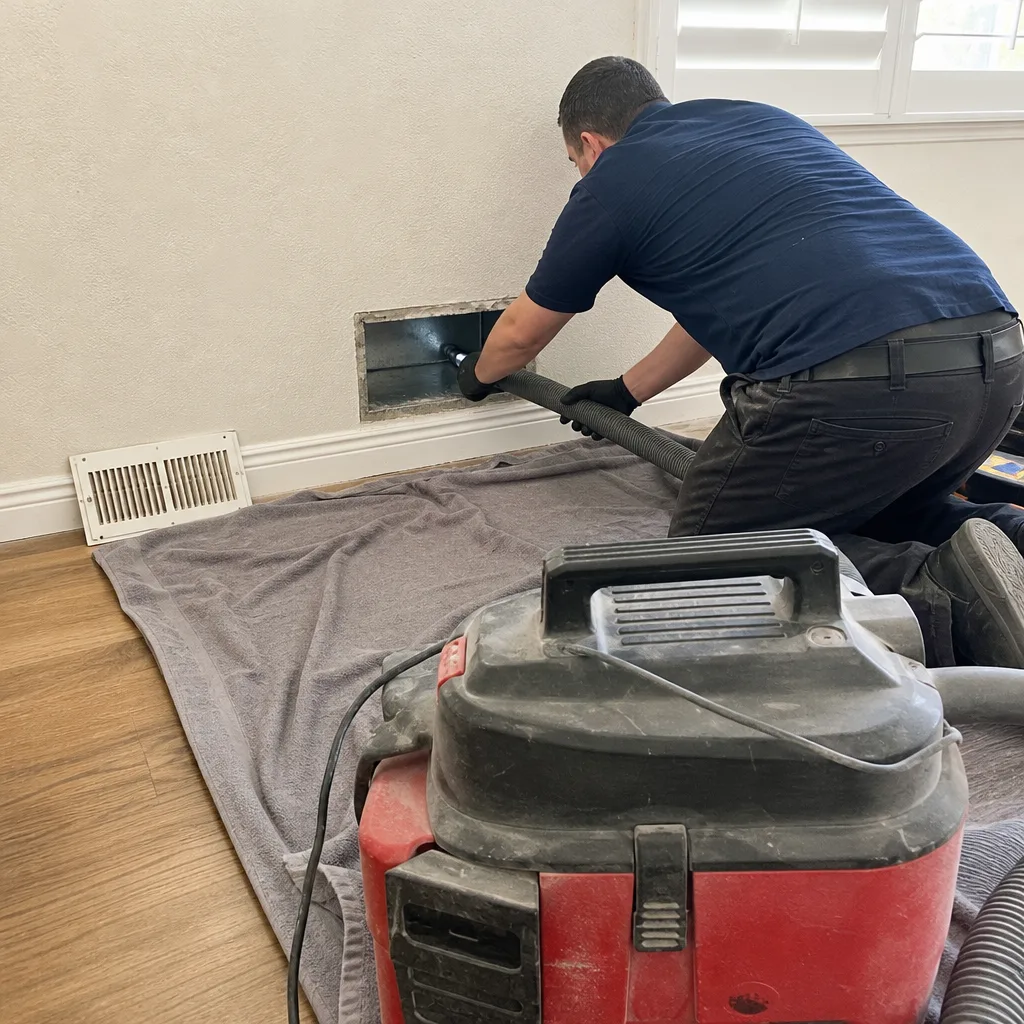
- Visible boot interior vacuuming. You can reach 6 to 12 inches into the boot from the register opening with a standard vacuum. That’s worthwhile and safe.
- Damper adjustment. Moving a damper lever is a homeowner task. Document where each damper was set before you move it so you can return to baseline if needed.
- Documentation of visible duct condition with photos. Your phone camera is a legitimate diagnostic tool. Photos of register interiors, filter condition, and dust patterns create a factual record over time.
Professional-Only Tasks (Equipment and Training Required)
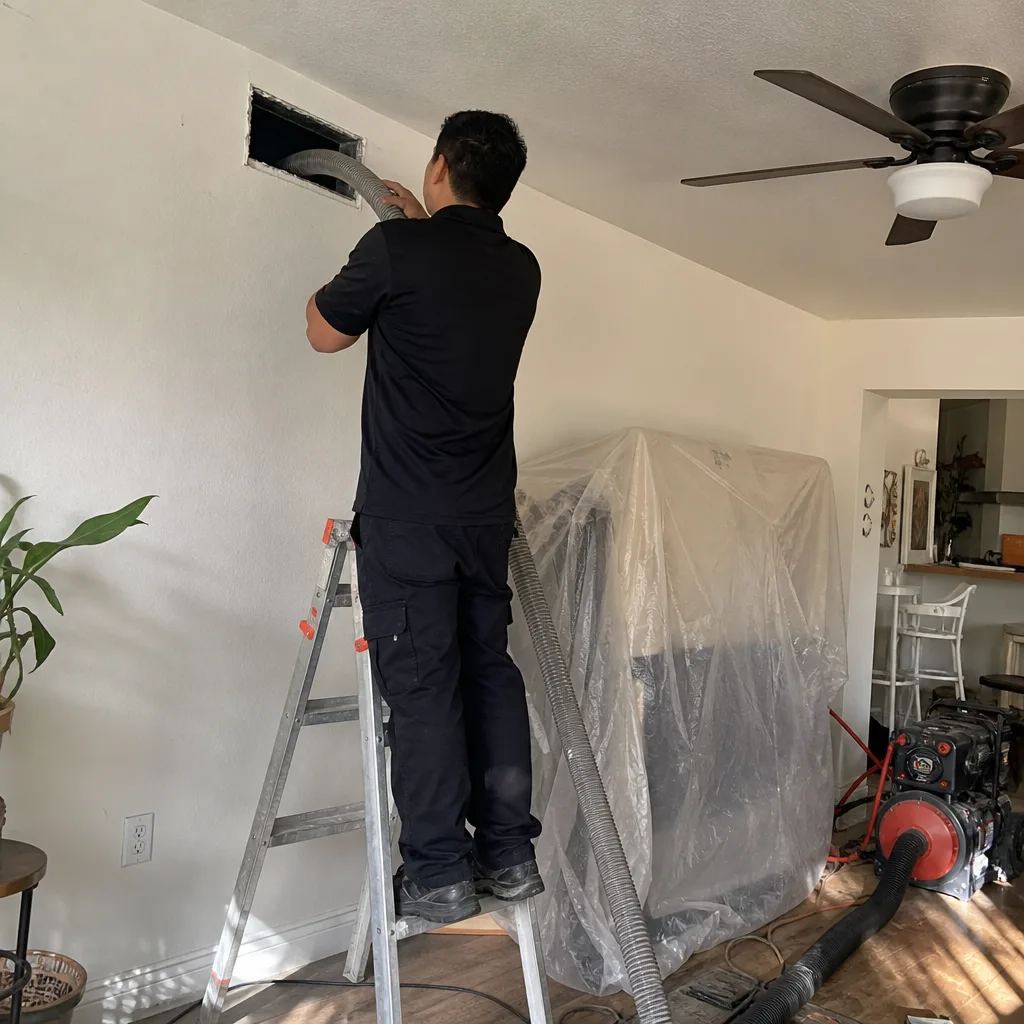
- Full duct interior cleaning. Proper cleaning requires negative-air equipment, typically 1,500 CFM or greater, to keep loosened particulate from blowing into living spaces. We run Rotobrush rotary brush systems paired with Nikro negative-air machines on our Santa Clarita jobs because the combination physically agitates duct surfaces while capturing what comes loose. This is not a shop-vac with a long hose.
- Duct sealing. If your ducts leak, a proper seal requires mastic applied at the joints, and in many cases, Duct Sealing in Santa Clarita involves accessing trunk lines in attics and crawlspaces where Santa Clarita’s summer heat and winter cool-down cause expansion and contraction that opens joints over time. This is work you want done by someone who can reach and inspect the full duct run.
- Plenum and coil cleaning. The evaporator coil sits downstream of the filter in most systems, and it captures whatever slips past. Cleaning it properly requires access, coil-specific cleaners, and knowledge of how to protect the electrical components nearby.
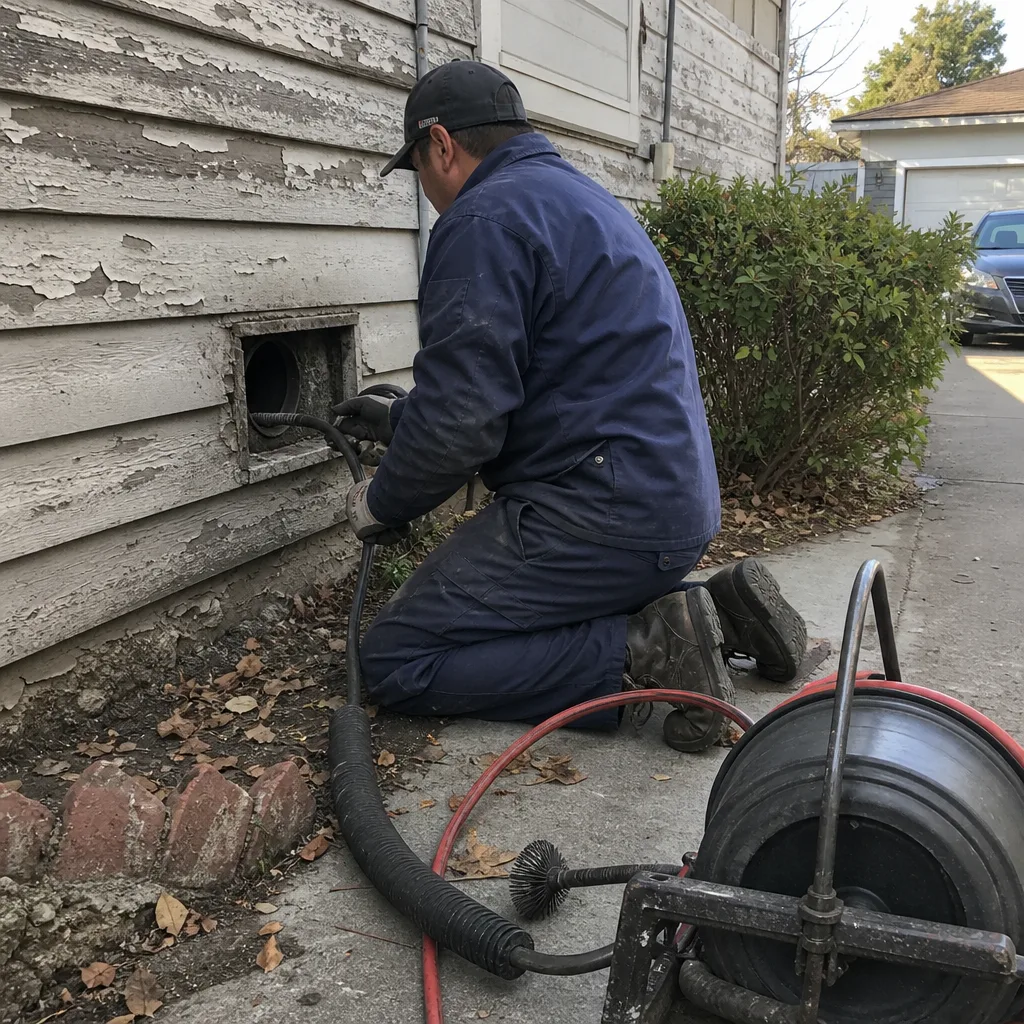
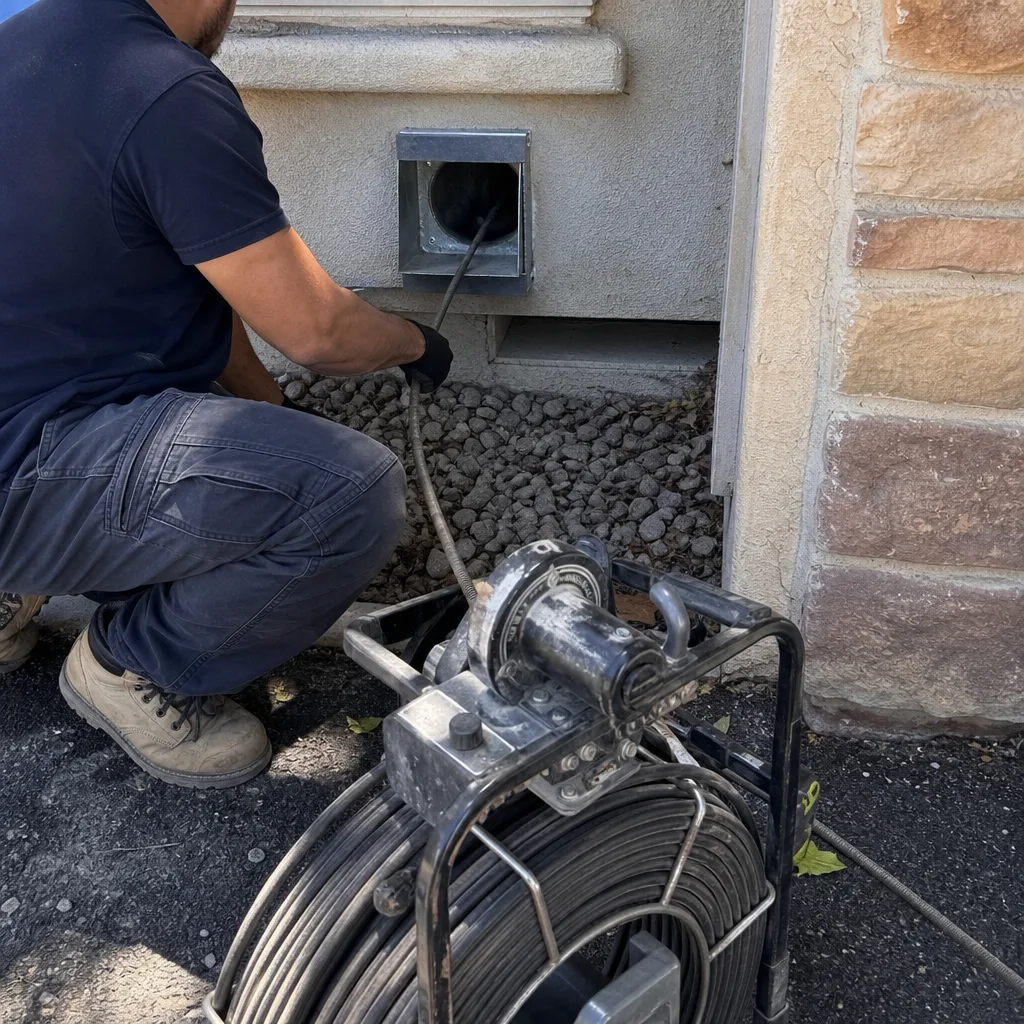
- Dryer vent cleaning. This is a related but separate service. Lint accumulation in dryer vents is a fire risk, and proper cleaning requires specialized brushes and, in many Santa Clarita homes, roof or second-story access. See our Dryer Vent Cleaning in Santa Clarita page for the full scope of what that involves.
The line is this: if the task requires anything beyond a screwdriver, a vacuum, and a flashlight, you’re moving into professional territory. Duct systems are not accessible enough for a homeowner to clean properly, and the tools that actually remove material from duct surfaces – rotary brushes, negative-air machines, high-pressure air whips – are commercial equipment that costs more than the service itself.
How to Document Duct Condition So You Have a Factual Baseline
The most useful thing a homeowner can do for their own duct system is keep a simple factual record. When a contractor tells you your ducts need cleaning, or when a different contractor says they don’t, you should have your own evidence. Here’s a documentation system that takes less than 30 minutes per quarter.
- Create a duct log. A simple note in your phone works. For each quarter, record the date you inspected, the filter brand and MERV rating, the filter condition at inspection, and any rooms that felt warmer or cooler than normal.
- Photograph the filter before you replace it. A photo held to a light source shows exactly how loaded it was, and the date stamp gives you a factual runtime record. Over a year, you’ll see whether loading is consistent or seasonal, and that pattern tells you when to schedule professional cleanings.
- Photograph register interiors once per year. Take the grille off, point your phone into the boot, and take a photo. Compare year over year. Dust accumulation that’s visible and growing is objective evidence that the ducts are holding material.
- Record any new sounds or smells with dates. “Rattle started November 12” is more useful to a technician than “it’s been rattling a while.” Sound changes flag mechanical issues, and having the date helps the technician locate the problem faster.
- Keep a running total of your filter replacement cadence. If you replace a 90-day filter every 45 days in summer, that’s a data point. It tells you the system is moving more particulate than a typical Santa Clarita home, which means duct cleaning may be warranted sooner than the standard 3 to 5 year interval.
When you do schedule a professional cleaning, this log gives the technician a factual starting point. Instead of a guess about how long the ducts have gone without service, you have a record of filter loading, airflow issues, and visible condition. That’s the difference between a cleaning that’s justified by evidence and one that’s sold on suspicion.
Our technicians use professional-grade equipment from brands like Abatement Technologies and Guardsman on every job, and part of The Garrison Standard is documenting what we found and what we did. You get a written record from our side, and your own log provides the before picture that makes that record meaningful.
Common Mistakes to Avoid
- Replacing filters too infrequently during Santa Ana season. The wind events from October through January load filters dramatically faster than the rest of the year. A filter that’s fine for 90 days in spring can be loaded in 45 during wind season. Inspect monthly during this window.
- Closing supply registers in unused rooms to save energy. Your system was designed for a specific airflow balance. Closing registers doesn’t save energy; it increases static pressure, forces air through leaks, and accelerates dust accumulation in the closed-off branch ducts. If you want to save energy, adjust the thermostat, not the registers.
- Installing a higher-MERV filter than your system can handle. A MERV 13 filter in a system designed for MERV 8 can restrict airflow enough to change system performance. Higher MERV is only better if your blower can handle it. If you’re not sure, consult a technician before upgrading.
- Ignoring dust accumulation around return grilles. Dust halos around returns are diagnostic evidence of return-side leaks. The air is pulling from unconditioned spaces around the return path, not through the grille. This won’t fix itself, and painting over the dust doesn’t fix the leak.
- Assuming new construction means clean ducts. Santa Clarita’s newer developments in areas like Hasley Canyon and Castaic generate significant construction dust, and that dust gets into duct systems during the build process. A new home with a dusty duct system is more common than most buyers expect.
- Treating duct cleaning as a one-time fix rather than part of an ongoing maintenance schedule. Ducts get dirty again because air moves through them constantly. The question is how fast. A maintenance calendar that includes filter discipline, grille inspection, and periodic professional cleaning keeps the interval long and the system clean.
When to Call a Professional
Some duct conditions need more than a checklist. If you see visible mold growth on duct surfaces, register interiors, or the coil, stop the DIY approach. Mold in ducts requires professional remediation; cleaning alone won’t resolve the moisture source that caused it. If you have a rodent or pest intrusion in your duct system, that’s a professional job with containment and sanitation protocols. If rooms that used to heat and cool evenly have drifted badly and damper adjustments don’t correct it, you likely have leaking or collapsed duct runs that need access and sealing. And if your filter loads completely in under 30 days during non-wind season, the ducts themselves may be so loaded that they’re re-contaminating the filter as fast as it catches particulate. Before scheduling work, review Air Duct Cleaning Permits, Codes & Inspections in CA: What You Need to Know. Hollis Air Duct Santa Clarita offers free estimates in Santa Clarita – call (661) 523-0295 and we’ll assess your system with written documentation of what we find.
Frequently Asked Questions
You’ll see specific evidence: visible dust deposits on register interiors that grow between cleanings, a dull gray film on grille surfaces that returns quickly after wiping, rooms that smell musty when the system runs, and filters that load faster than they should relative to the season. If you’re documenting your filter condition quarterly, a pattern of accelerating loading is the strongest factual indicator. A professional inspection with photos of the duct interior confirms what you’re seeing. Call (661) 523-0295 for a free estimate in Santa Clarita.
Santa Ana winds carry extremely fine particulate that behaves differently from ordinary household dust. This powder-fine material penetrates deeper into duct surfaces, passes through gaps that larger particles can’t, and accumulates rapidly on return-side components. Because Santa Clarita sits in a wind channel, homes here see more of this fine material than homes in coastal communities, and the standard filter change intervals don’t account for it. Monthly filter inspection during wind season is the single most effective countermeasure.
You can safely vacuum the first 6 to 12 inches of the boot visible from each register opening with a standard household vacuum. What you can’t safely or effectively do is clean the branch lines and trunk ducts further in. Those require negative-air equipment and mechanical agitation to loosen and capture material without blowing it through your living space. The limitation isn’t caution; it’s physics. The interior surfaces beyond the boot can’t be reached or cleaned effectively with homeowner tools.
Every 3 to 5 years is the standard interval for most Santa Clarita homes, but local conditions shift that. Homes near open space with frequent wind exposure, homes with pets that shed heavily, homes with pool equipment near returns, and homes in wildfire-adjacent areas may need cleaning on the shorter end. The best way to know is to document filter loading and register condition. If your own records show accelerated loading, you have factual justification for a shorter interval. Call (661) 523-0295 for an expert assessment.
Yes. A loaded filter restricts airflow, which causes the blower motor to work harder, which increases energy consumption and shortens motor life. In severe cases, restricted airflow can cause the evaporator coil to freeze in summer because there’s not enough warm air moving across it to prevent icing. The damage potential is real, and the fix is simple and inexpensive: replace filters on a schedule tied to Santa Clarita’s seasonal conditions rather than a generic 90-day rule.
Duct cleaning removes accumulated dust, debris, and particulate from inside the duct system. Duct sealing addresses leaks at joints and connections where conditioned air escapes into attics, crawlspaces, and walls. They’re complementary services: cleaning prepares the system for effective sealing, and sealing after cleaning means the cleaned ducts don’t immediately re-contaminate from unfiltered outside air pulling in through leaks. Many Santa Clarita homes benefit from both, especially older tract homes where joint sealing has deteriorated over years of thermal expansion and contraction.
The Bottom Line
Duct maintenance in Santa Clarita is a seasonal discipline, not an annual checkbox. The homes here face particulate loading from Santa Ana winds, wildfire smoke, continuous summer runtime, and older construction with return paths that develop leaks over decades. The checklist that works is one you actually run: inspect filters monthly during wind and smoke season, walk your grilles quarterly, document what you find, and schedule professional cleaning when your own records show the ducts are holding material faster than they should. That’s the difference between a system that performs and a system that quietly loads up. For more guides & resources, or if you want a written assessment of your duct condition from a crew that shows up on time and prices the job in writing before starting, call Hollis Air Duct Santa Clarita at (661) 523-0295.
Written by Roy Castellanos, Owner at Hollis Air Duct Santa Clarita, serving Santa Clarita since 2004.
See the difference
 Before
 After
After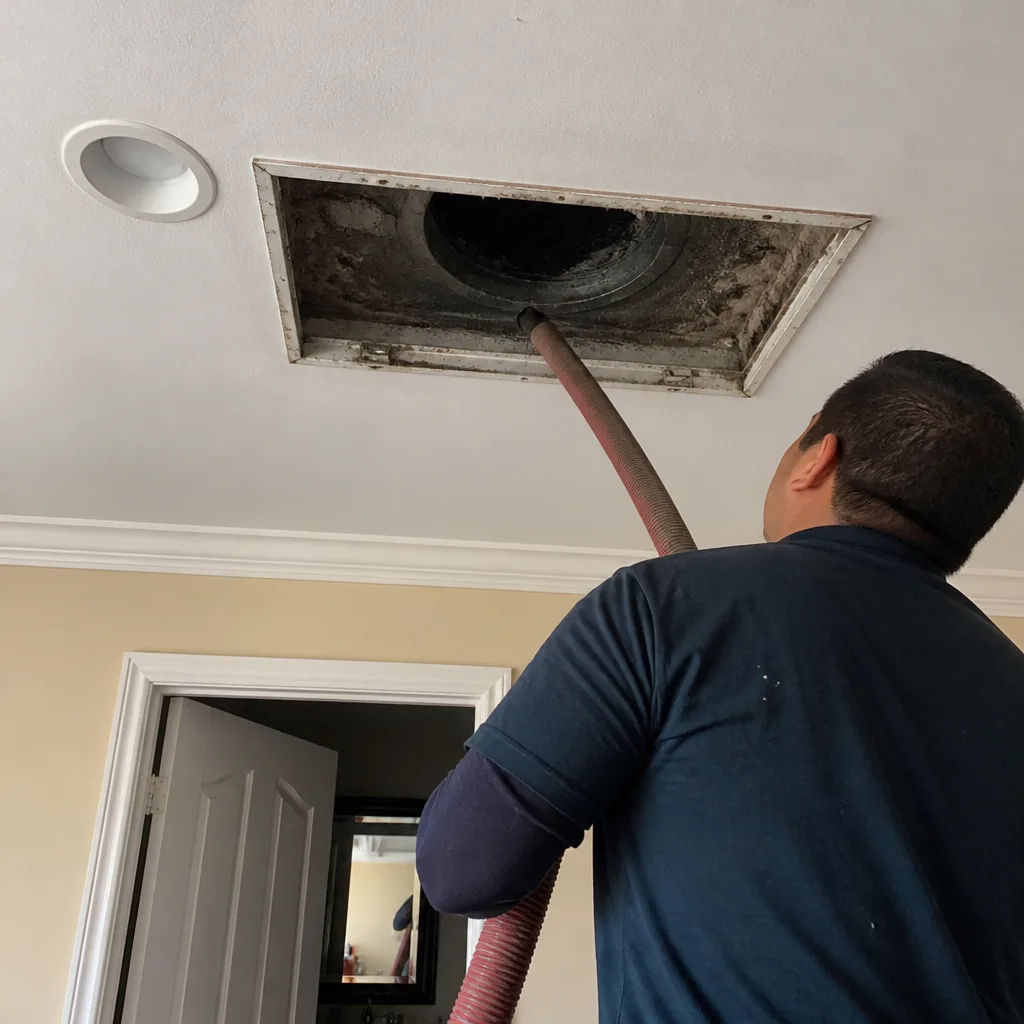 Before
 After
After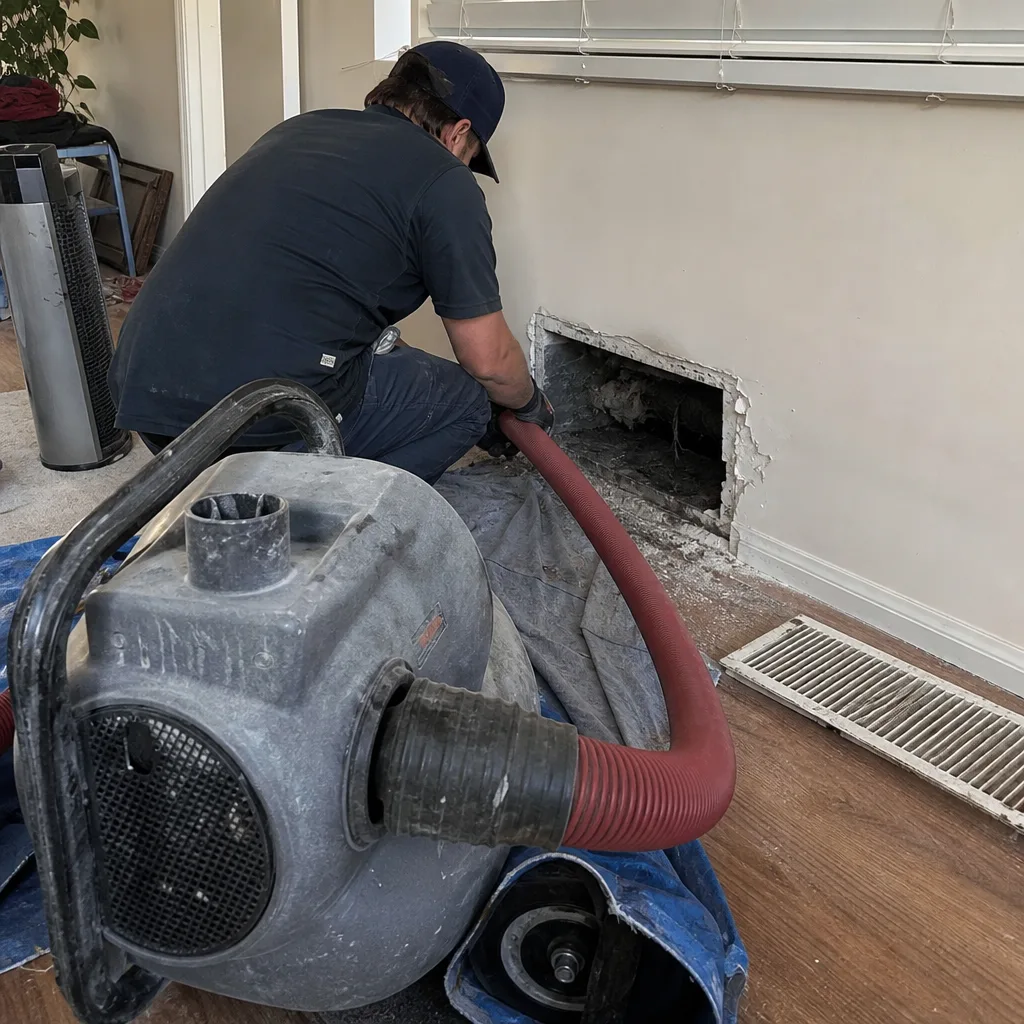 Before
 After
After