
Last updated October 15, 2026
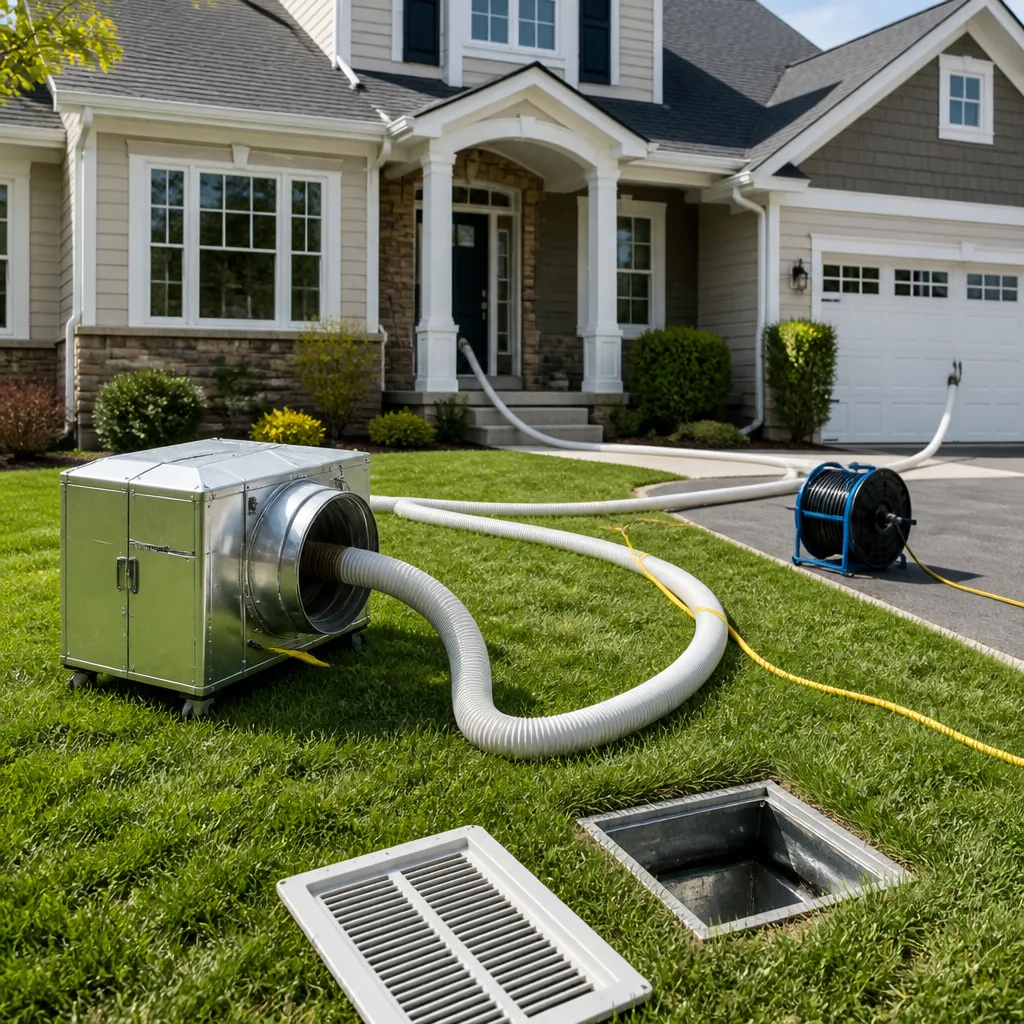 Whole-home duct cleaning
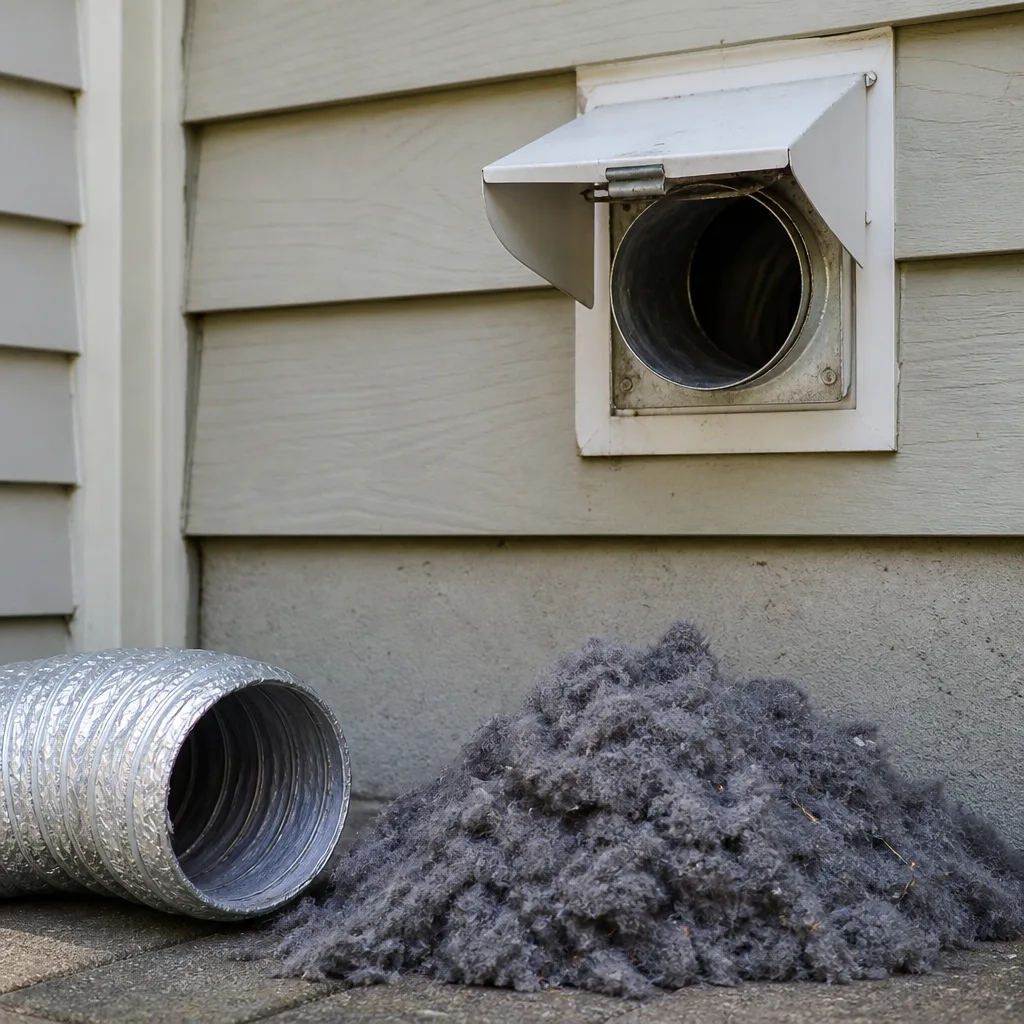 Dryer vent cleaning
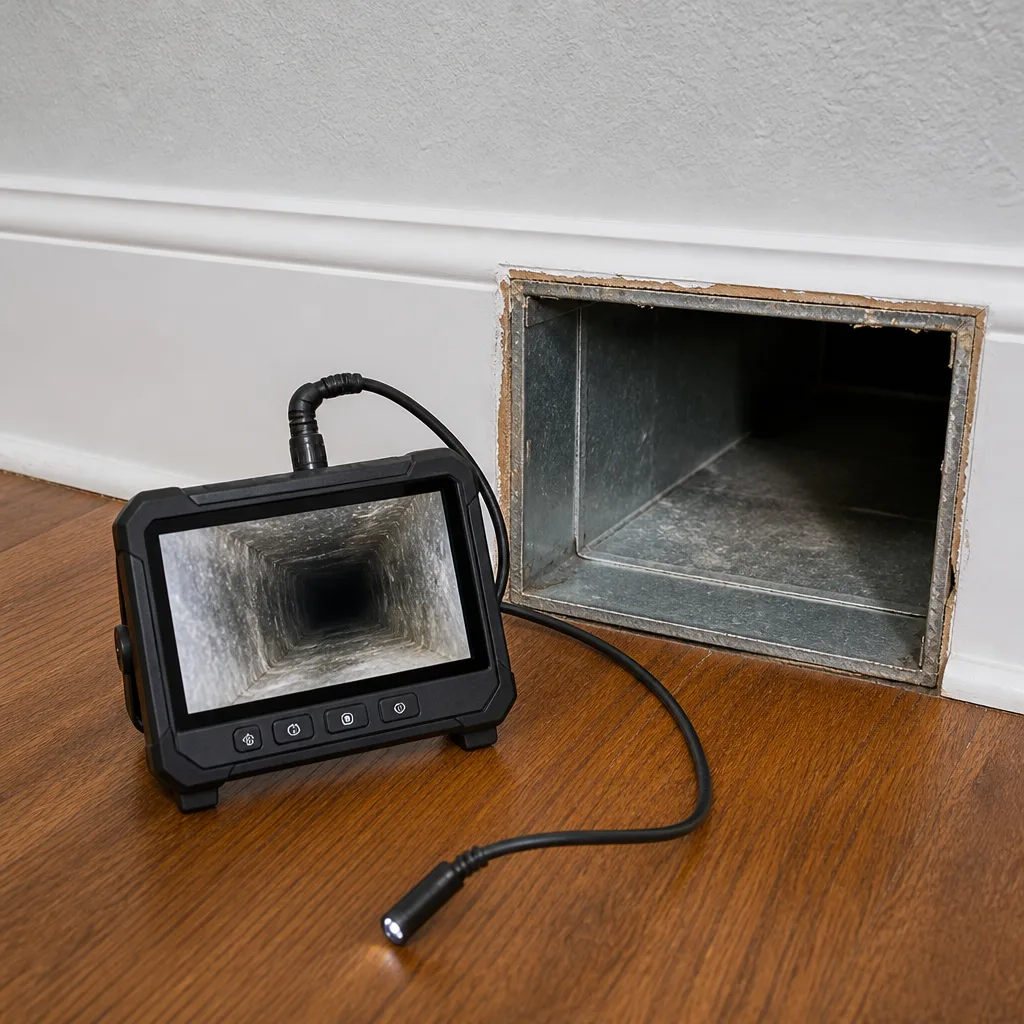 Camera inspection
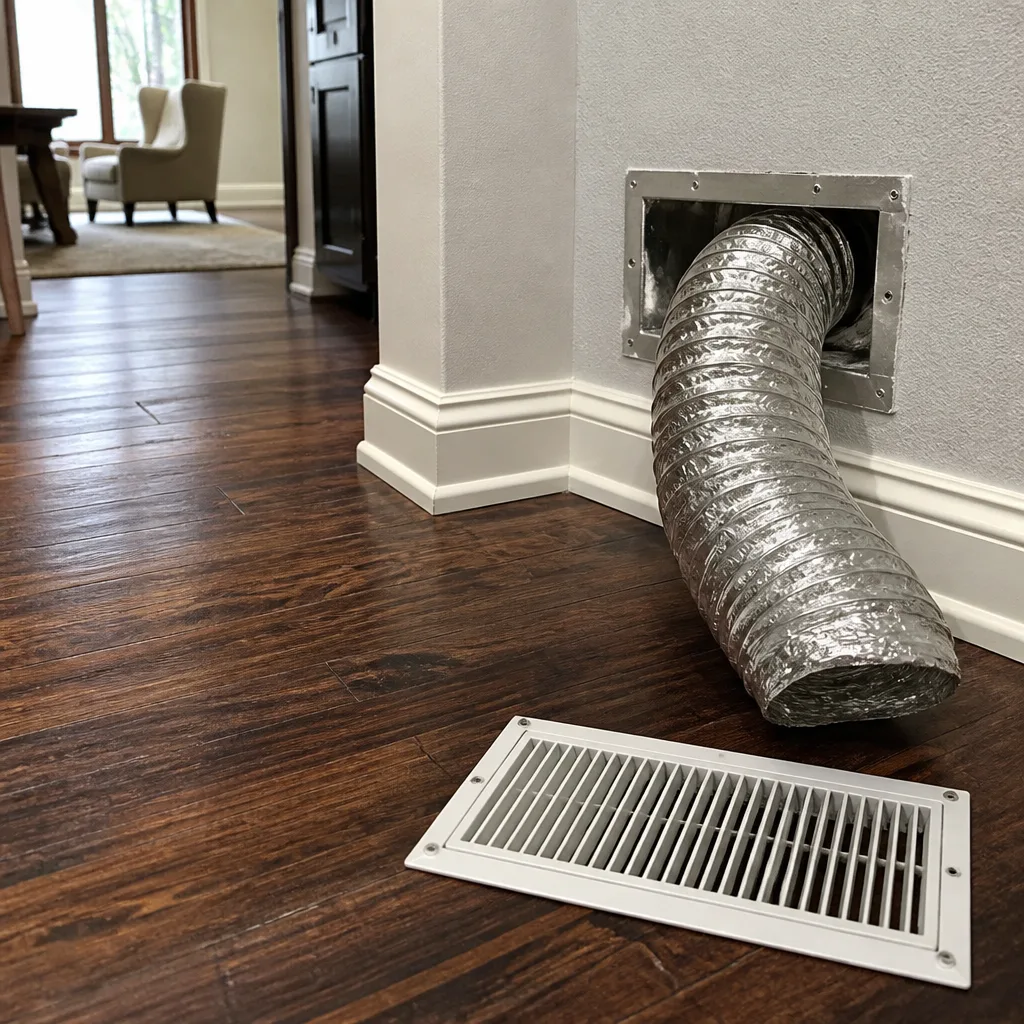 Sanitizing & deodorizing
Whole-system duct and dryer vent check with before-and-after photos - you see exactly what came out of your vents
That "$99 whole-house special" is a bait ad - the real number appears once they are in your hallway, or the "clean" is a shop-vac at the register. We photograph the inside of your ducts before and after instead.
Seasonal Air Duct Cleaning Care for Santa Clarita: Year-Round Homeowner’s Guide
Most seasonal HVAC guides tell Santa Clarita homeowners to schedule service in spring and fall. That advice is recycled from other climates, and it misses what actually happens in the Santa Clarita Valley. The highest contamination-risk window for duct systems here isn’t spring or the back half of fall. It’s late summer through October, when triple-digit temperatures force your air conditioner into maximum runtime, wildfire smoke drifts through the canyons, and Santa Ana winds push ash and fine particulate against every exterior intake. This guide maps air duct care to those real, local stress points, season by season, so you know what to do each month, what to skip, and when Air Duct Cleaning is warranted versus when a filter change does the job.
Quick Answer
Seasonal air duct cleaning in Santa Clarita works best as a summer-prep and post-wind-event discipline, not a spring-fall routine. The two highest-value actions are a pre-summer duct inspection with filter upgrade in late April or May, and a post-Santa Ana or post-wildfire-smoke assessment in October or November. Most households in the valley need a full cleaning every 3 to 5 years, but that interval shortens if you live near active construction, in canyon corridors that concentrate smoke, or run your AC more than 2,800 hours a year. Between cleanings, return air grille maintenance in high-traffic rooms is the single most effective thing you can do to slow contaminant buildup. See our Air Duct Cleaning Maintenance Checklist for Santa Clarita Homeowners for a complete seasonal walkthrough.
Styles & brands we work with
Table of Contents
- Spring in Santa Clarita: Construction Dust, Pollen, and the Pre-Summer Inspection
- Summer: Maximum Runtime, Coil Moisture, and Filter Loading
- Fall: Santa Ana Winds, Wildfire Smoke, and the Post-Event Protocol
- Winter: Attic Condensation, Flex Duct Stress, and Heater Cycling
- The Santa Ana Wind Factor: What Wind Events Actually Do to Your Duct System
- Post-Wildfire Smoke Protocol: When to Clean, When to Filter, and What to Check First
- Pre-Summer Preparation: The April-May Checklist That Reduces Peak-Season Strain
- The Return Air Grille Habit Most Homeowners Skip
- Attic Temperature Extremes and Flex Duct Insulation: What Degrades and When to Replace
Spring in Santa Clarita: Construction Dust, Pollen, and the Pre-Summer Inspection
Spring in the Santa Clarita Valley is short and busy. February through May brings wildflower bloom cycles, heavy pollen from oak and juniper on the hillsides, and the start of grading season for new residential development in communities like Tesoro del Valle, Skyline Ranch, and the continued build-out of the Newhall Ranch area. All of that means two things for your duct system: organic particulate loading and construction dust infiltration.
Pollen is larger and less dense than wildfire smoke, so it tends to collect in the first few feet of your return ductwork and on the return air grille face rather than deep inside the supply runs. Construction dust behaves differently. The ultra-fine silica and clay particles kicked up during grading and framing are small enough to pass through standard MERV 8 filters, which means they deposit along the full length of your supply ducts and across your evaporator coil.
Spring is the right time to do these three things:
- Inspect return grilles in high-use rooms. Remove each grille, check for visible buildup, and vacuum the interior register box. This takes 10 minutes and prevents recirculation of settled dust.
- Check the condensate drain line. As temperatures swing from cool mornings to warm afternoons in March and April, your AC runs occasionally, producing condensate. A clogged drain line backs water into the air handler, and standing water inside the system is a mold precursor.
- Schedule a pre-summer duct inspection with a camera scope. A visual inspection tells you whether accumulated dust is cosmetic or structural, and whether particulates are present in supply runs beyond the return side. We’ve scoped ducts in Saugus and Canyon Country that looked fine on the return side but carried a quarter-inch of fine dust in the supplies after years of nearby construction.
The practical rule for spring: if you haven’t had your ducts cleaned in three or more years, spring is a better window for it than fall. You’ll go into the summer demand period with clean coils, clean supply runs, and a filter system that can do its job.
What Spring Filter Upgrades Make Sense in Santa Clarita
As pollen season peaks in April, many homeowners ask whether they should switch from a standard one-inch fiberglass filter to something with a higher MERV rating. The short answer is yes, with a caveat. A MERV 11 or MERV 13 pleated filter will capture far more pollen and construction dust than a MERV 8, but it also increases static pressure. Most residential systems in Santa Clarita homes built since 2000 can handle MERV 11 without losing measurable airflow. If your system is older, check with a technician before stepping up in rating. Brands like Honeywell and Aprilaire offer media filters that achieve MERV 11 to MERV 13 efficiency at lower static pressure than one-inch pleated filters, which matters when your AC is about to run hard for four months.
For a deeper look at how Santa Clarita’s specific air quality affects cleaning frequency, see our guide to Air Duct Cleaning in Santa Clarita.
Summer: Maximum Runtime, Coil Moisture, and Filter Loading
June through September is the endurance test for Santa Clarita HVAC systems. Valley temperatures regularly exceed 100°F, and your system may run 10 to 14 hours a day during heat waves in July and August. A system that cycles 20 minutes per hour in spring might cycle 50 minutes per hour during a Santa Clarita summer stretch. That runtime is what drives everything else: filter loading, coil moisture accumulation, dust compaction in the return plenum, and static pressure creep in the duct runs.
Summer is also when the evaporator coil stays wet for extended periods. The coil runs colder during high-cooling-demand periods, and condensation doesn’t dry between cycles because the system never stops long enough. That persistent moisture creates conditions where particulate already inside the system can bind to coil surfaces, reducing heat exchange efficiency and raising your energy bill at the worst possible moment. You can’t prevent coil moisture during summer, but you can reduce what’s available to bind to it by starting the season with clean supply runs and a fresh, high-efficiency filter.
Mid-Summer Actions That Help (and Don’t Require a Service Call)
- Check the filter monthly from June through September. If it’s visibly darkened, replace it regardless of the nominal 90-day rating. The manufacturer’s rating assumes average loading conditions, not 12-hour daily runtime in 105-degree heat.
- Keep the outdoor condenser clear of pet hair, cottonwood fluff, and landscaping debris. Restricted condenser airflow raises head pressure, which increases coil temperature and makes the system work harder for the same cooling output.
- Watch for thermal expansion noises in the first heat wave. Metal ductwork expands when the system transitions from cool morning operation to hot afternoon operation. Occasional ticking is normal. Loud popping or banging at the start of every cycle can indicate a duct support issue worth inspecting.
One thing that surprises homeowners: summer is not the ideal season for a full duct cleaning. The system is under heavy load, and removing accumulated material from a system you need running every day adds risk during the only period when you can’t afford downtime. If you missed the spring window, wait until late September or October, when demand eases and you also need post-wind-event inspection anyway. The exception is when you discover visible mold growth or a rodent intrusion, which warrant immediate attention regardless of season.
Fall: Santa Ana Winds, Wildfire Smoke, and the Post-Event Protocol
Fall is the most underappreciated season for Santa Clarita duct contamination. From late September through November, the valley sits between two forces: Santa Ana wind events that carry fine dust and ash from the high desert, and wildfire smoke from fires in the Angeles National Forest, the Santa Susana Mountains, and, in severe years, the San Gabriel range. The 2019 Tick Fire, 2020 Lake Fire, and the more recent Castaic and Hughes fires all pushed heavy smoke into the Santa Clarita Valley for days or weeks at a time.
Smoke behaves differently in a duct system than dust or pollen. Smoke particles are sub-micron – far smaller than even construction dust – which means they pass through fiberglass and low-MERV pleated filters as if the filter weren’t there. Those particles settle on the evaporator coil, inside the blower housing, and along the first 10 to 15 feet of supply ductwork. The particles are also chemically reactive. When they combine with coil moisture, they form a film that traps heat and degrades efficiency, and they can leave a persistent smoke odor that recirculates every time the blower runs.
The post-Santa Ana and post-smoke protocol is straightforward:
- Inspect the filter first. If you’re running a MERV 8 filter during a smoke event, plan to replace it when the air clears. If you’re running a MERV 11 or higher, check for discoloration and replace if the filter face is visibly gray or tan.
- Look for ash accumulation at exterior intake points. Ash tends to collect around the condenser coil and at any exterior door or window near the return path. Wash the condenser with a gentle hose stream (system off) to remove surface ash.
- Assess the smoke odor inside the home. If the smell lingers more than 48 hours after the outdoor air clears, the odor is likely embedded in the duct surface film or the blower wheel. This is when a cleaning is genuinely warranted, not a filter change.
- Schedule a duct inspection if you can see ash inside the return grille or smell smoke during AC operation. The distinction between “filter change is sufficient” and “cleaning is warranted” is the presence of residual odor or visible film inside the ducting, both of which require a scope to confirm.
Fall is also the right time to consider Duct Sealing in Santa Clarita. Wind-driven dust and smoke both exploit the same weaknesses: unsealed joints, loose takeoffs, and gaps at the plenum. Sealing these before the wind season reduces both contaminant ingress and energy loss.
Winter: Attic Condensation, Flex Duct Stress, and Heater Cycling
Winter in Santa Clarita is mild by most standards, but that mildness creates a specific set of duct conditions. Overnight lows in December and January frequently drop into the 30s in the canyons and the wind-protected areas of Valencia and Stevenson Ranch, while daytime highs stay in the 60s. That 30-degree daily temperature swing is the problem, not the cold itself.
When the heater runs at night and shuts off by mid-morning, warm humid air from the living space can travel into attic-run flex duct and meet the cooler duct walls left over from the overnight low. The result is condensation on the inside of the duct at transition points, especially where flex duct connects to metal takeoffs and diffusers. Repeated condensation cycles over a decade accelerate the breakdown of the inner liner of flex duct, creating small tears that leak air and admit attic dust and insulation fibers.
Winter is also the season when rodents look for warm nesting sites. Attics in the Santa Clarita Valley cool below 45°F at night during December and January, which drives mice and roof rats into spaces near the furnace and the air handler. Rodent access to ducting results in chewed flex duct sections, contamination from droppings, and a distinct odor when the heater runs. If you smell something sharp in the first minutes of a heating cycle, inspect immediately.
The winter checklist is short but specific:
- Walk the attic once in December or January. Use a flashlight to look for visible condensation on duct surfaces, sagging in flex duct runs, or torn insulation sections. Sagging flex duct is a sign the inner liner has degraded enough to lose structural integrity.
- Listen for unusual heater sounds. Whistling or a change in blower note between November and February often indicates a new air leak at a connection point, which the temperature swings have stressed.
- Check rodent traps or deterrents in the attic quarterly. This is less about duct cleaning than about preventing the kind of damage that requires full duct replacement.
If you missed duct cleaning in spring or fall, winter is an acceptable window in Santa Clarita. The system load is lightest between November and February, which means a cleaning disrupts your comfort less than at any other time of year. The tradeoff is that you’ll go into spring with a clean system but not necessarily a clean filter schedule, so plan to revisit filters in April.
The Santa Ana Wind Factor: What Wind Events Actually Do to Your Duct System
Santa Ana winds are not just an outdoor nuisance. They change the contamination profile of every exposed component of your HVAC system, and they do it in a way that’s specific to the Santa Clarita Valley’s geography. The valley sits in a wind corridor between the high desert and the coastal plain. When a Santa Ana event sets up, sustained winds of 30 to 50 mph with gusts above 60 funnel through the Newhall Pass, Soledad Canyon, and the San Francisquito Canyon corridor, carrying fine dust, dried vegetation fragments, and urban particulates from Palmdale and Lancaster.
The key number for duct systems is particle size. Santa Ana wind dust is typically in the 2.5 to 10 micron range, which is precisely the bracket that standard MERV 8 filters capture inconsistently and MERV 11 filters capture well. When your AC is still running in September and October (as it is in most Santa Clarita years), the system draws that wind-driven air through the outdoor condenser and, depending on your return path, through any exterior cracks or openings near the return plenum.
What makes wind events worse than ordinary dust accumulation is the combination of three factors that don’t overlap at any other time of year:
- System still in cooling mode: Until late October, most Santa Clarita homes still cycle the AC during afternoon highs. That means the evaporator coil remains periodically wet, and wind-driven dust that reaches the coil binds to it immediately.
- Extended event duration: Santa Ana events in autumn often last 3 to 5 days, with sustained wind for 18 to 24 hours at a time. That’s enough time for a measurable dust layer to build on exterior surfaces, condenser fins, and intake screens.
- Post-event temperature swing: When the wind stops, the air is often clear and cool, which tempts homeowners to open the house. Opening windows and doors changes the pressure profile of the house and pulls settled dust through the return path, re-suspending particulate that would otherwise have stayed outside.
The practical guidance: after any Santa Ana event where you see visible dust on window sills or outdoor furniture, check the filter immediately. If the filter face is gray or tan, replace it. If you can see dust inside the return register, you’re past the point where a filter change alone addresses the problem.
Post-Wildfire Smoke Protocol: When to Clean, When to Filter, and What to Check First
Wildfire smoke exposure is the single most impactful seasonal contaminant event for Santa Clarita ducts, and it’s the one where homeowners most often make the wrong call. The confusion is understandable: after a smoke event, the air indoors may smell smoky, but that doesn’t automatically mean the ducts need cleaning. In many cases, the odor is coming from soft surfaces – furniture, carpet, curtains – that re-emit smoke compounds for weeks after the outdoor air clears.
The distinction that matters is where the smoke residue is located. Smoke that never entered the duct system in significant quantities doesn’t require duct cleaning. Smoke that passed through the system during AC operation deposits particles on coil surfaces and duct liners, and that’s when a cleaning addresses a real problem.
The 5-Step Post-Smoke Assessment
- Run the system and note the smell timing. Turn the fan to “on” (not auto) and stand at a supply register. If the smoke odor is present within the first minute of airflow and stays consistent, it’s likely embedded in the duct surfaces or coil. If the smell fades after a minute, it’s likely coming from room surfaces, not the ductwork.
- Inspect the filter under bright light. Remove the filter and hold it against a window. If you see a gray film or dark particulate, the filter caught smoke and should be replaced. If the filter was a MERV 8, upgrade to a MERV 11 or MERV 13 for the next 30 to 60 days while residual smoke clears.
- Check supply register vanes and nearby walls. If you see fine black or brown soot streaks on wall surfaces near supply registers, smoke particles passed through the system and deposited on surfaces. That’s a signal to clean, not just filter.
- Look at the return grille face. Smoke particles are small enough to coat the entire return grille surface evenly. If you see a gray-tan film on the grille face itself, the same film exists further down the return path.
- Evaluate room surface odor separately. Wash walls, curtains, and soft furnishings in the most smoke-exposed rooms. Wait 72 hours after the outdoor air clears, then re-run the system. If the odor persists when the fan runs, the residue is in the duct system and a cleaning is warranted.
A filter upgrade during and after a smoke event is the highest-value action you can take. MERV 13 filters capture smoke particles effectively but may restrict airflow on older systems. If your system can’t handle MERV 13, a Honeywell or Aprilaire media cabinet with a MERV 11 rated media filter provides a better balance of capture efficiency and pressure drop than a one-inch filter of the same rating. For homes in smoke-prone corridors like Agua Dulce, Canyon Country’s eastern edge, or the hills above Newhall, this upgrade is worth making permanent, not seasonal.
If you need professional help assessing smoke damage or want a free estimate for post-smoke duct cleaning, Hollis Air Duct Santa Clarita home services every neighborhood in the valley including Valencia, Saugus, Canyon Country, Newhall, and Castaic.
Pre-Summer Preparation: The April-May Checklist That Reduces Peak-Season Strain
The single most effective seasonal action a Santa Clarita homeowner can take is a targeted pre-summer preparation window in late April or early May. You’re ahead of the first real heat wave, the system is not yet under peak load, and whatever you address now will carry through the next four months of maximum runtime.
Here’s the full pre-summer checklist, in the order that matters:
- Replace or upgrade filters. If you’ve been running the same filter since January, it’s loaded. A MERV 11 pleated filter or a media cabinet filter from Honeywell or Aprilaire is the right choice for summer in this valley.
- Inspect and clean return grilles on all floors. This includes the ceiling returns, the wall returns, and, in two-story Santa Clarita homes, the often-forgotten return under the staircase or in the upstairs hallway. Remove each grille, vacuum the cavity, and wipe the grille face.
- Check the evaporator coil if you can. If your coil is accessible through a panel, a visual check tells you whether last year’s operation left a visible gray layer. If the coil has a white, waxy buildup, that’s not just dust – it’s degraded coil coating mixed with particulate, and it’s worth a professional cleaning before the heat arrives.
- Run the system for 30 minutes in cooling mode and listen for airflow changes. Walk the house and compare airflow from room to room. A room that was noticeably weaker last summer will be weaker again this summer unless you address the underlying duct issue now.
- Verify the condensate drain is clear. Pour a cup of white vinegar down the drain line in late April. It kills biological growth without damaging the PVC. If the drain backs up, you have a clog that will cause water damage during peak humidity weeks.
- Confirm the outdoor condenser is level and has clearance. The condenser should sit level and have at least 18 inches of clear space on all sides. Trim back any shrubs that grew over winter.
For most Santa Clarita homes, completing this checklist takes under two hours and doesn’t require professional equipment. But if step 3 or step 4 reveals issues you can’t resolve, that’s the moment to call a technician – before the first week of 100-degree heat, not during it.
The Return Air Grille Habit Most Homeowners Skip
If there’s one recurring observation from two decades of working in Santa Clarita homes, it’s this: the return air grille in the busiest room of the house is almost always the most neglected surface in the entire HVAC system. Living rooms, family rooms, and open-plan kitchen-dining spaces in homes across Valencia and Saugus have return grilles coated in a visible layer of gray-brown fuzz – hair, dust, candle soot, cooking aerosols, pet dander – on every inspection.
The reason this matters more than most people think is pressure. The return side of a residential HVAC system runs under negative pressure relative to the room. Every cubic inch of air the system moves comes through a return grille somewhere in the house. When that grille is partially blocked, the system pulls harder through the remaining open area, increasing air velocity and drawing more contaminants off surrounding surfaces. A clean return grille isn’t just about aesthetics. It directly affects how much particulate enters the system in the first place.
The maintenance itself is simple:
- Monthly during June through September, remove the grille from its mounting and vacuum both faces with a brush attachment.
- Wipe the grille face with a damp cloth every second month to remove the oily film that traps dust.
- Once a year, vacuum the cavity behind the grille and the first few inches of return duct with a hose extension.
- If the grille is painted shut (common in homes with multiple repaint cycles), score the paint line with a utility knife before removing it. Repaint with a thin coat after reinstallation.
High-traffic rooms need this treatment more often. The family room in a home with two adults, two teenagers, and a dog is a different contaminant environment than a spare bedroom return. Treat the high-use returns monthly during cooling season and the low-use returns quarterly.
Attic Temperature Extremes and Flex Duct Insulation: What Degrades and When to Replace
Santa Clarita attics see temperature extremes that accelerate flex duct degradation faster than almost any other California climate zone. On a July afternoon, attic temperatures routinely reach 130°F to 150°F. On a January night, that same attic can drop to 35°F. The thermal cycling puts constant mechanical stress on the duct materials, and the result is a predictable failure timeline.
Flex duct consists of three layers: an inner plastic or foil liner, a layer of insulation (typically R-4.2 to R-8 fiberglass), and an outer vapor barrier jacket. Heat is the enemy of all three. The inner liner becomes brittle over time, especially at connection points where the duct meets metal takeoffs or plenum boxes. The insulation compresses if the duct sags or is poorly supported, reducing its effective R-value. The outer jacket develops small tears from the constant expansion and contraction, and those tears allow attic air to infiltrate the insulation layer.
The typical flex duct lifespan in Santa Clarita attics is 15 to 20 years, but that number varies significantly by installation quality and attic conditions. Ducts in older Valencia and Saugus homes built in the 1990s are now at or past that age, and many are showing visible degradation: sagging between supports, torn outer jackets, condensation staining at the connection points, and inner liner deterioration where the duct meets the register boot.
Seasonal inspection catches this degradation before it becomes a full replacement job. The key signs to look for during any attic walk:
- Sagging between supports: Flex duct should be supported every 4 to 5 feet. Long runs with visible sag indicate lost tensile integrity.
- Shiny spots on the outer jacket: This is a sign the vapor barrier has worn through or torn, exposing the insulation beneath.
- Condensation staining around register boots: In winter, this indicates warm air is reaching cold metal at the boot connection, which means the duct-to-boot seal has failed.
- Visible gray fiberglass at any tear point: Once insulation is exposed, it sheds fibers into the attic air, which can then enter the living space through the same opening.
If an inspection reveals compromises across multiple runs, a Duct Sealing in Santa Clarita service can restore integrity at the connection points, but if the liner itself has failed in more than one or two locations, replacement is the only real fix. Ignoring flex duct degradation means paying to condition your attic, not your living room.
Common Mistakes to Avoid
- Scheduling on a generic spring-fall calendar. Santa Clarita’s contamination peaks don’t align with the standard national schedule. If you only schedule in April and October but the wind event hits in late September, your fall service misses the exact need it was supposed to address.
- Running a MERV 13 filter on a system designed for MERV 8. The filter captures more particulate, but the increased static pressure can reduce airflow enough to drop cooling capacity by 10 to 15 percent. That tradeoff rarely makes sense in a 105-degree Santa Clarita heat wave.
- Ignoring the filter during peak runtime. A filter that lasts 90 days under average load will load out in 4 to 6 weeks in July and August when the system runs 12 hours a day.
- Waiting until after a wildfire to think about filtration. The right filter upgrade happens before smoke season, not a week into it. Filters sell out quickly in the Santa Clarita Valley when a major fire is burning.
- Believing duct cleaning is an annual requirement. For most homes in this valley, a professional cleaning every 3 to 5 years is adequate, with the interval shortened by pets, construction proximity, wildfire smoke exposure, or high occupant load. Annual cleaning without a documented need is wasted money.
- Treating the return grille as decoration. The return grille is the first-stage filter and the highest-traffic surface in the system. A blocked return forces the blower to work harder and pulls contaminant-laden air from the lowest level of the room.
See the difference
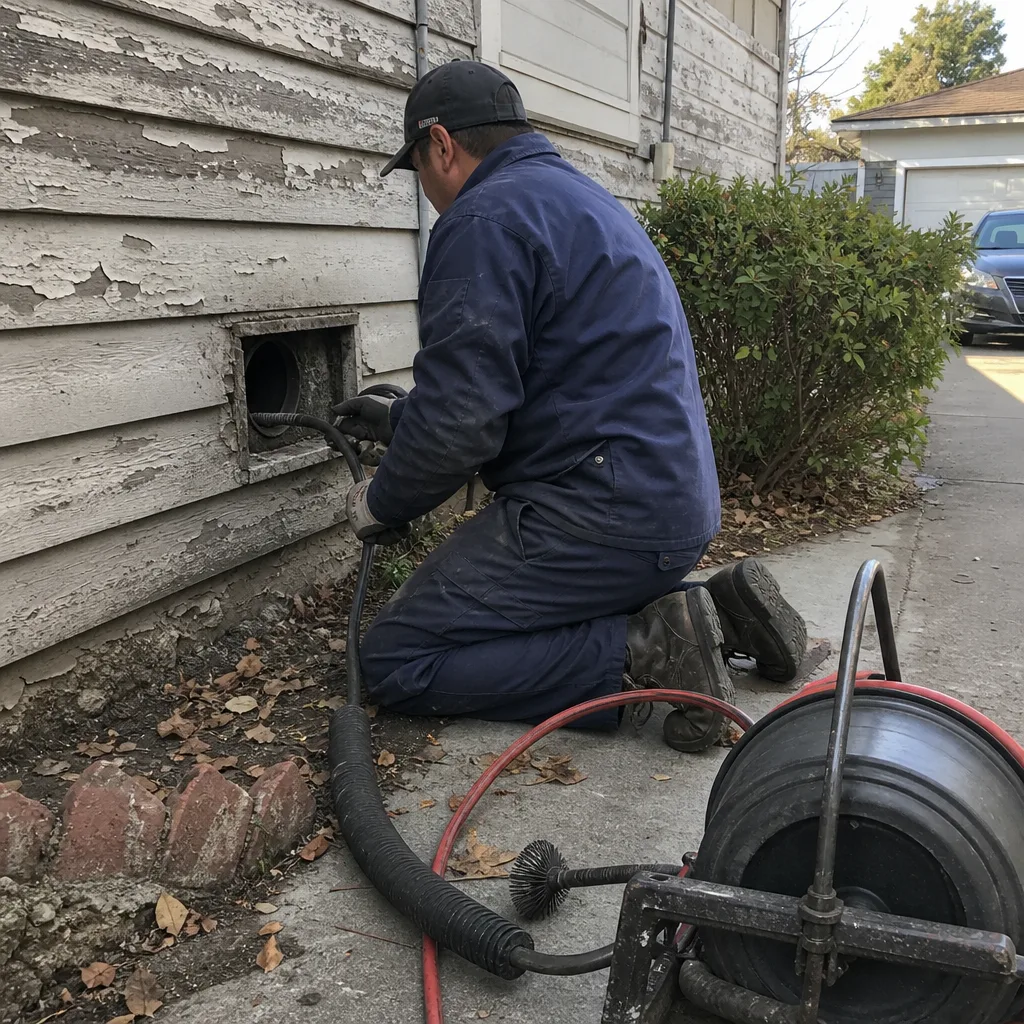 Before
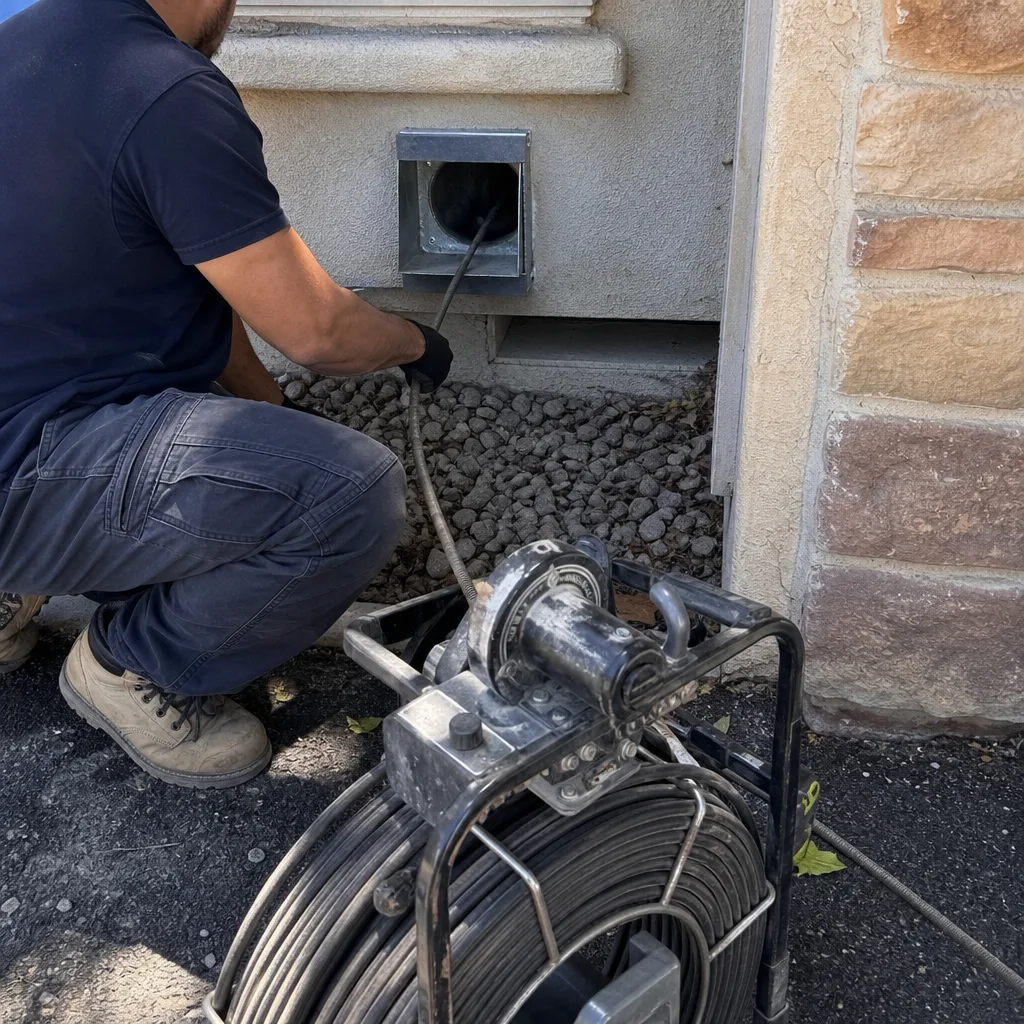 After
After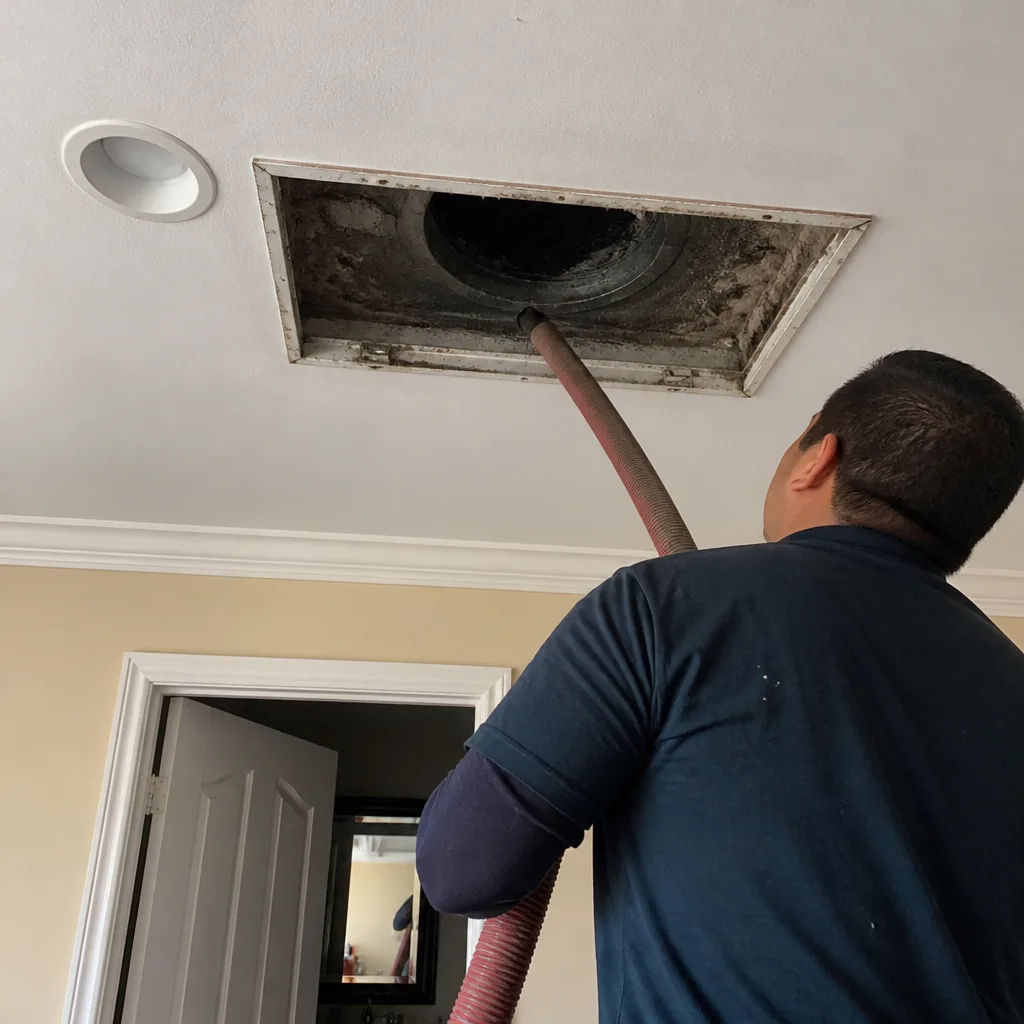 Before
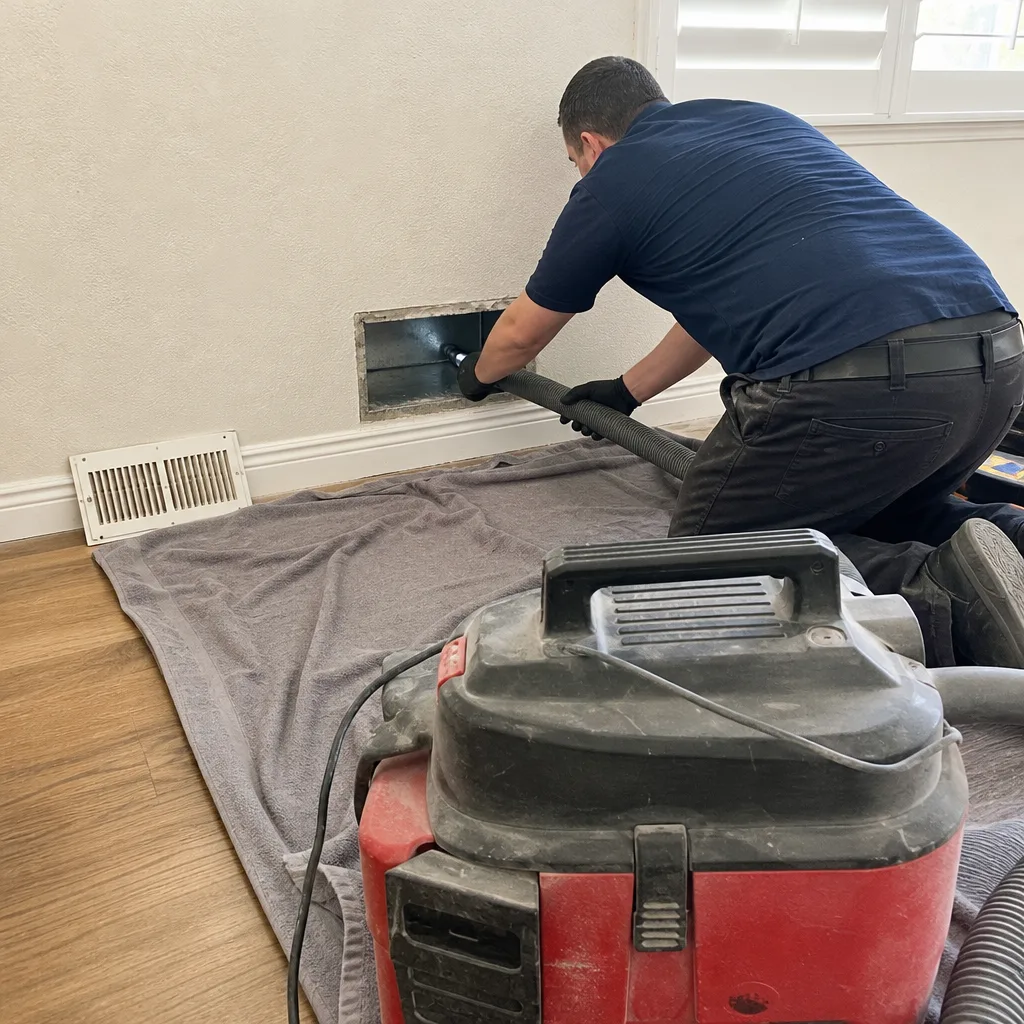 After
After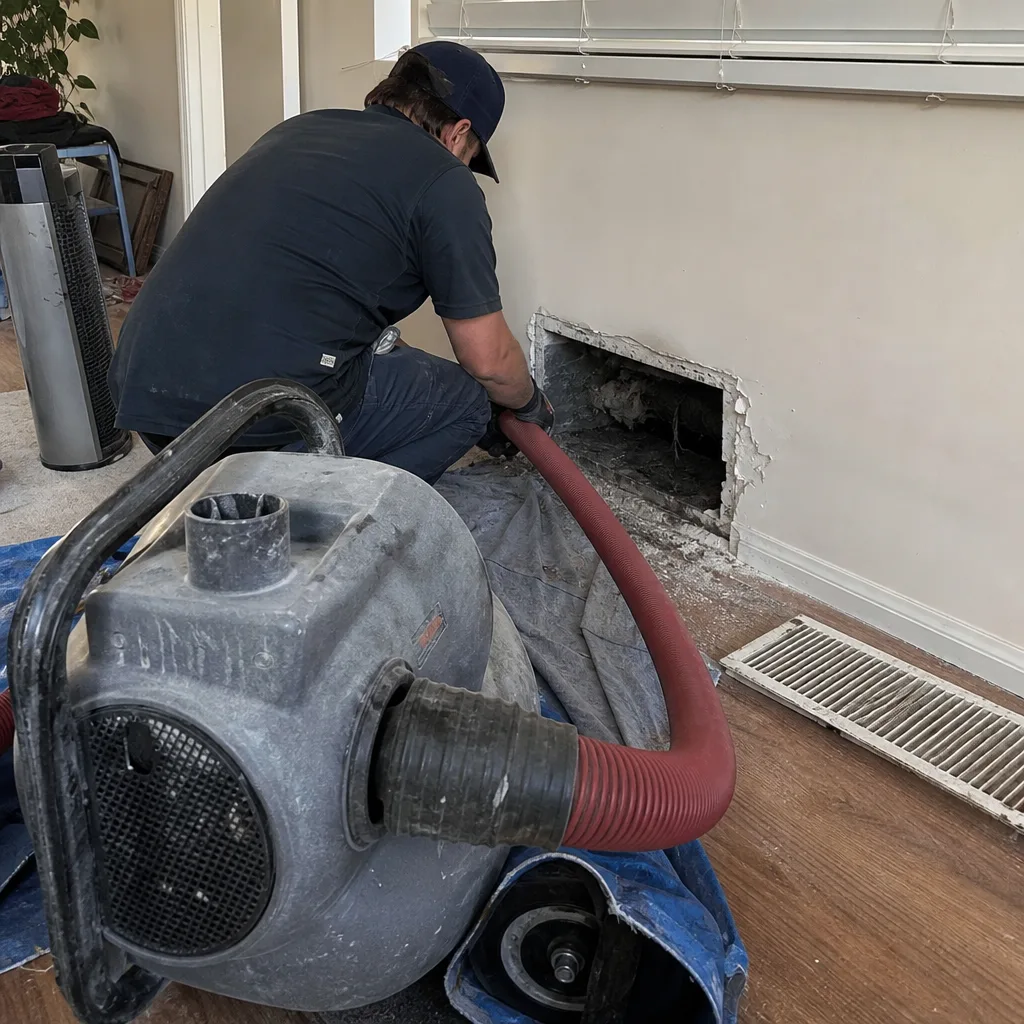 Before
 After
AfterWhen to Call a Professional
Most of the seasonal maintenance described in this guide is homeowner-accessible, but certain situations require a trained eye, professional equipment, or both. For Air Duct Cleaning Cost Breakdown: The Santa Clarita Homeowner’s Reference for 2026 and pricing guidance, see our dedicated breakdown. You should call a professional when you see visible mold growth inside any duct surface or on the coil; when you smell smoke or a persistent odor from the vents more than 72 hours after the outdoor air clears; when airflow from a specific room is noticeably weaker than others and you can’t find the cause at the register; when a visual inspection of the attic reveals sagging, torn, or condensation-stained flex duct; and after any rodent intrusion into the attic or ducting. You should also call when you don’t want to climb into a 140-degree attic or when you need the ductwork evaluated with a camera scope, which is the only way to assess what’s inside a supply run you can’t see.
Hollis Air Duct Santa Clarita offers free estimates across the valley. Call (661) 523-0295 to schedule an inspection or ask specific questions about your system.
Frequently Asked Questions
Most Santa Clarita homes need professional duct cleaning every 3 to 5 years, not annually. The interval shortens to every 2 to 3 years if you live near active construction sites (common in the Newhall and Canyon Country build-out areas), if your household includes multiple pets, if you’ve experienced one or more significant wildfire smoke events that penetrated the system, or if anyone in the home has respiratory sensitivities. A camera inspection is the only way to accurately determine whether cleaning is needed now or can wait. Call (661) 523-0295 for a free estimate with scope inspection included.
A filter change addresses particles that are still being captured by the filter media; a duct cleaning addresses particles that have already deposited on coil surfaces, blower components, and duct liners. If the smoke odor disappears within 48 hours of the outdoor air clearing and you don’t see soot streaks around supply registers, a filter change is typically sufficient. If the odor persists when the fan runs, or if you see visible soot streaks near supply registers, the residue is embedded in the system and cleaning is warranted. Call (661) 523-0295 for a post-smoke assessment at a free estimate price.
For most Santa Clarita homeowners, late spring (April to early May) is the better window because it prepares the system for maximum summer runtime. Fall cleaning (October to November) is the right choice if you’ve had a significant wildfire smoke or wind-dust event, or if you skipped the spring window. Winter is acceptable but offers no weather-specific advantage. Summer is the one season to avoid, unless you’re addressing visible mold or rodent contamination. Call (661) 523-0295 to discuss your system’s history and find the right seasonal window.
Low quotes in the air duct cleaning trade almost always come with add-on pricing at the door: per-vent charges, extra fees for difficult access, and upgrades for filters or sanitizers that should have been included in the original quote. Hollis Air Duct Santa Clarita gives one flat, written price per system before any work begins, and that price does not change when the technician arrives. Call (661) 523-0295 to get a written price that matches the work actually done.
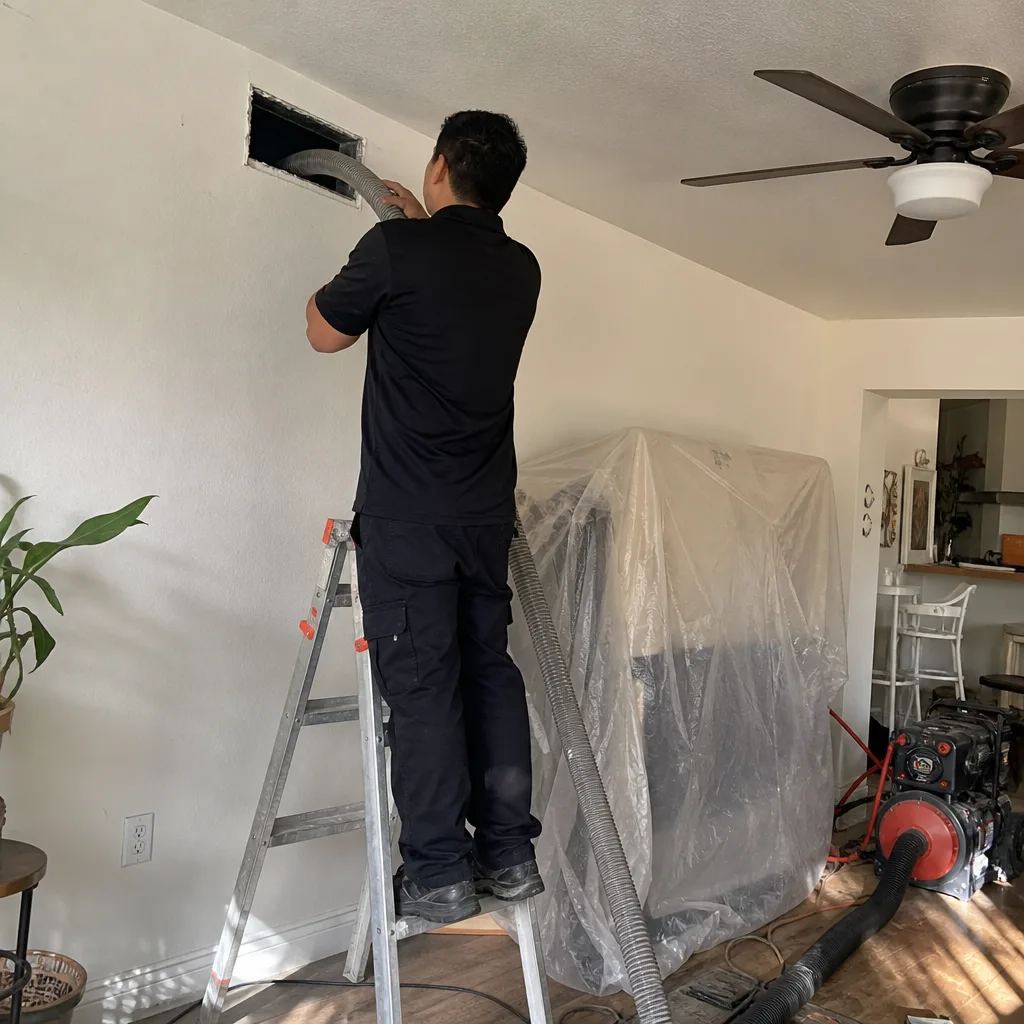
The two most reliable indicators are a before-and-after camera scope comparison and a review of the negative-air extraction method used. A professional cleaning should show visible removal of accumulated material inside the supply runs, not just the return side. You should also see the technician use a negative-air machine (not just a vacuum hose) to create continuous airflow out of the system during agitation. Hollis uses Rotobrush rotary brush systems and Nikro negative-air machines on every job, and every job is covered by the 365-Day Done Right Promise: if the work isn’t right, we come back and fix it at no charge. Call (661) 523-0295 for a free estimate.
Every Hollis air duct cleaning, dryer vent cleaning, and duct sealing job in Santa Clarita is covered in writing for a full year. If the work fails or the problem returns within 365 days, we come back and make it right at no charge, including a free second visit. This is a written guarantee, not a verbal promise. Call (661) 523-0295 to get the written price and written guarantee before any work begins.
The Bottom Line
Santa Clarita’s seasonal duct care needs don’t follow the generic spring-fall schedule. The highest-value actions are targeted: a pre-summer inspection and filter upgrade in late April or May, monthly filter checks from June through September, a post-Santa Ana and post-smoke assessment in October or November, and an attic duct walk in December or January. Between professional cleanings, which most valley homes need every 3 to 5 years, the return grille in high-traffic rooms is the single most important maintenance point on the system. Every Hollis job in Santa Clarita gets a written price before work starts, background-checked uniformed technicians, professional equipment from Rotobrush and Nikro, and a 365-Day Done Right Promise in writing. When the next seasonal need comes up, you know exactly what to expect before you ever pick up the phone.
Contact Hollis Air Duct Santa Clarita at (661) 523-0295 for a free estimate on air duct cleaning, dryer vent cleaning, or duct sealing anywhere in the Santa Clarita Valley.
Written by Roy Castellanos, Owner at Hollis Air Duct Santa Clarita, serving Santa Clarita since 2004.