
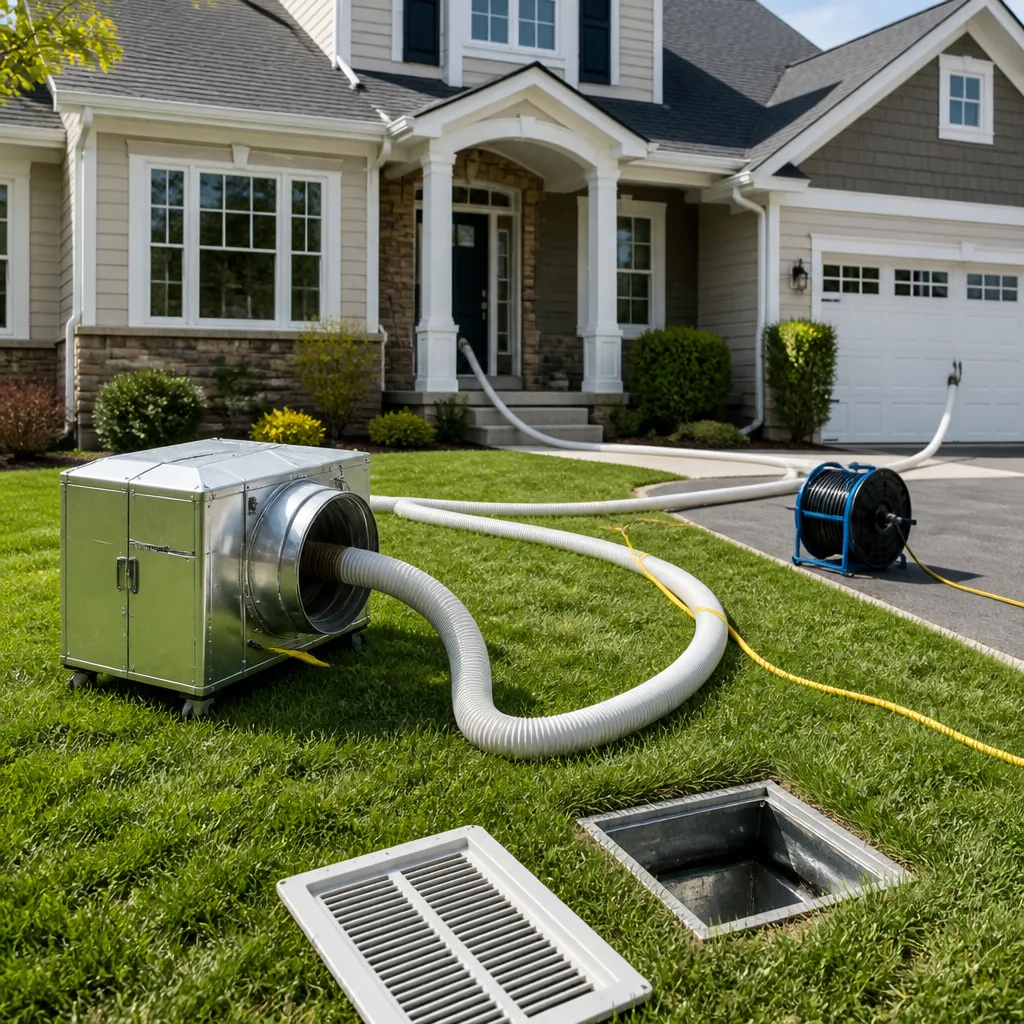
 Whole-home duct cleaning
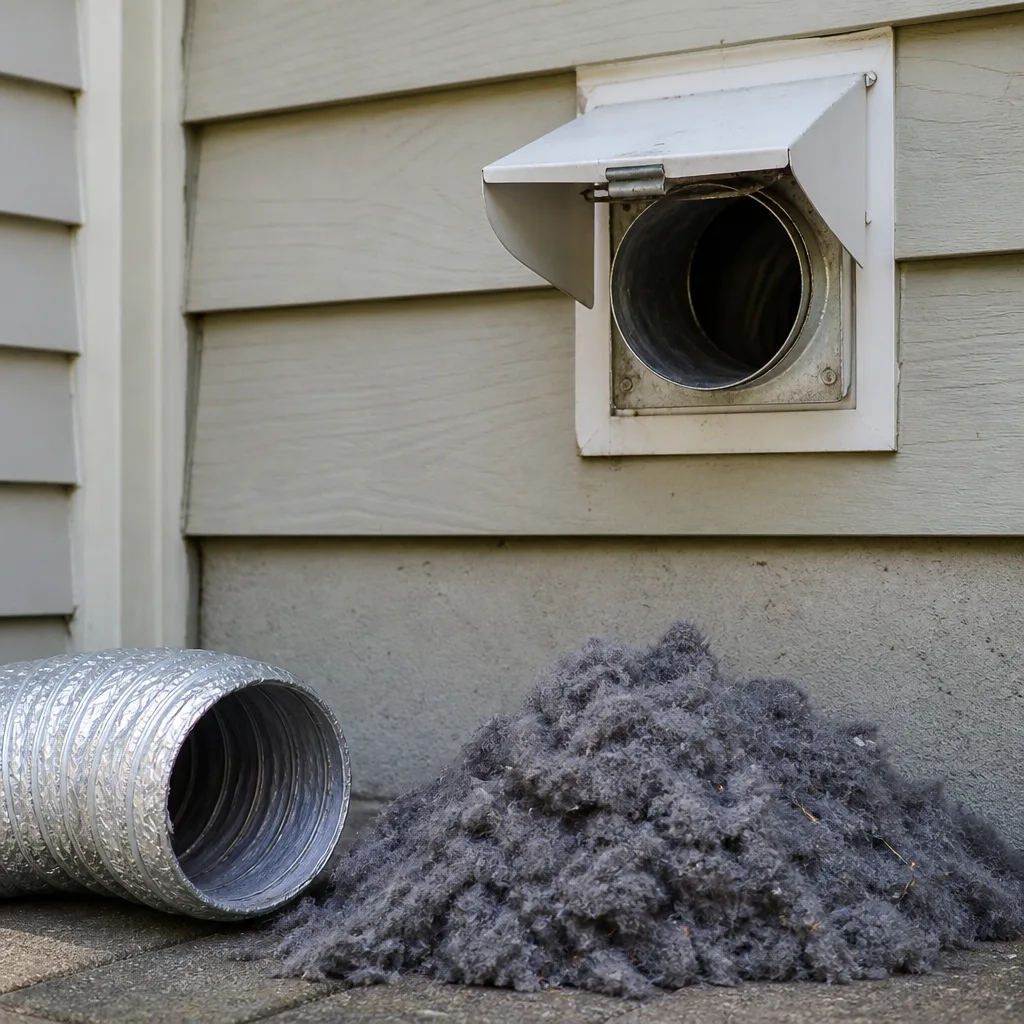 Dryer vent cleaning
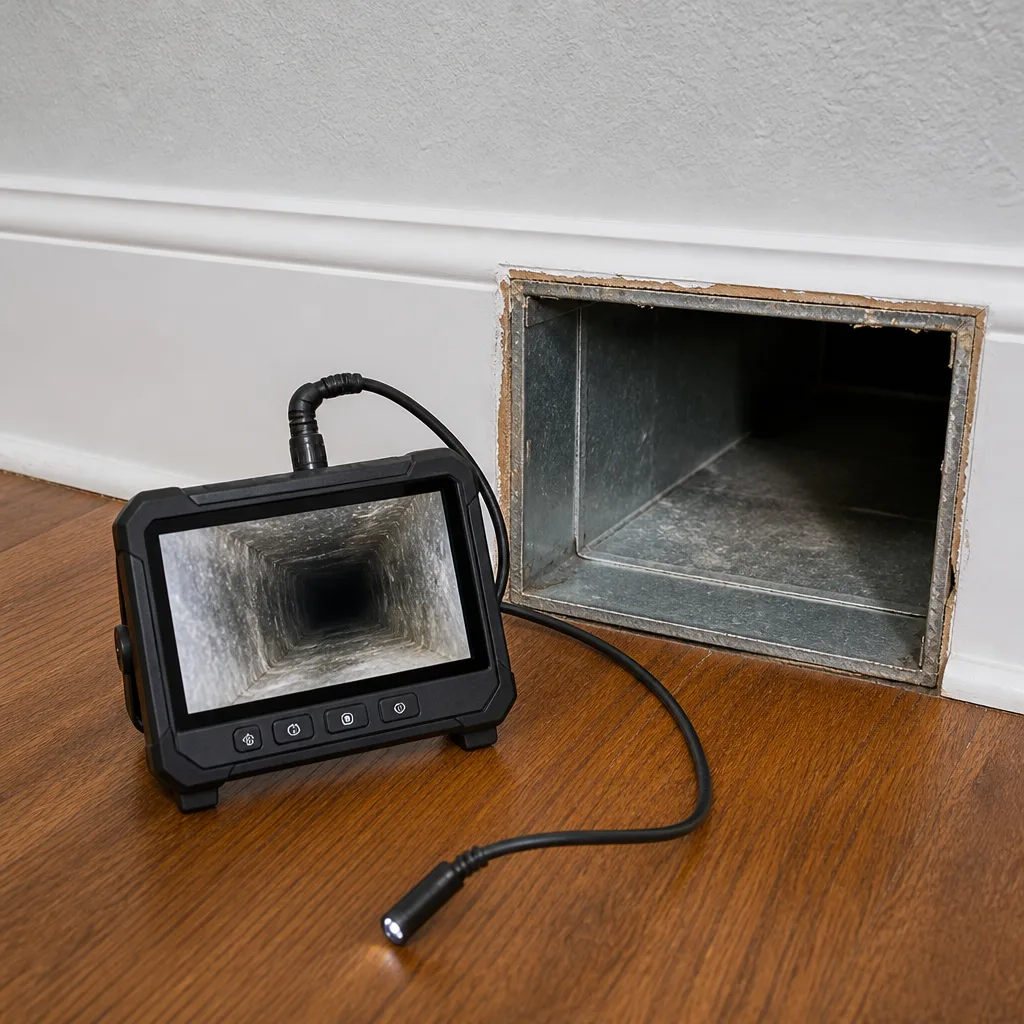 Camera inspection
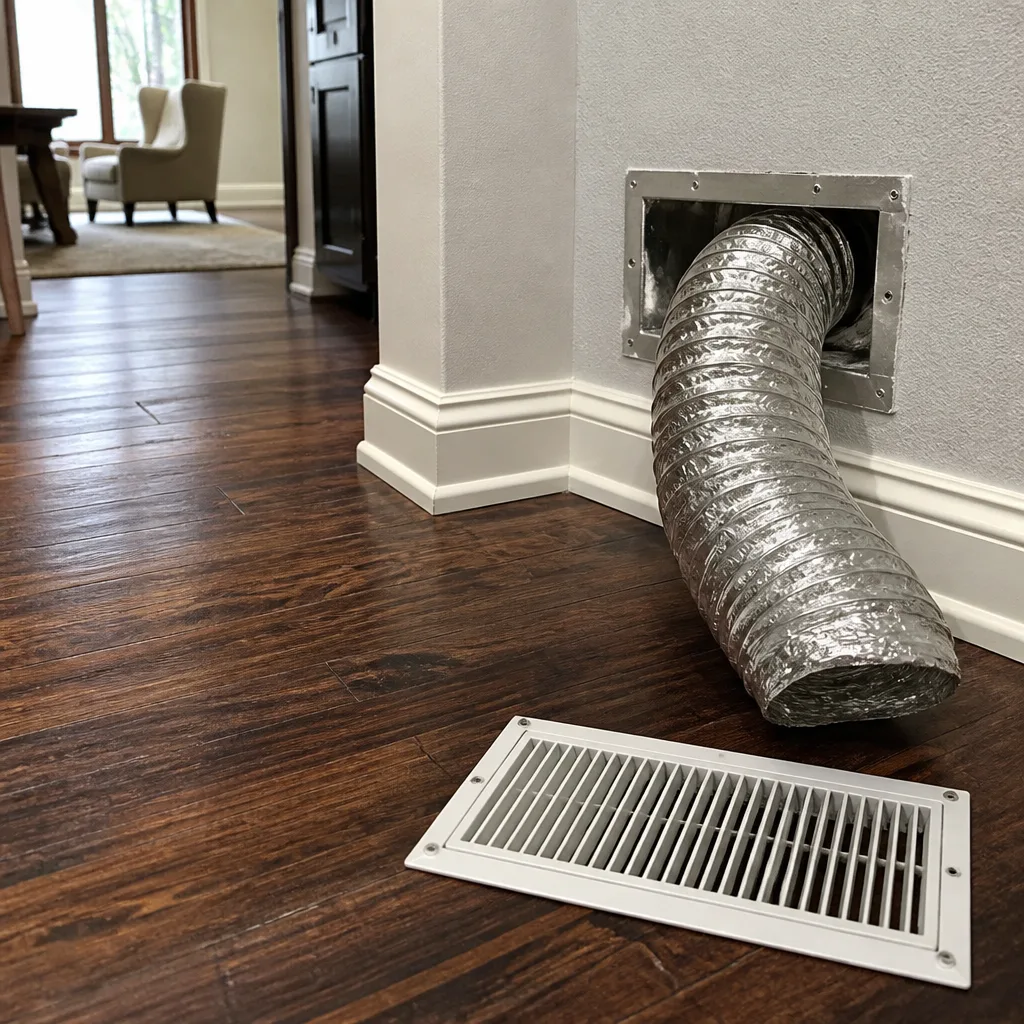 Sanitizing & deodorizing
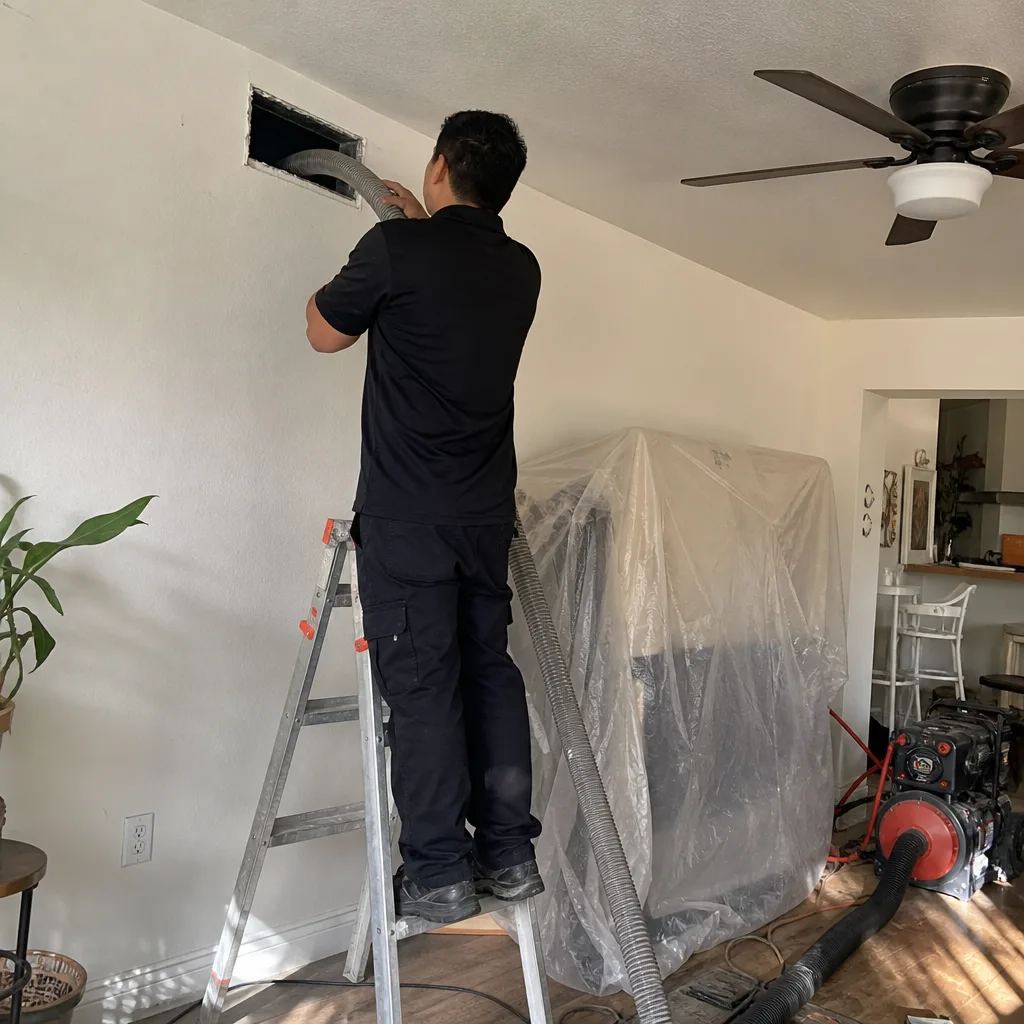
Whole-system duct and dryer vent check with before-and-after photos - you see exactly what came out of your vents
That "$99 whole-house special" is a bait ad - the real number appears once they are in your hallway, or the "clean" is a shop-vac at the register. We photograph the inside of your ducts before and after instead.
Honeywell Register & Grille Cleaning: The Santa Clarita Owner’s Guide
Honeywell register and grille cleaning in Santa Clarita typically runs $149 to $329 depending on how many registers your home has and how heavily they’re coated. Our crews stock the brushes, coil cleaner, and compressed-air tools to do it right the first visit, and most homes are finished in 90 minutes to 2 hours. The way most owners find us is simple: they notice one register that looks darker than the others, or they pull a grille off to check and find a gray felt mat stuck to the back of it.
Here’s the thing about Honeywell registers: they’re well made, but the fin spacing on Honeywell’s stamped-face models is tighter than what you’ll find on most builder-grade stock. That tight spacing does a good job of directing airflow, and it also does an excellent job of catching every particle of dust, pet hair, and cooking grease that moves past it. By the time a Santa Clarita summer has run its course with the AC working hard, those fins are carrying a layer of buildup that restricts the airflow you paid for. Roy Castellanos has pulled registers in Valencia homes barely three years old that look worse than 15-year-old registers in coastal climate. The valley heat mixes with whatever’s in the air and bakes it on. That’s not a knock on Honeywell, it’s just what the Santa Clarita climate does to anything with fins and a face.
Clean ducts move clean air. Everything else is just sales talk.
Before we get into model specifics, one clear note: Hollis Air Duct Santa Clarita is an independent service provider. We service and clean Honeywell products, but we are not affiliated with Honeywell, and our technicians carry professional-grade tools from Rotobrush, Nikro, and Abatement Technologies alongside Honeywell-compatible cleaning products.
Which Honeywell Models This Applies To
Honeywell’s register and grille lines fall into a few clear families, and the cleaning approach changes slightly depending on which one you have. The most common in Santa Clarita homes are the Honeywell stamped steel sidewall registers (the classic curved-blade design), the Honeywell linear bar grilles used in newer open-floor-plan builds, and Honeywell return air filter grilles, which typically sit on a wall or ceiling and hold a replaceable filter behind a hinged door. If your register has a Honeywell logo stamped into the face, it’s almost always a stamped steel sidewall model. If it has no visible logo but came with the home’s Honeywell HVAC system, it’s typically a linear bar grille or a return filter grille.
The compatibility detail that matters for cleaning is this: Honeywell stamped registers use a specific fin angle (roughly 35 degrees) that’s shallower than most aftermarket replacements. Shallow fins mean less throw distance, so Honeywell often sizes these registers one width up from what a generic chart would suggest. If someone previously swapped your original register for an off-the-shelf substitute, the airflow may already be off. We see this often in older Saugus and Canyon Country homes where a prior repair left mismatched registers. We can tell you during the cleaning whether what’s installed matches what should be there, which is information worth having if you’re dealing with a room that never quite cools or heats evenly.
For OEM versus aftermarket: when a register is beyond cleaning, we’ll tell you honestly. Honeywell OEM registers still hold up well and are available from HVAC supply houses across the Santa Clarita Valley. Quality aftermarket units from brands like Airmate and TruAire are sometimes half the price and fit standard openings correctly if the measurements match. The choice depends on whether you want the exact finish and fin profile or just a clean, functional register that moves air properly. We stock both on the truck, so the decision doesn’t stall the job.
Styles & brands we work with
Signs Your Honeywell Register & Grille Cleaning Is Failing
- Visible gray or brown film on the fins. This is the most common tell. Santa Clarita’s dry heat bakes airborne dust, cooking oil, and hair product residue onto register fins. The film starts to look almost like felt and blocks the gaps between fins.
- Airflow feels weak from one register but strong from others. When a Honeywell register’s fins pack with buildup, the effective opening shrinks. If you close and open the damper and the airflow barely changes, the fins themselves are likely loaded.
- You can smell a musty or dusty odor when the blower kicks on. The register is the last thing air passes before entering the room. Accumulated dust there gets a fresh blast of air every cycle, and that’s what you’re smelling.
- The register face looks streaky or stained even after wiping. Wiping the outside face doesn’t reach between the fins where the actual restriction lives. If the streaks return within a week, the buildup is inside the fin stack.
- You find dust settling more quickly on surfaces in one room. A restricted register creates turbulence as air squeezes past the obstruction. Turbulent air dumps dust particles right at the grille rather than pushing them deeper into the room.
None of these are emergencies, but they compound. A Honeywell register that’s 30% restricted by buildup means that room gets 30% less conditioned air, and your system runs longer to compensate. We’ve seen systems in Santa Clarita running 45 extra minutes per cycle because of restrictions at the register level.
See the difference
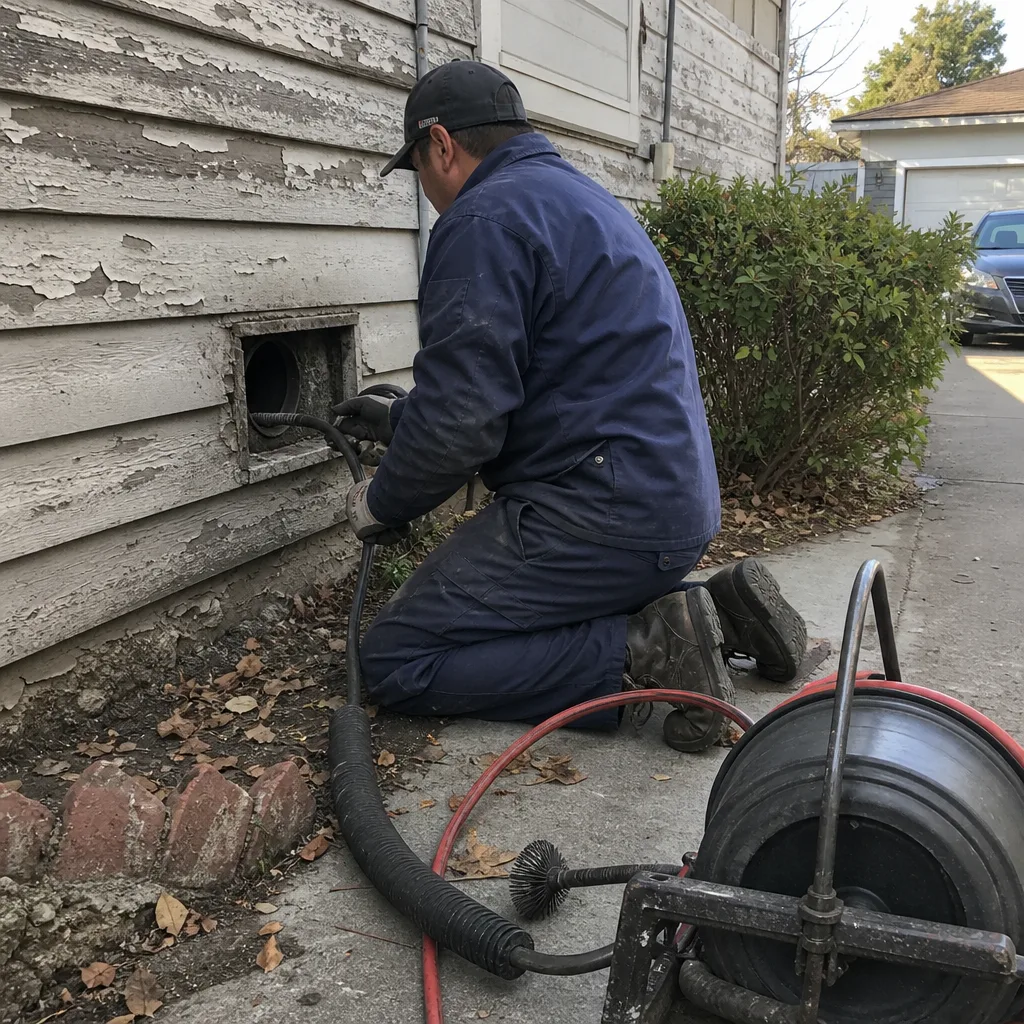 Before
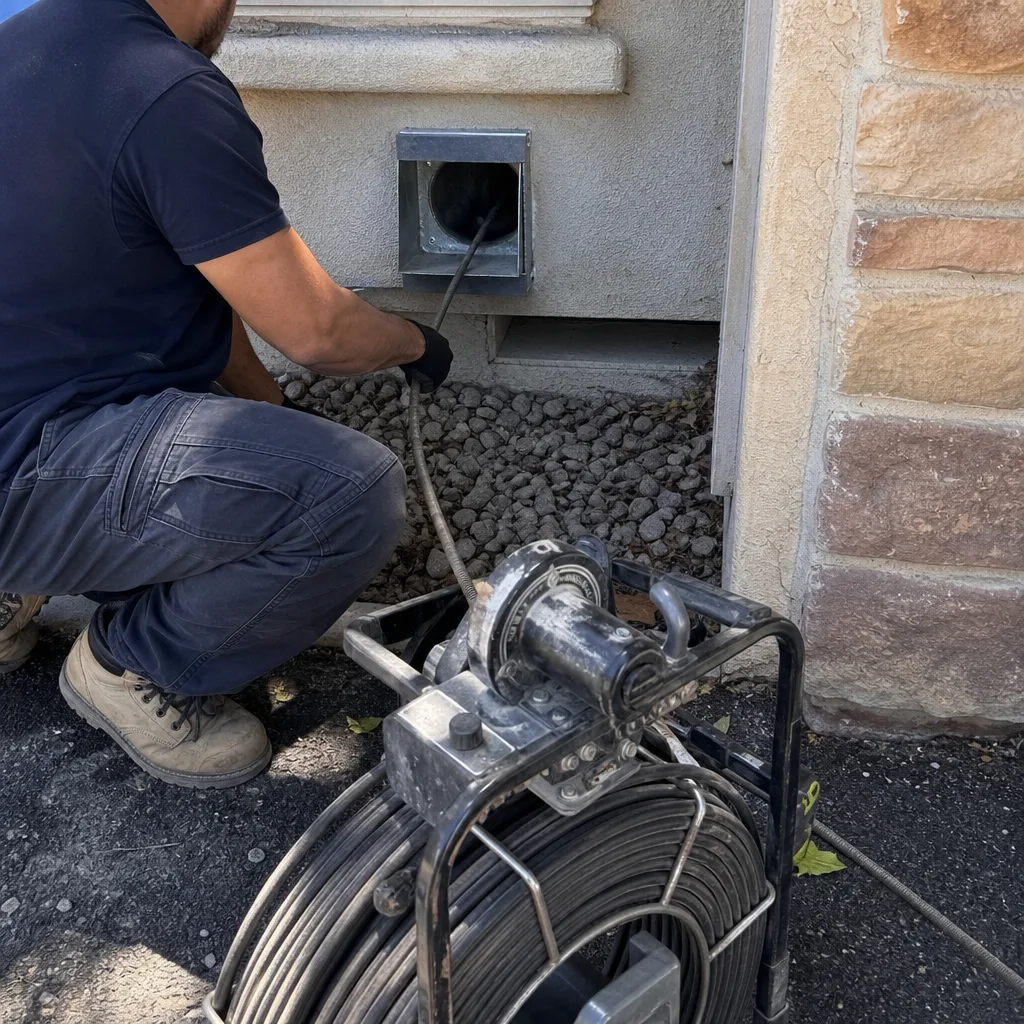 After
After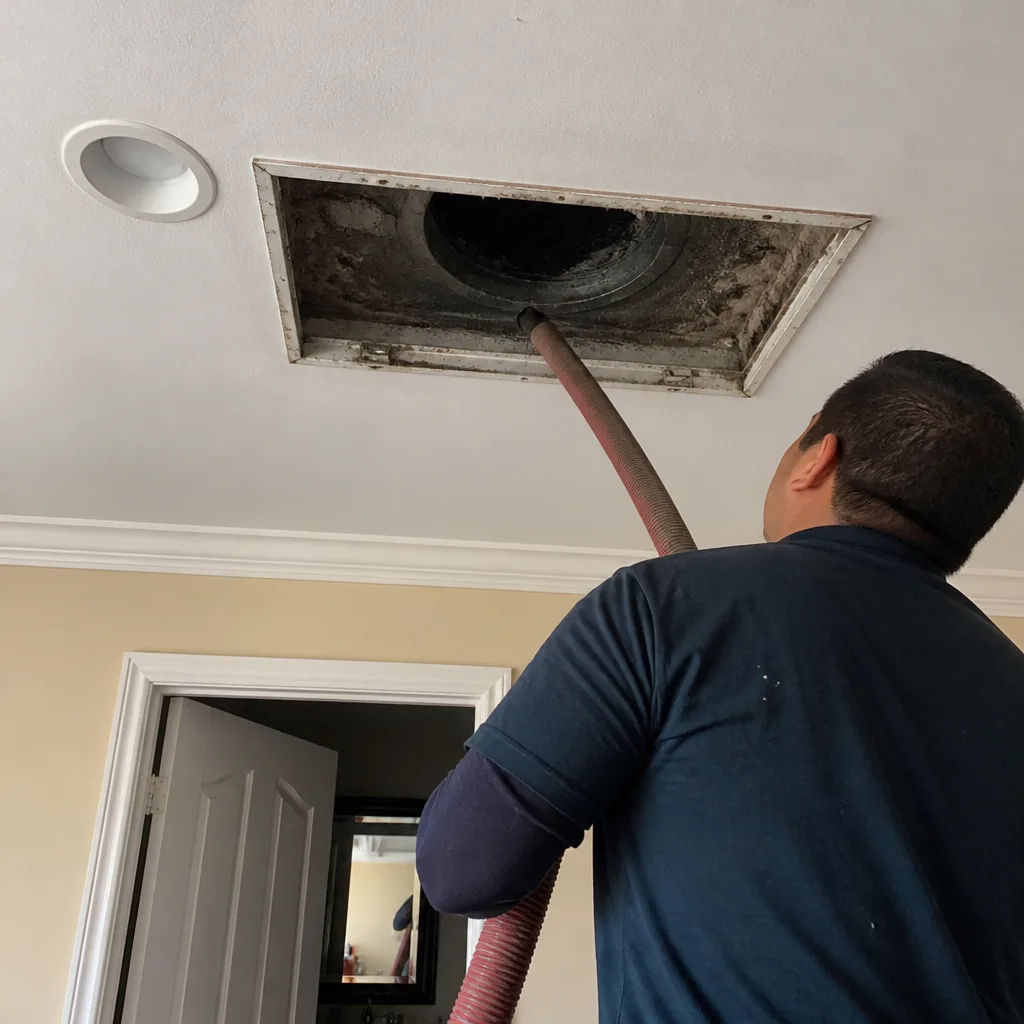 Before
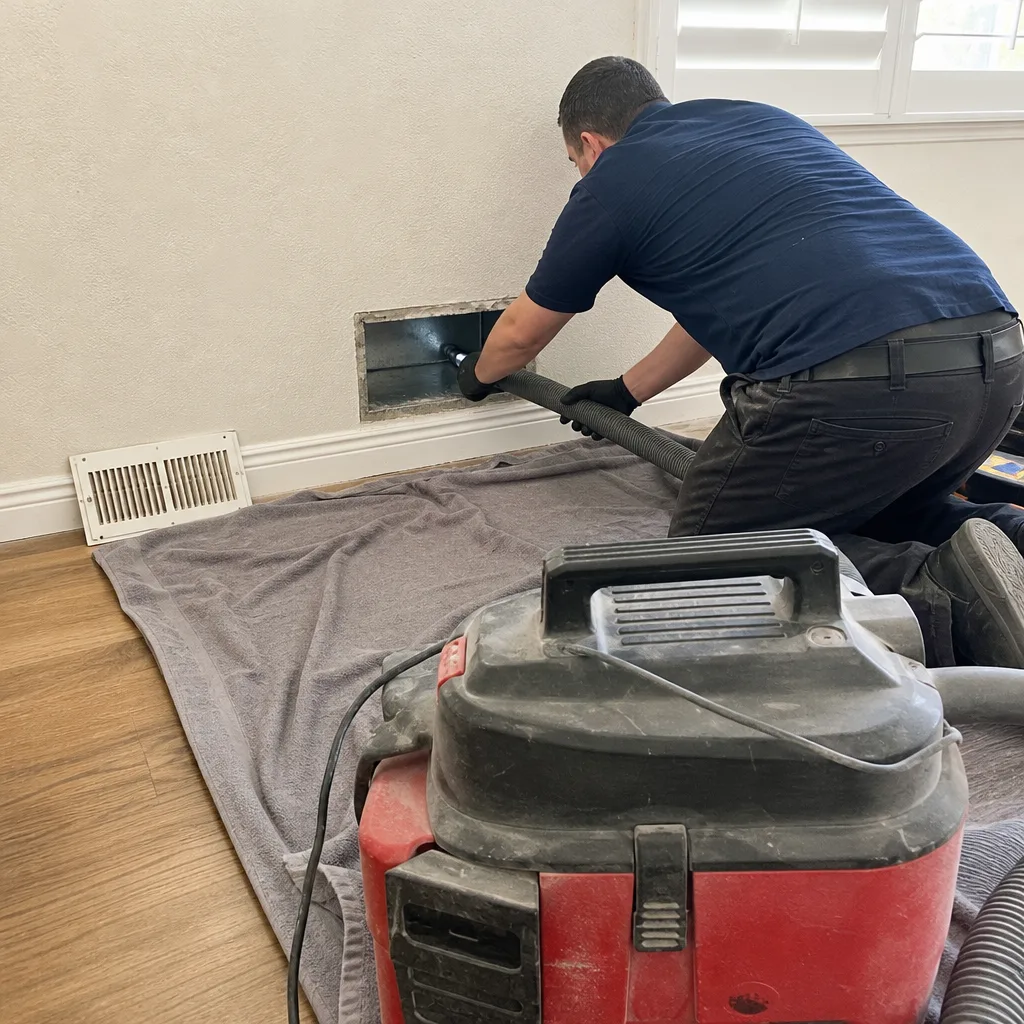 After
After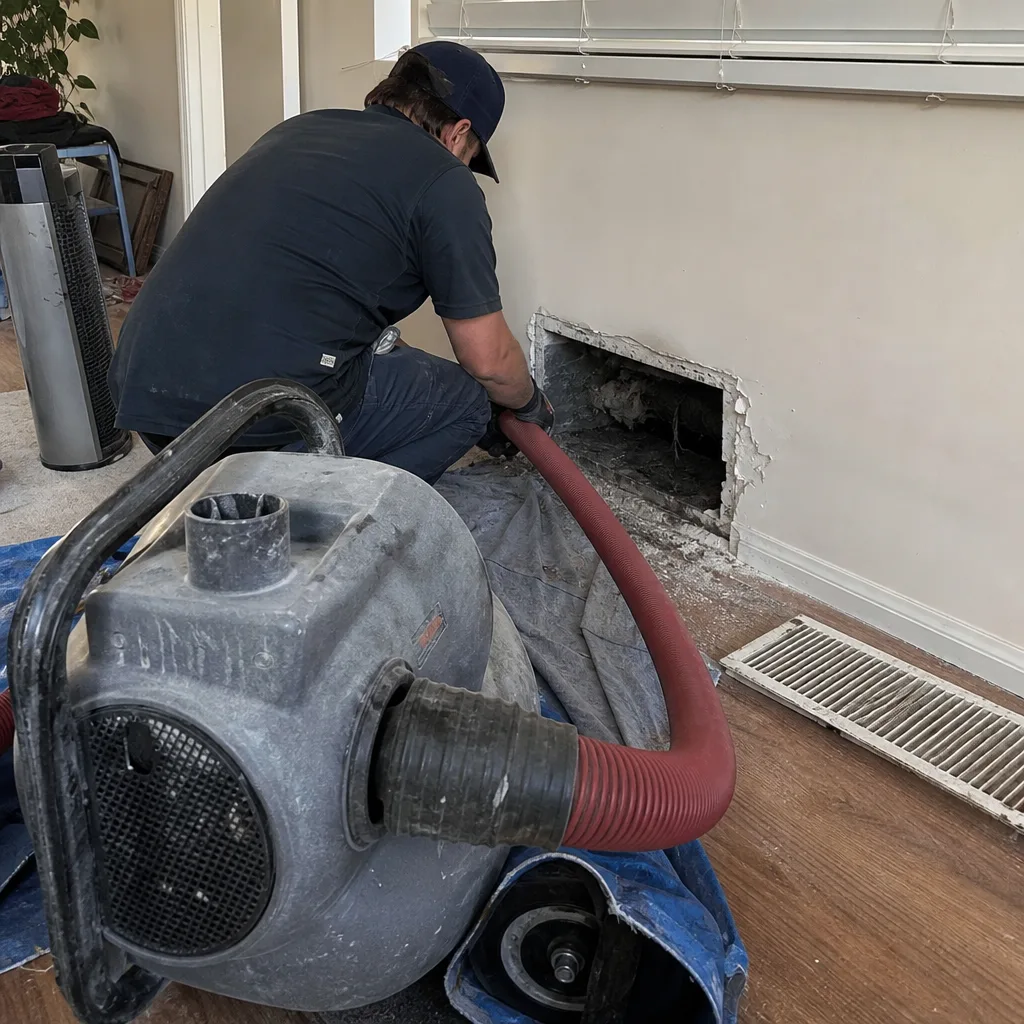 Before
 After
AfterReplacement Cost & What’s Included
Whole-home Honeywell register and grille cleaning in Santa Clarita levels out as follows:
- Small homes (up to 10 registers): $149 to $199
- Medium homes (11 to 16 registers): $199 to $269
- Larger homes (17+ registers or steep vaulted ceilings): $269 to $329
The range is driven by register count, whether return filter grilles need filter replacement, and whether vaulted ceilings require ladder work. Some registers in older Santa Clarita ranch homes are installed in floors, and floor registers typically have deeper buildup from foot traffic dust and occasional spills. Those take longer and cost on the higher end.
Every quote is written down before we start. That price includes removing each register, cleaning the fin stack with professional coil cleaner, brushing the blades with stiff natural-bristle brushes, wiping the frame and face, and reinstalling with the same screws. We don’t bill per register unpredictably. If a register is damaged beyond cleaning and needs replacement, we’ll show you the issue, quote the replacement separately, and let you decide. The written quote also includes the 365-Day Done Right Promise: if the cleaning fails to solve the problem within a year, we return and redo it at no charge.
DIY or Call Us?
There’s no serious safety risk with cleaning your own Honeywell registers, and I’ll be straightforward about that. You can vacuum the face, wipe down the fins with a dry microfiber cloth, and unscrew floor registers to vacuum underneath. What you’ll struggle with is cleaning the full depth of the fin stack without professional coil cleaner and brushes sized for the work. The baked-on film we see in Santa Clarita homes doesn’t come off with soapy water. The register may look better on the surface while still moving less air than it should, which is the part that costs you money on your utility bill.
If you have aluminum Honeywell linear bar grilles, bending a bar is a real concern. Those bars are thin and not repairable once kinked. If you have high return grilles above stairwells or on vaulted ceilings, ladder work with cleaning chemicals in hand isn’t worth the fall risk. The honest answer: try the dry wipe if you want. If the residue doesn’t come up, call us at (661) 523-0295. We’ll quote it and finish it on one visit.
FAQs
Every 12 to 18 months in Santa Clarita is realistic. The valley’s dry heat bakes airborne debris onto register fins faster than coastal climates, and the Santa Ana season adds a layer of fine dust you won’t find elsewhere. If you have pets or run the system heavily in summer, check registers every spring and budget for an annual cleaning.
Most Honeywell registers can be fully cleaned with professional coil cleaner and fin brushes. They’re built to be cleaned, not thrown away. The exception is painted registers where the finish has started to peel; cleaning can accelerate the peeling, and you’re better off replacing that register with a matching OEM or aftermarket unit. We’ll tell you which direction makes sense before we touch it, not after.
Most Santa Clarita homes take 90 minutes to 2 hours for the full register and grille cleaning. That includes removal, cleaning, drying, and reinstallation of every register in the home. Larger homes with 17 or more registers or high-ceiling work may run longer, and we’ll tell you the expected window when we quote the job.
Yes. Our trucks carry Honeywell OEM replacements for the most common stamped steel and return filter grille sizes in Santa Clarita homes. We also stock quality aftermarket equivalents from Airmate and TruAire for standard openings. If you have an unusual size or finish, we’ll source it from a local supply house and return to install it. We also service and clean registers on systems from Lennox, Trane, and Carrier; the cleaning process translates, but the fit and finish details vary by brand.
Call (661) 523-0295 for a written, no-hassle quote on Honeywell register and grille cleaning in Santa Clarita. Phones are answered by a live person around the clock, and the number on the quote is the number you’ll pay.
Written by Roy Castellanos, Owner, Hollis Air Duct Santa Clarita at Hollis Air Duct Santa Clarita, serving Santa Clarita and nearby areas.