
Last updated October 15, 2026
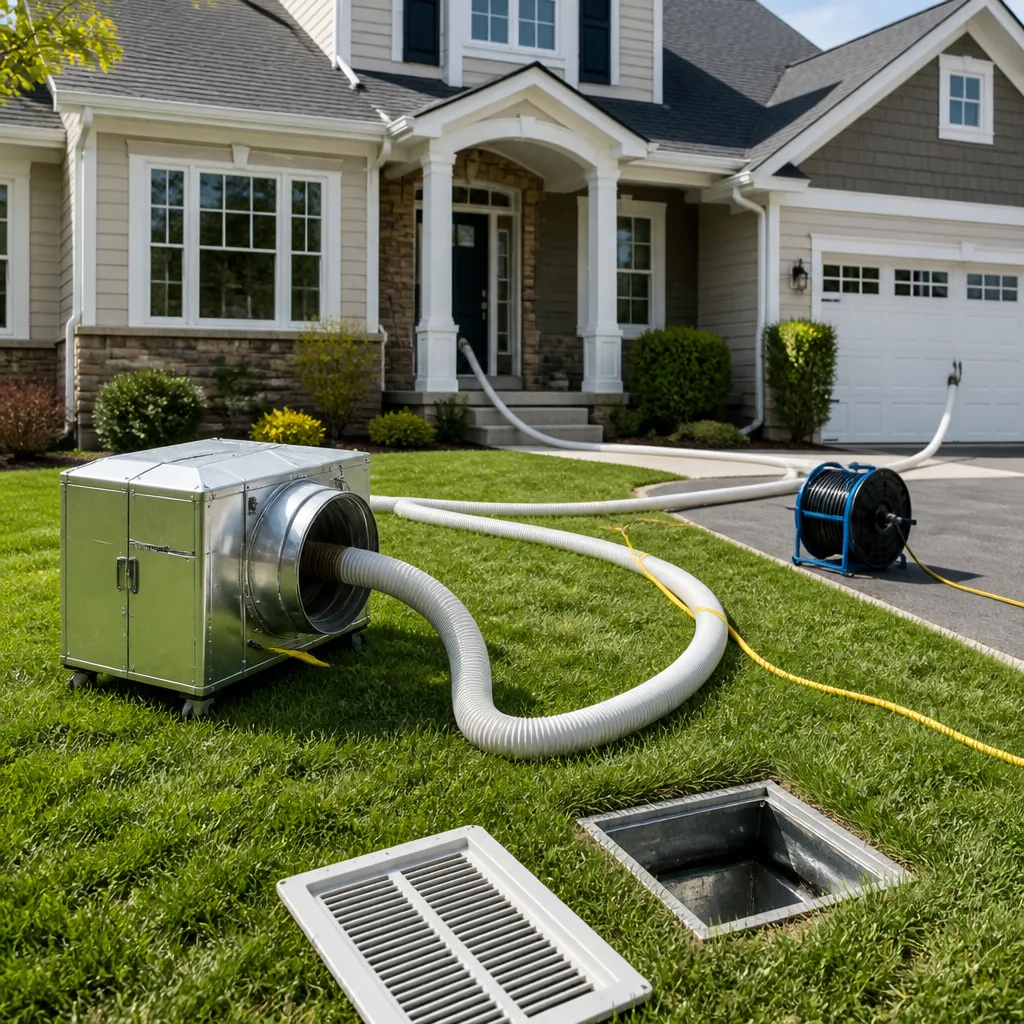 Whole-home duct cleaning
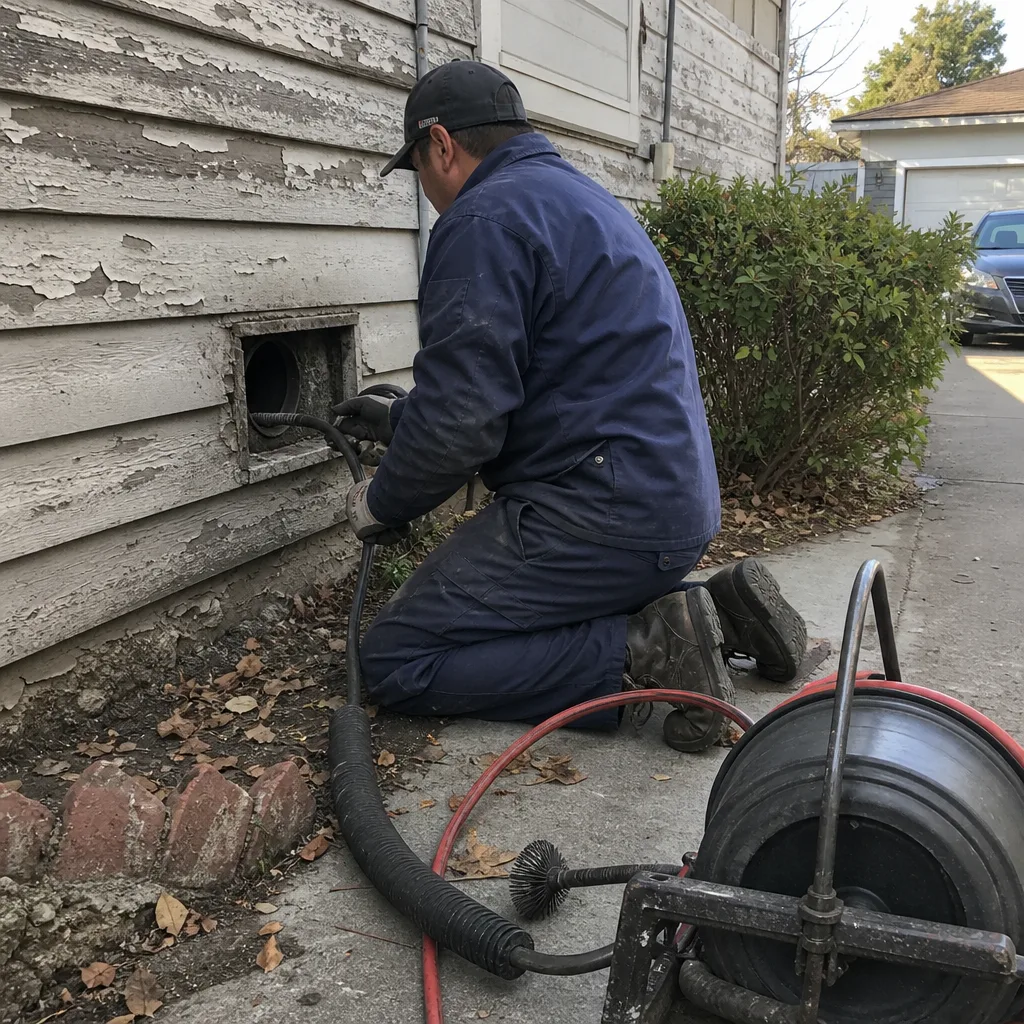
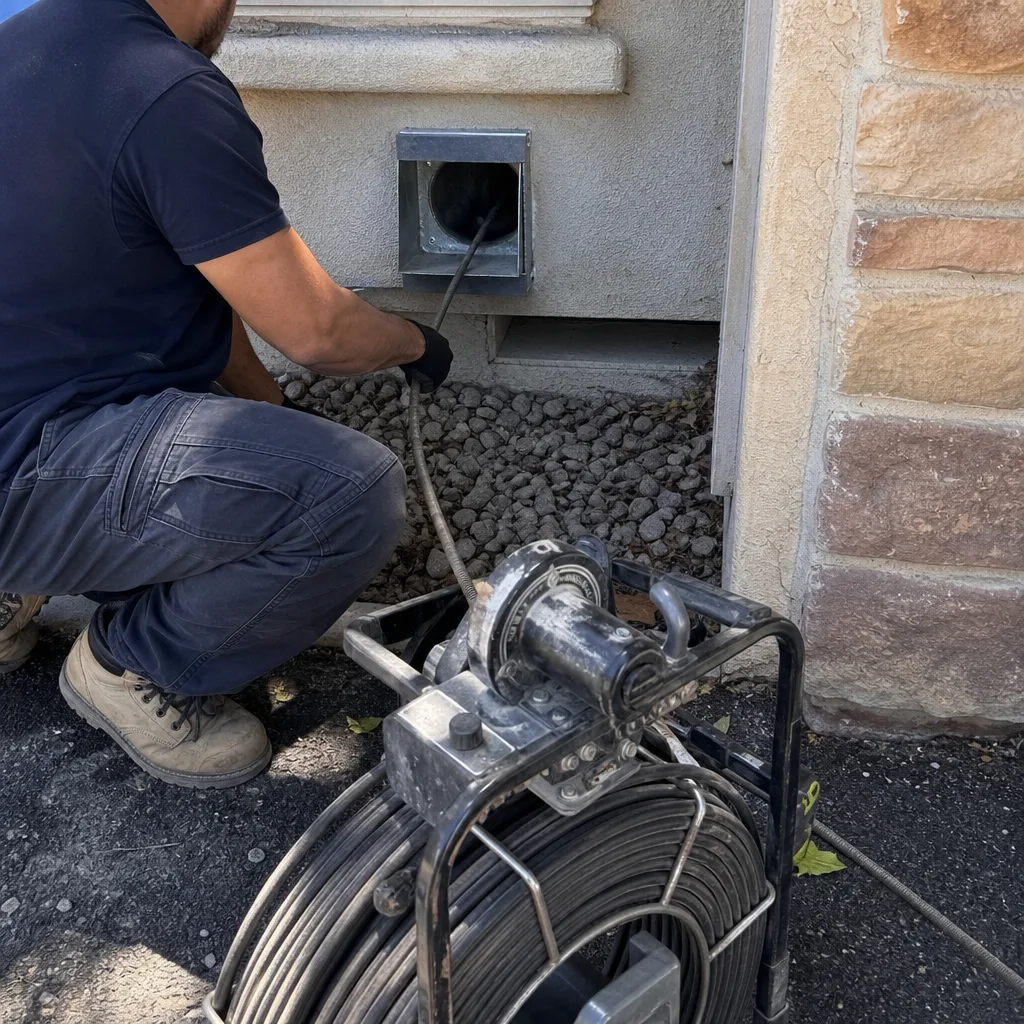
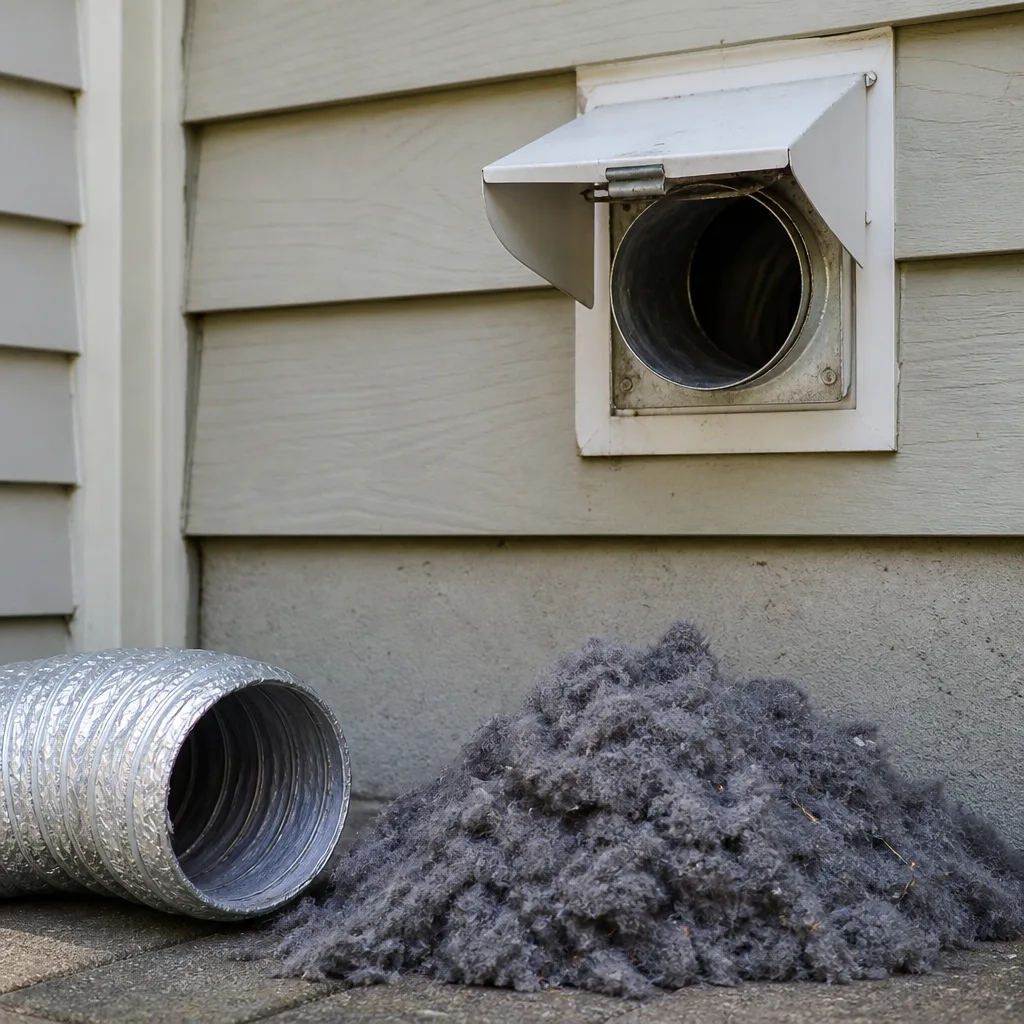 Dryer vent cleaning
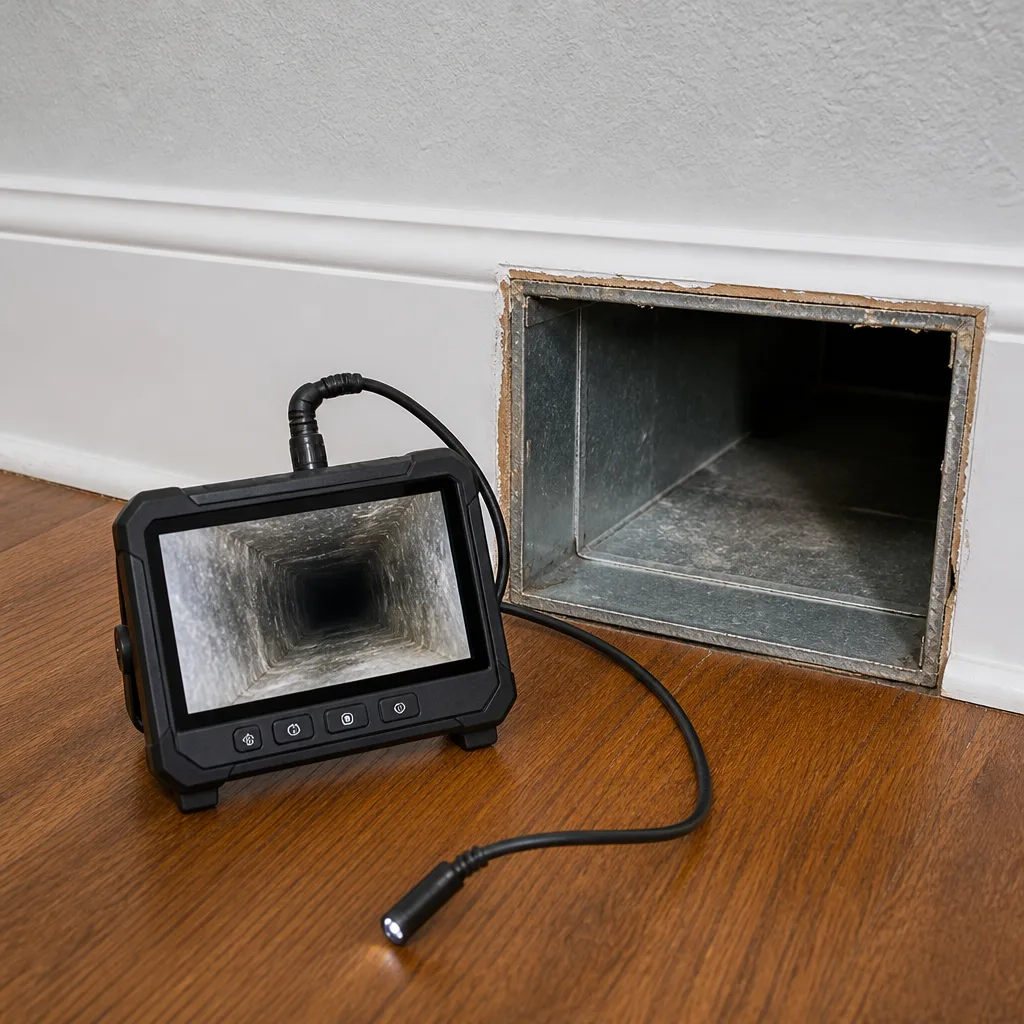 Camera inspection
 Sanitizing & deodorizing
Whole-system duct and dryer vent check with before-and-after photos - you see exactly what came out of your vents
That "$99 whole-house special" is a bait ad - the real number appears once they are in your hallway, or the "clean" is a shop-vac at the register. We photograph the inside of your ducts before and after instead.
Air Duct Cleaning Permits, Codes & Inspections in CA: What You Need to Know
In Santa Clarita, a homeowner once paid a duct cleaning crew to “seal a few leaks while they were in there.” Two years later, that unpermitted repair flagged on a pre-sale home inspection. The cleaning company wasn’t licensed to modify ductwork, and the homeowner absorbed the correction cost. The line between cleaning and repair is where the legal risk hides. This guide and our Complete Guide to Air Duct Cleaning in Santa Clarita explain exactly where that line sits under California law, what the Mechanical Code actually requires, and how to protect yourself before any work begins.
Quick Answer
Air duct cleaning itself requires no permit in California, because it’s a maintenance service, not construction. But the moment a contractor opens a duct to repair it, replaces flex duct, installs UV or ionization equipment inside the air handler, or modifies the system’s design, the work falls under the California Mechanical Code and requires a C-20 HVAC contractor license. Unpermitted duct modifications, even ones done during a legitimate cleaning visit, can void homeowner insurance, complicate home sales, and leave you holding the correction bill.
Styles & brands we work with
Table of Contents
- Cleaning vs. Repair: The Legal Line in California
- What the California Mechanical Code Actually Says About Ducts
- How Santa Clarita and Los Angeles County Handle HVAC Permits
- UV Air Purifiers and Ionizers: The Unlicensed Installation Problem
- Insurance and Liability When Unpermitted Work Exists
- How to Verify a Contractor’s Credentials Before You Allow Duct Work
- What an Inspection Actually Looks For
- Common Mistakes to Avoid
- When to Call a Professional
- Frequently Asked Questions
Cleaning vs. Repair: The Legal Line in California
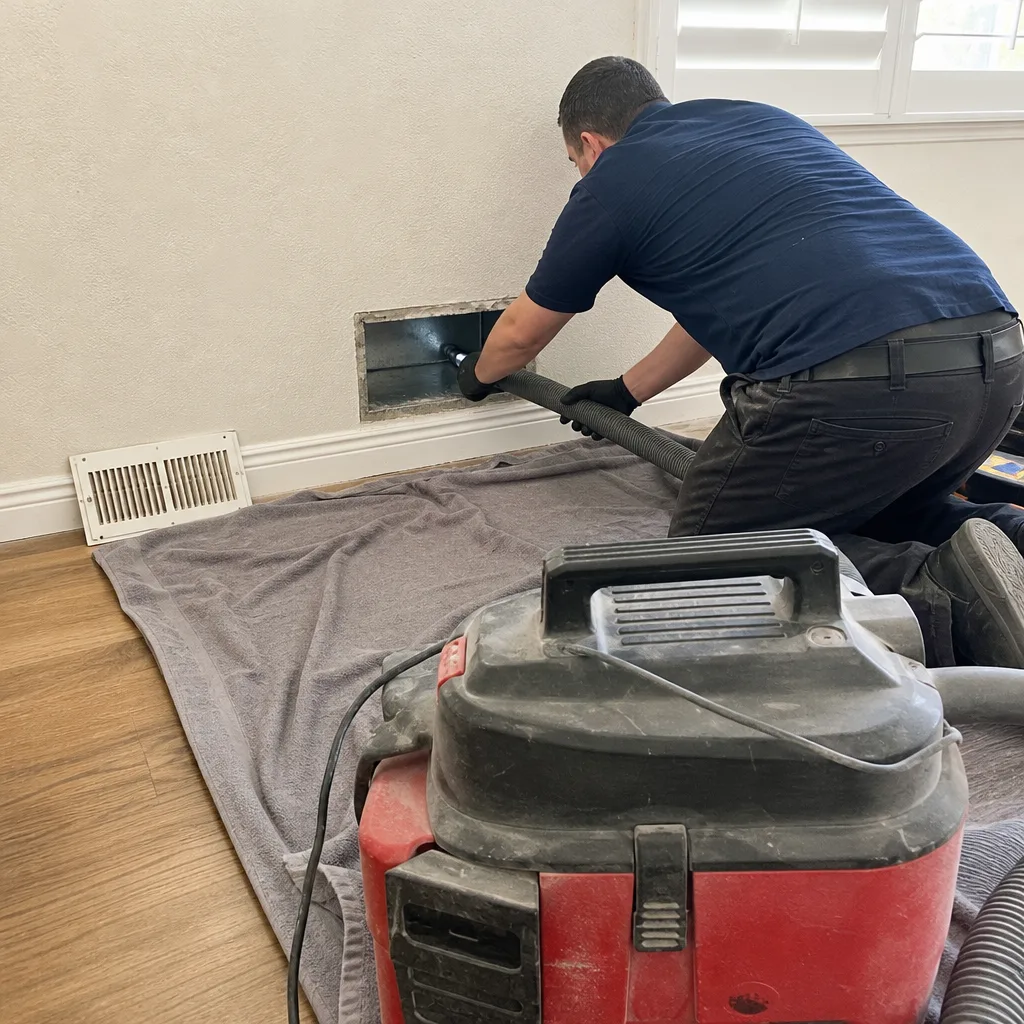
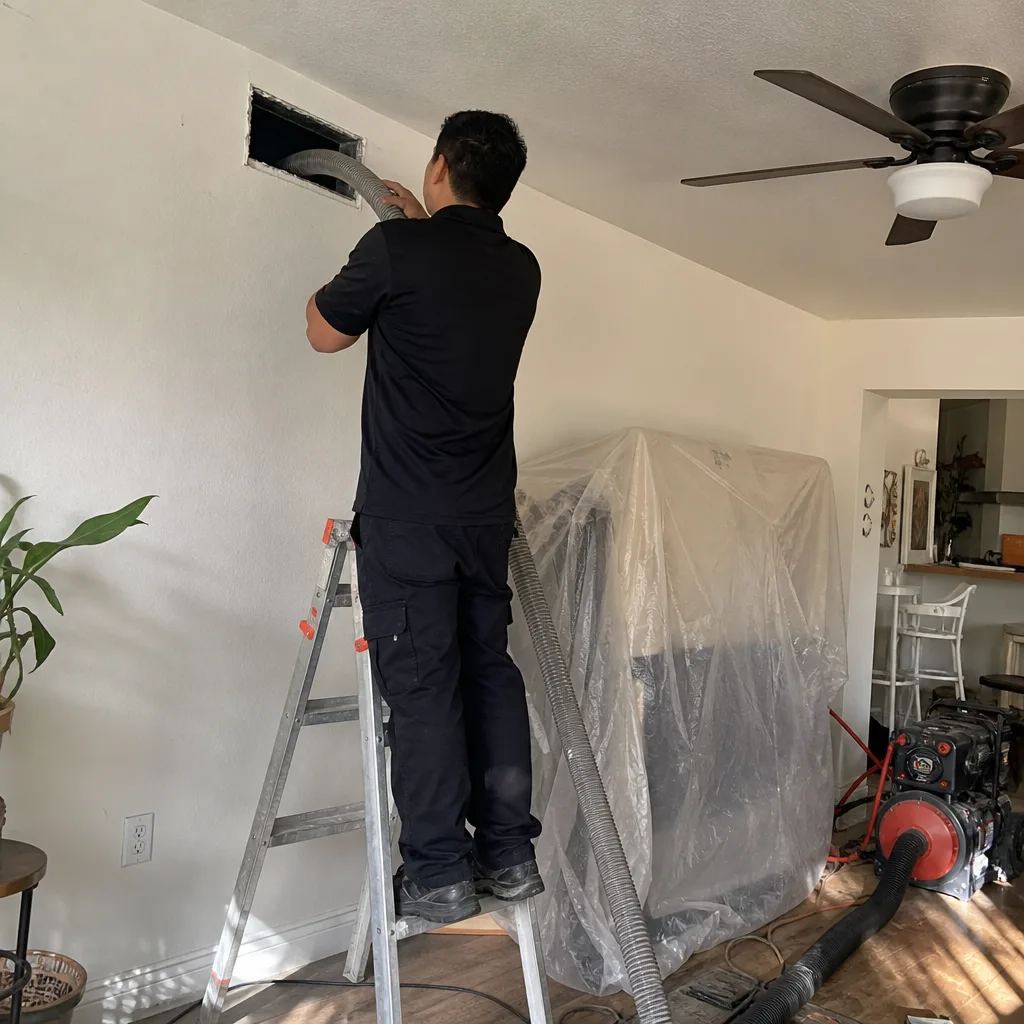
The distinction in California law is straightforward, but most homeowners never hear it explained. Air duct cleaning is classified as maintenance. It involves moving air through the existing system to remove dust and debris using negative-air machines and rotary brush systems like those from Rotobrush or Nikro. No structural change occurs, so no permit is required and no contractor’s license is needed.
Repair and modification are different. If a technician removes a section of duct to patch it, installs a new run of flex duct, adds a register, moves a boot, or changes the plenum configuration, that is construction. Under Business and Professions Code Section 7026.1, HVAC work requires a C-20 Warm-Air Heating, Ventilating and Air-Conditioning Contractor license. That license exists specifically because improper duct modification creates fire, carbon monoxide, and airflow hazards.
What we’ve seen in Santa Clarita, especially in older track homes in Valencia and Canyon Country where duct runs sit in tight attic spaces, is that cleaning crews sometimes offer to “fix that separation we found” or “patch that tear real quick” during Air Duct Cleaning services. The motivation might be helpful, but the legal effect is that an unlicensed party has now performed HVAC construction on your property. If the repair fails, your homeowner’s insurance can deny the claim. If you’re selling, a sharp home inspector will note unpermitted work and the buyer’s lender may require correction before closing.
The safest posture: treat every physical change to the duct system as a separate scope of work requiring a licensed C-20 contractor. Cleaning is one service. Repair is another. The company you hire should be able to tell you which one you’re actually getting before tools touch metal.
What the California Mechanical Code Actually Says About Ducts
The California Mechanical Code (CMC), based on the Uniform Mechanical Code, governs how duct systems must be built, sealed, insulated, and supported. While the state and local code requirements sit in the background for most homeowners, they matter during a cleaning visit because a legitimate contractor must not leave the system in worse condition than the code requires.
Specific provisions you should know:
- Duct sealing: CMC requires duct connections to be sealed with mastic, UL 181-rated tape, or other approved sealants. Duct sealing mastic, a thick paste applied over joints and seams, is the trade standard in Santa Clarita homes where attic temperatures routinely exceed 130 degrees in summer and fail flimsy tapes. Duck tape, the fabric-backed household product, is not an approved duct sealant under code.
- Insulation: Ducts running through unconditioned spaces, which in Santa Clarita means nearly every attic-mounted run, must meet minimum R-value insulation requirements. Damaged or missing insulation on an attic duct is a code issue, not just an energy-efficiency preference. A cleaning crew that tears insulation and doesn’t replace it has left your system below code.
- Airflow standards: The CMC establishes minimum airflow requirements for habitable rooms. A collapsed flex duct or a disconnected boot isn’t just dirty; it’s a violation that reduces airflow and forces your system to work harder. During a cleaning, a technician who notices crushed flex duct should flag it, but the physical repair requires a licensed contractor.
- Support and spacing: Ducts must be supported at specified intervals. In Santa Clarita, we regularly see older homes in Newhall and Saugus where duct straps have failed and runs sag and kink. Again, correction requires licensed work, but knowing the issue exists is the first step.
What does this mean for a cleaning visit? A disciplined company will document what it sees, explain which items are maintenance issues and which are code-relevant conditions, and refer you to a licensed HVAC contractor when the latter applies. The Garrison Code, which governs how our technicians behave on every job, requires exactly that: identify it, explain it, and never modify it without the right license in hand.
How Santa Clarita and Los Angeles County Handle HVAC Permits
The City of Santa Clarita’s Building and Safety Division adopts the California Mechanical Code with local amendments. HVAC work that changes the duct system, replaces a furnace, installs new duct runs, or adds zones is permit-required. Simple maintenance and cleaning is not. The trigger for a permit, put plainly, is whether the system’s design, capacity, or physical configuration is being changed.
Los Angeles County, where parts of Santa Clarita fall under county jurisdiction in unincorporated areas like Castaic and Agua Dulce, operates similarly. If a contractor replaces a section of flex duct in an attic, LA County expects a permit. If a contractor only cleans the existing ducts and replaces a filter, no permit is required. The distinction tracks the maintenance-versus-construction line described above.
What triggers an inspection in practice:
- Duct replacement: Removing and replacing any portion of the duct system.
- Furnace or air handler replacement: Even if the ducts remain untouched.
- Adding a zoning damper: Changes system design and airflow distribution.
- Installing in-duct equipment: UV lamps, ionization devices, and some whole-house humidifiers.
- Relocating registers or adding new runs: Any change to the duct layout.
For a Santa Clarita homeowner, the practical takeaway is this: if a contractor proposes any of the above during a cleaning visit, ask which permit will be pulled and under what license the work will be performed. The answer should be immediate and specific. If it isn’t, don’t allow the work to proceed. For basic Air Duct Cleaning in Santa Clarita, no permit conversation is ever needed, and that’s how it should be.
UV Air Purifiers and Ionizers: The Unlicensed Installation Problem
The fastest-growing gray area in California’s duct cleaning industry is the installation of UV air purifiers and ionization devices. These units are often sold during cleaning visits as upgrades, and the installation frequently happens without a permit and without a licensed HVAC contractor on site. That is a legal problem.
UV lamps and ionizers that mount inside the air handler or ductwork are electrical devices installed in a permanently connected manner. Under California law, installing them requires an electrical contractor (C-10) license or a C-20 HVAC contractor working with appropriate electrical coverage. A duct cleaning company without those credentials cannot legally install them. Yet the practice is widespread, because the sale is high-margin and the legal risk falls entirely on the homeowner.
In Santa Clarita, where many homes run forced-air systems with central returns and attic-mounted air handlers, we’ve seen ionizer installs where wiring was left exposed, UV lamps were installed without protective shielding, and the device was never properly sized for the duct dimensions-all Air Duct Cleaning Warning Signs every Santa Clarita homeowner should know. None of those failures surface immediately. They surface later, as electrical issues or as air handler service calls where a licensed HVAC tech discovers the unpermitted addition.
How to protect yourself before allowing any in-duct equipment installation:
- Ask for the California contractor’s license number of the person who will physically install the device. Verify it at CSLB’s website under “HVAC” or “Electrical” classification.
- Ask whether a permit will be pulled. If the answer is no, the installation should not happen. Some areas permit minor electrical work without a permit, but in-duct high-voltage UV systems generally fall outside that carve-out.
- Request the equipment brand and model before agreeing. Reputable brands, including Abatement Technologies and Guardsman filtration products, publish installation requirements. If the contractor can’t name the model, they’re improvising.
Insurance and Liability When Unpermitted Work Exists
Unpermitted duct work performed during or alongside a cleaning visit carries financial consequences that go well beyond the repair cost. In a real estate transaction, the issue is most visible: standard seller disclosures in California require owners to disclose known unpermitted work, and buyers’ home inspectors increasingly flag duct modifications that don’t match the home’s original permit history. What follows is often a repair demand, a price reduction, or a lender requirement to correct the work before funding.
The insurance angle is less visible but equally serious. Most California homeowner policies exclude coverage for losses caused by work that required a permit but was performed without one. If an unpermitted flex duct repair fails and water damage or fire results, the insurer can deny the claim. The homeowner is then alone on the full cost of correction and any structural damage.
In Santa Clarita’s real estate market, where pre-sale inspections are common and buyers often request HVAC condition reports, unpermitted duct work sits near the top of the list of deal-killers. A $200 “seal the leak” favor during a $400 cleaning can become a $3,000 to $6,000 correction after a lender gets involved. The leverage belongs to the buyer at that point.
The disciplined approach: keep cleaning and modification lives completely separate. Hire a licensed C-20 contractor for any duct repair, insist on permits where required, and keep the paperwork. If you’re planning to sell within five years, the paperwork is what turns a headache into a non-issue.
How to Verify a Contractor’s Credentials Before You Allow Duct Work
Verification is simpler than most people assume, and it takes about ten minutes. The California Contractors State License Board (CSLB) maintains a public database of every licensed contractor in the state. Before any duct modification begins, the person doing the work should be able to hand you a license number that you can verify yourself.
Steps to verify:
- Get the license number. A legitimate contractor will provide it without hesitation. Ask for the number, not just a business name, because similar names are common.
- Check the CSLB website. Search by number and confirm the license is active, not suspended or expired.
- Confirm the classification. The license must say C-20 (HVAC) for duct repair or installation work. A C-20 cannot install electrical devices like UV lamps without appropriate electrical qualifications, so if the job involves wiring, ask whether a C-10 electrical contractor will be involved.
- Ask about permits. For the specific work proposed, ask directly: “Does this require a permit, and will you pull it?” If the contractor says no permit is needed, confirm that against the City of Santa Clarita or LA County building department’s written guidance.
At Hollis Air Duct Santa Clarita, we clean ducts. Our Duct Sealing in Santa Clarita service is performed to code, and when a job requires licensed HVAC repair work beyond our scope, we say so in writing and point you to the right trade. That’s the Garrison Standard: the price is written before work begins, the scope is clear, and nothing gets modified under an unlicensed hand.
What an Inspection Actually Looks For
When a permit is pulled for duct work in Santa Clarita or Los Angeles County, an inspector will visit at a defined point in the project. Knowing what they check helps you understand why the permit process exists and why skipping it is a bad trade.
Typical inspection points for duct work:
- Proper sealing: Mastic or UL 181 tape at every joint and connection. No gaps, no household duct tape.
- Insulation: Correct R-value for the location, undamaged and continuous across the run.
- Support: Straps or saddles at code-specified intervals, with no sagging runs.
- Duct sizing: Correct diameter for the airflow the system is designed to deliver.
- Fire and combustion safety: Clearances around the furnace, proper flue connections, and no duct material too close to hot surfaces or combustible framing.
- Electrical: For any in-duct equipment, proper wiring, grounding, and disconnect means, as the National Electrical Code requires.
None of this is academic. In Santa Clarita, where summer attic temperatures stress every part of the system, correctly sealed and insulated ducts save real money and improve airflow. The inspection is the documentation that the work meets the standard. When you’re selling, that documentation is worth more than the repair itself.
Common Mistakes to Avoid
- Letting a cleaning crew “patch” a duct during a cleaning visit. Whatever goodwill motivates the offer, it is unlicensed HVAC work if the company doesn’t hold a C-20 license. The repair may not fail today, but when it does, you own it.
- Assuming a permit is just paperwork. The permit process exists because improper duct work creates fire, carbon monoxide, and airflow hazards. Skipping it transfers the risk from the contractor to you.
- Allowing UV or ionizer installation without verifying credentials. In-duct electrical devices are not accessories. They are installations. If the installer can’t show you a valid license number, don’t let them near your air handler.
- Not asking what equipment will be used. Professional-grade negative-air machines from manufacturers like Rotobrush and Nikro define legitimate duct cleaning. Hardware-store vacuums don’t. Ask before you book.
- Throwing away paperwork. Permit records, invoice details, and any written scope of work are the evidence you’ll need if you sell the home or file an insurance claim.
- Treating “duct cleaning” and “duct sealing” as interchangeable. They’re not. One is maintenance, one is modification. Know which service you’re buying before you agree.
- Waiting until pre-sale inspection to address unpermitted work. By then, your negotiating leverage is gone. Fix issues on your timeline, not a buyer’s.
When to Call a Professional
The right time to call is before work begins, not after something goes wrong. If you suspect unpermitted duct work was performed on your home, a licensed HVAC contractor can assess the system and tell you what needs correction. The same applies if you’re preparing to sell and want to get ahead of inspection issues, or if a cleaning company tells you your ducts need “sealing.” Hollis Air Duct Santa Clarita home offers free estimates in Santa Clarita, and our technicians will tell you plainly what’s cleaning and what’s repair. Call (661) 523-0295. If you’re dealing with dryer vents specifically, our Dryer Vent Cleaning in Santa Clarita service follows the same disciplined standard.
Frequently Asked Questions
No. Air duct cleaning is classified as maintenance, not construction, and no permit is required anywhere in California, including Santa Clarita. The permit question only arises when duct work is modified, replaced, or added to, which is a separate scope of work requiring a licensed contractor.
For an exact quote on duct cleaning in Santa Clarita, call (661) 523-0295. Estimates are free and the price is written before any work starts.
Only if the company holds a valid C-20 Warm-Air Heating, Ventilating and Air-Conditioning Contractor license from the California Contractors State License Board. Most duct cleaning companies do not hold that license, which means they cannot legally open, patch, replace, or modify ductwork. Verify the license number before allowing any repair.
Duct cleaning removes dust and debris using negative-air suction and rotary brush agitation without changing the system’s physical structure. Duct sealing involves applying mastic sealant to joints and seams, a code-governed repair that affects system performance and requires licensed HVAC work when it crosses into modification territory.
Yes, in most cases. UV lamps and ionization devices are permanently installed electrical equipment, and their installation generally requires an electrical permit and a licensed contractor with appropriate electrical qualifications. A duct cleaning company without those credentials cannot legally install them.
Visit the California Contractors State License Board website and search by the contractor’s license number. Confirm the license is active and the classification matches the work being performed. For duct repair or installation, the classification must be C-20 HVAC.
Unpermitted duct work flagged during a pre-sale inspection typically becomes a negotiation point, and lenders often require correction before funding. The repair demand can add thousands to the transaction at the moment you have the least leverage. Getting ahead of it before listing solves the problem on your timeline.
Hollis Air Duct Santa Clarita offers free estimates in Santa Clarita. Call (661) 523-0295 if you need guidance or a written price for any duct work.
The Bottom Line
Air duct cleaning in California requires no permit because it’s maintenance, not construction. But the legal protection ends the moment the work crosses that line. Duct repair, flex duct replacement, and in-duct equipment installation all require a licensed C-20 contractor, often with permits and inspections. In Santa Clarita, where attic duct systems age under extreme heat and home sales regularly hinge on inspection results, the distinction isn’t academic. Keep cleaning and modification separate, verify credentials before any repair, and keep the paperwork. For more guides & resources, visit our blog. The alternative is absorbing someone else’s risk.
Written by Roy Castellanos, Owner at Hollis Air Duct Santa Clarita, serving Santa Clarita since 2004.
See the difference
 Before
 After
After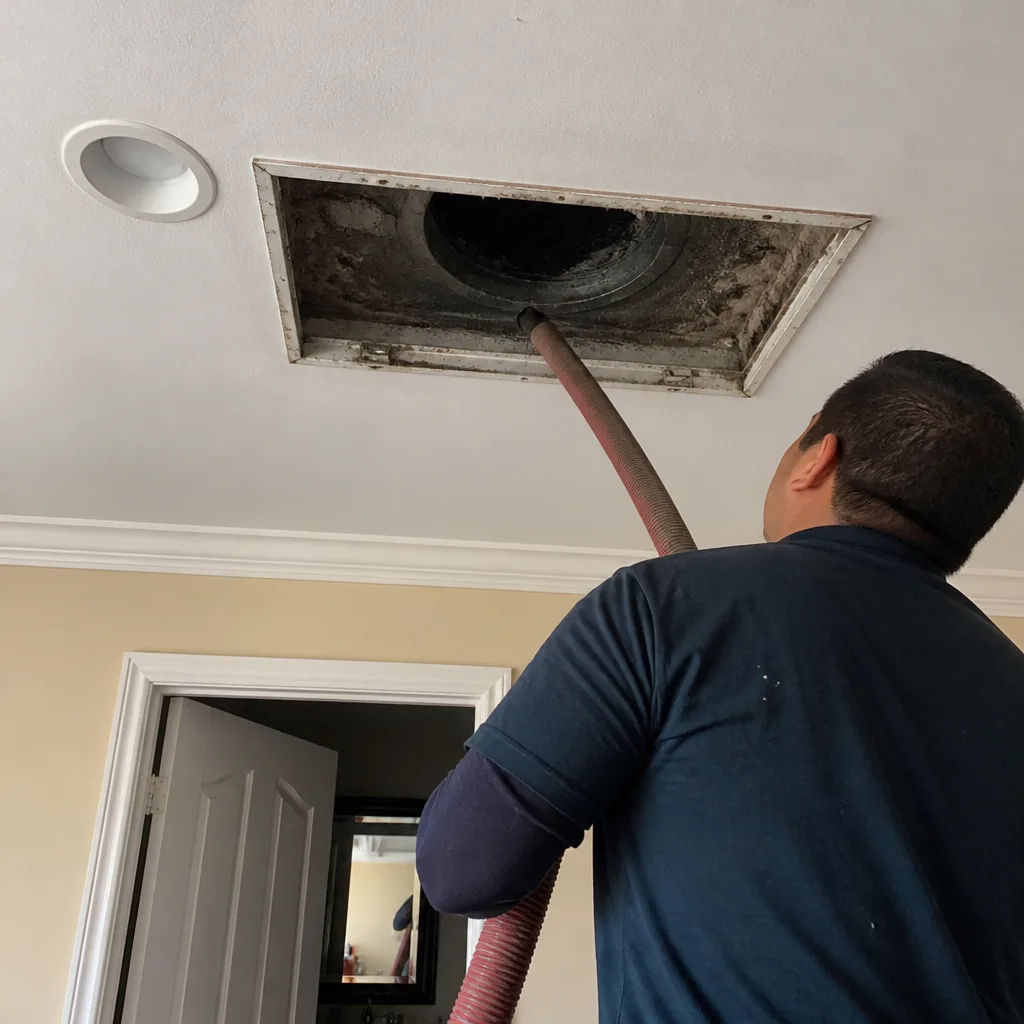 Before
 After
After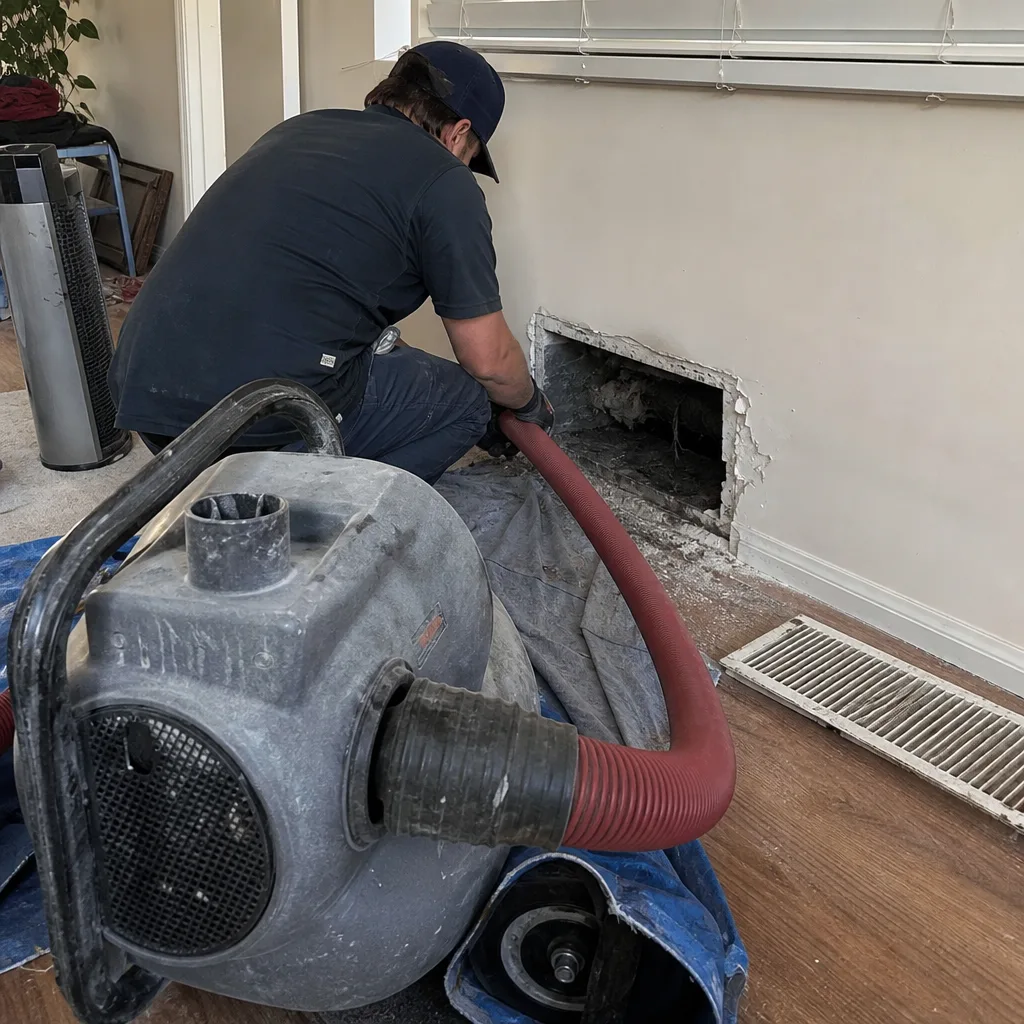 Before
 After
After