
Last updated October 15, 2026
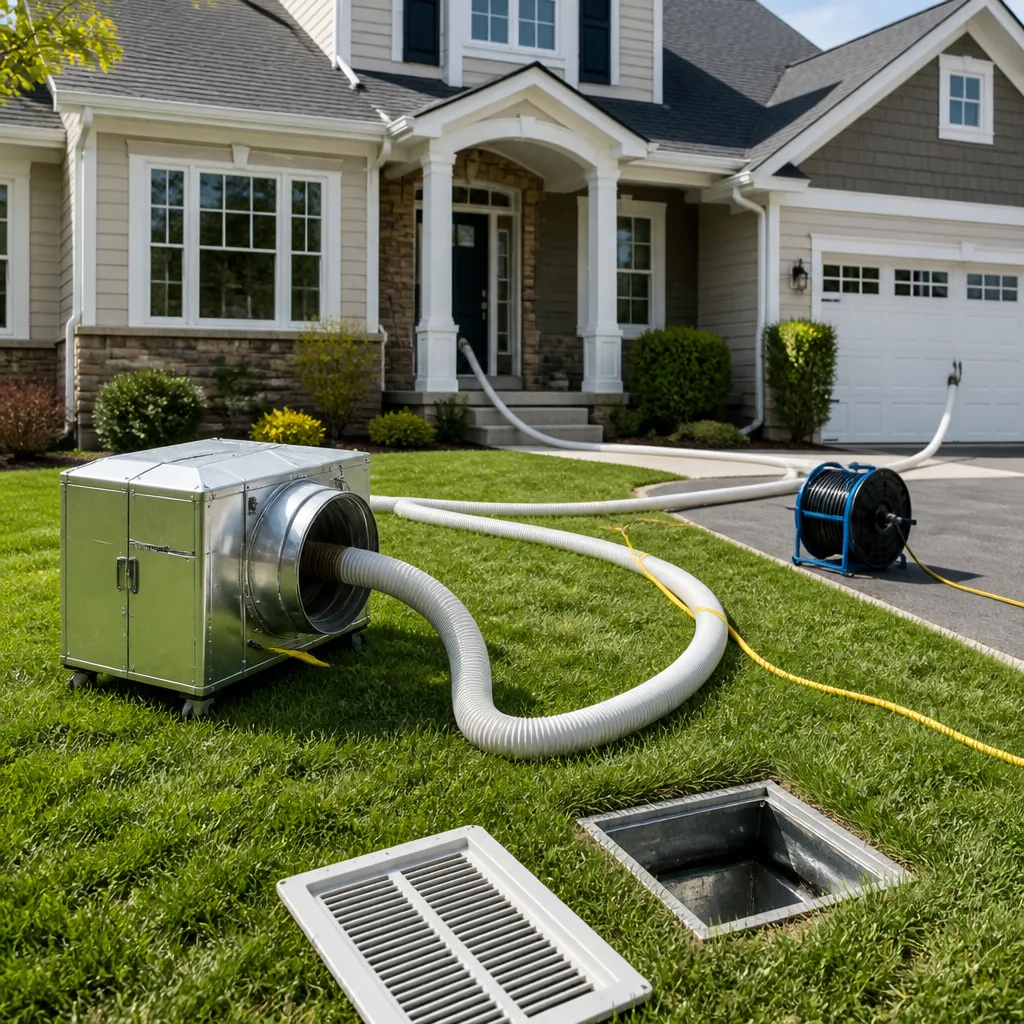 Whole-home duct cleaning
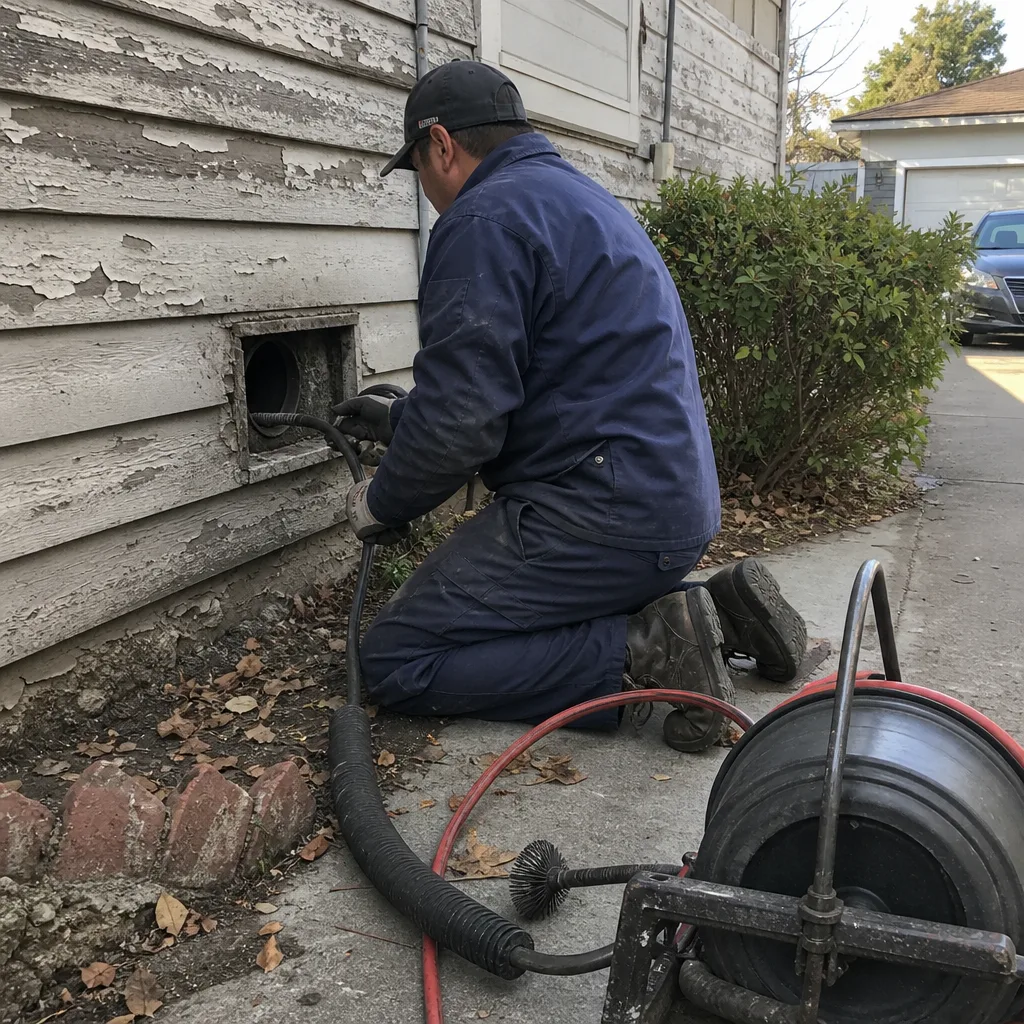
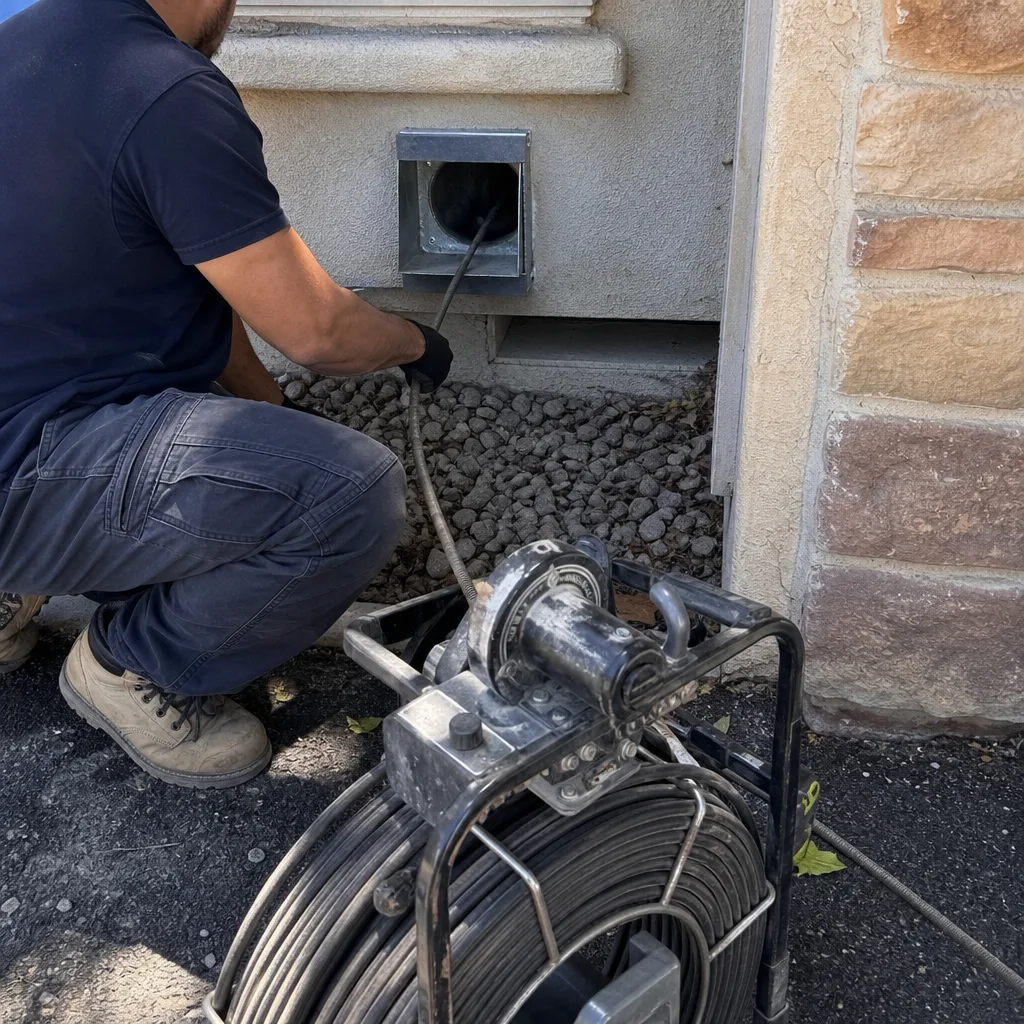
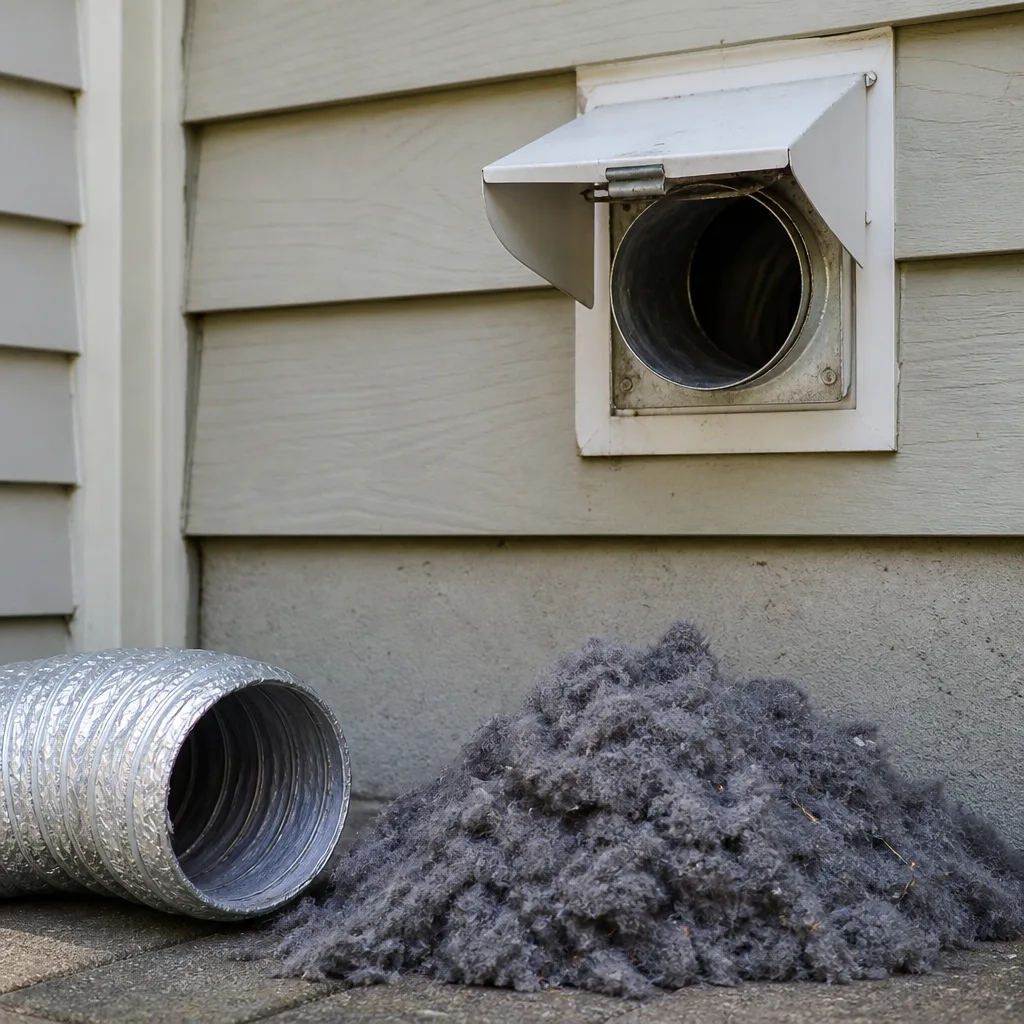 Dryer vent cleaning
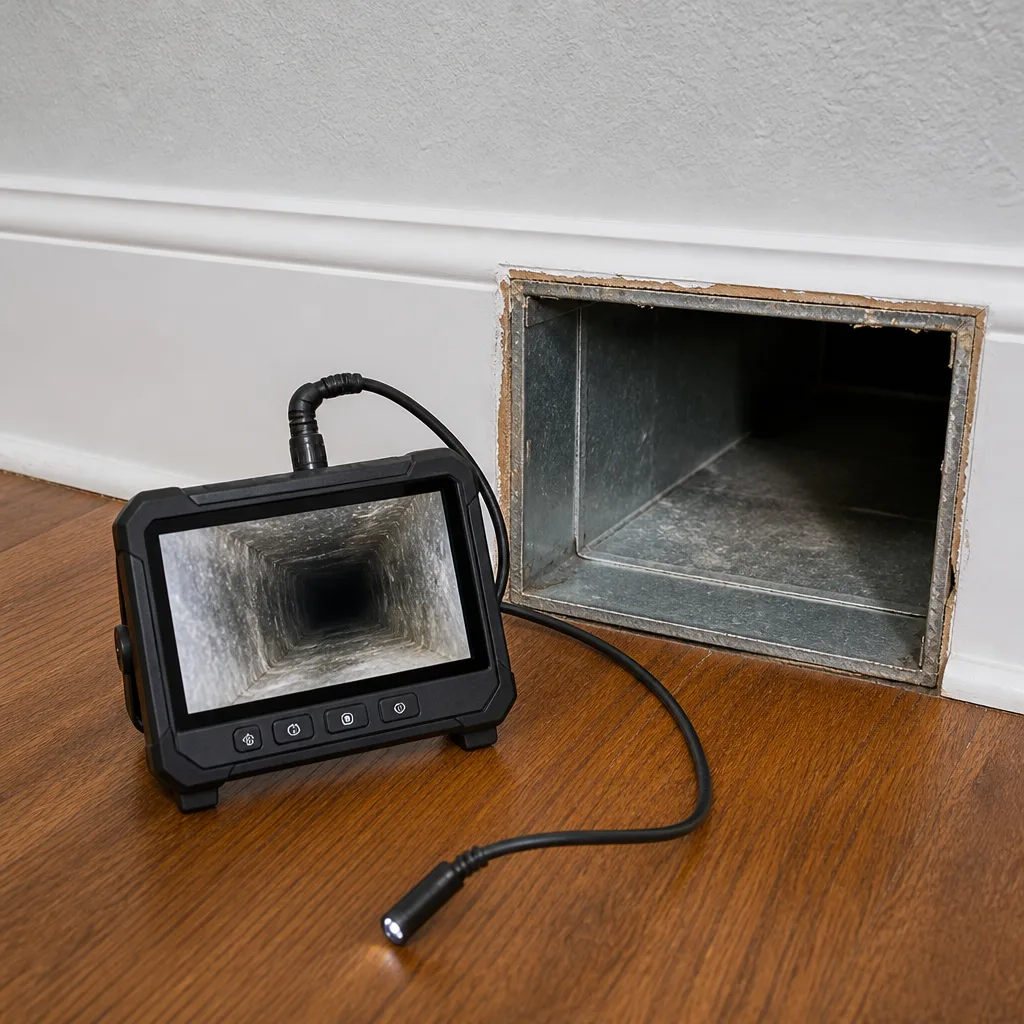 Camera inspection
 Sanitizing & deodorizing
Whole-system duct and dryer vent check with before-and-after photos - you see exactly what came out of your vents
That "$99 whole-house special" is a bait ad - the real number appears once they are in your hallway, or the "clean" is a shop-vac at the register. We photograph the inside of your ducts before and after instead.
DIY vs Professional Air Duct Cleaning: The Santa Clarita Homeowner’s Decision Guide
A standard shop vac pushed into a supply duct doesn’t create negative pressure. It creates positive pressure. That means the dust, pet dander, and construction debris you’re trying to remove is more likely being shoved deeper into the duct run or blown back into your living room. Most DIY duct cleaning attempts across Santa Clarita accomplish the exact opposite of what the homeowner intended. This guide draws a clear line between what a homeowner can competently handle and what requires equipment most people have never seen outside a commercial job site.
Styles & brands we work with
Quick Answer
Homeowners can legitimately handle grille removal and washing, filter replacement, and accessible flex duct inspection. But actual duct interior cleaning requires negative-pressure HEPA-filtered extraction equipment that isn’t sold at hardware stores, which means most DIY attempts redistribute debris rather than remove it. If your system genuinely needs interior cleaning, hiring a professional with the right tools-like our Air Duct Cleaning services-is the only path that actually removes the material from your home.
Table of Contents
- Where DIY Legitimately Works
- What Negative-Pressure Extraction Actually Does
- Why a Shop Vac Cannot Clean Ducts
- The Risk Profile of Aggressive DIY Attempts
- How to Know If Your System Actually Needs Cleaning
- What a Professional Cleaning Should Look Like
- Common Mistakes to Avoid
- When to Call a Professional
- Frequently Asked Questions
- The Bottom Line
Where DIY Legitimately Works
Before anyone recommends a full system cleaning in Santa Clarita, the honest question is what you can already do yourself. The answer is more than most homeowners realize, and it costs almost nothing.
The metal or plastic grilles that cover your supply registers and return intakes are designed to be removable. In most Santa Clarita homes built within the last thirty years, they’re held in place by two screws or simple friction. Once removed, wash them in warm soapy water, let them dry, and reinstall. That’s ten minutes per grille and it removes the visible dust film that accumulates on every surface in the Santa Clarita Valley, where the Santa Ana winds push fine particulates into homes for weeks at a time each fall.
The second legitimate DIY task is filter replacement, but it has to be done correctly. A filter that’s too thin or installed with gaps around the frame lets unfiltered air bypass it entirely. When you install a new filter, check that it fits flush in the filter slot with no visible gaps. A 1-inch filter with a cardboard frame that flexes under pressure is not doing its job. For homes in neighborhoods like Valencia, Saugus, and Canyon Country, the standard is a filter that sits square and snug, replaced every 60 to 90 days depending on pets and dust load.
The third task is visual inspection. If you can reach a section of flex duct in your attic and it’s accessible without compressing insulation or walking on joists unsafely, you can look for obvious problems: disconnected sections, crushed runs, kinked flex, or visible holes. You’re not fixing these yourself in most cases, but identifying them tells you whether a professional visit is warranted.
We’ve said this to homeowners across Santa Clarita for twenty years: if what you’re seeing on the grille is dust you can wipe with a finger, that’s surface accumulation. Clean the grille. That does not mean the duct interior needs cleaning.
What Negative-Pressure Extraction Actually Does
The trade term for proper duct cleaning is negative-air extraction, sometimes called source removal. Here’s what it means in plain terms and why it matters for your home.
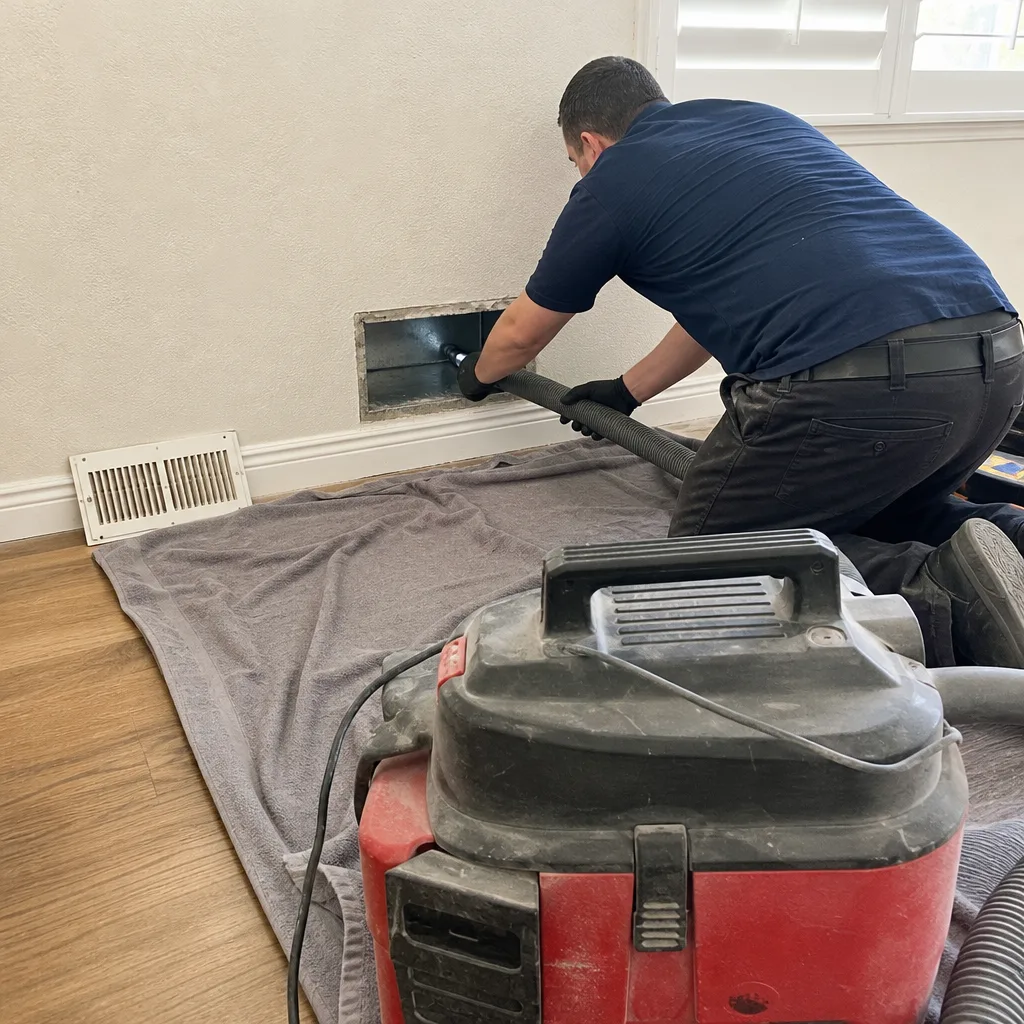
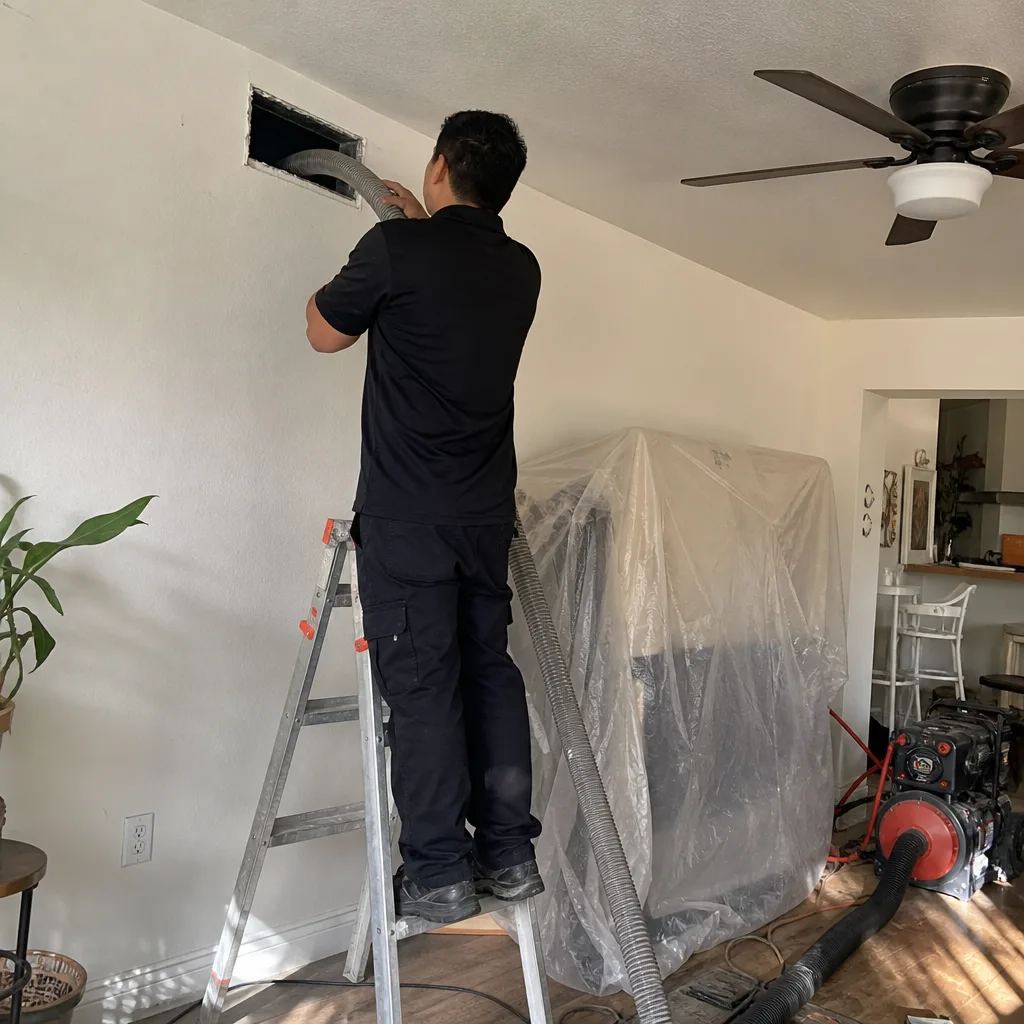
In a proper setup, a high-powered vacuum unit creates suction strong enough to pull air through the entire duct system from a single connection point. While that suction is running, rotating brushes or agitation tools loosen debris stuck to the duct walls. The loosened material is immediately pulled by the airflow toward the vacuum unit and out of the system. The key is that nothing is allowed to settle or escape back into the living space. HEPA filtration on the exhaust side captures particles down to 0.3 microns before the air is returned to the room or vented outside.
This is what commercial-grade equipment like Rotobrush rotary brush systems and Nikro negative-air machines are built to do. A Nikro HEPA-filtered negative air machine typically moves thousands of cubic feet per minute, creating enough suction to overpower gravity and drag debris along horizontal duct runs. The brush system mechanically agitates the duct walls because dust that has adhered over years won’t simply lift off from airflow alone. It needs mechanical disruption combined with immediate extraction.
For a Santa Clarita home, this matters because of what accumulates in our ducts specifically. The area’s dry climate means soils are fine and airborne. Combined with the region’s wildfire seasons, which deposit ash particulate into homes across Valencia, Stevenson Ranch, and Newhall, duct interiors accumulate a finer, more adherent dust than humid-climate duct systems do. That dust bonds to the film left by air-conditioning condensation cycles during the long cooling season. Mechanical agitation is often the only thing that breaks it loose, and without immediate negative-air extraction, you haven’t removed anything. You’ve just moved it.
For full context on what a complete service includes, see our breakdown of Air Duct Cleaning in Santa Clarita.
Why a Shop Vac Cannot Clean Ducts
The physics problem is straightforward, but almost no YouTube video explains it. A standard wet/dry shop vac in the $80 to $200 range operates on positive pressure at the hose end where you connect accessories. It’s designed to pull debris toward the canister from relatively close range, with maximum suction delivered within a foot or two of the hose opening. That suction drops dramatically as distance increases, which is why a shop vac hose starts to feel weak beyond six or eight feet. It also has no meaningful exhaust filtration. Particles too small for the internal filter get blown out the back of the unit and back into the room.
Now consider the geometry of a typical Santa Clarita home’s duct system. The average supply duct run here is 20 to 30 feet long, with turns, elbows, and register boots that the shop vac hose cannot navigate. You can push a flexible hose maybe four or five feet into a duct before it binds or kinks. The rest of the duct run is untouched.
Even if you can reach a section, the positive pressure situation becomes a problem. The shop vac is exhausting whatever it doesn’t capture. If the vacuum has any internal leak or a filter that isn’t seated perfectly, the exhaust carries fine particulates. In a confined attic or crawlspace, that exhaust recirculates. And when you push the hose down a supply duct from the register opening, the airflow you’re creating runs counter to how the system was designed to move air. Debris you loosen gets pushed further down the run, where it either settles or eventually gets blown into your home the next time the air handler kicks on.
This is not a technique problem. It’s an equipment threshold problem. No amount of patience, extension hoses, or adapter kits changes the fundamental limitation: consumer vacuums cannot generate sustained negative pressure through a sealed duct system, and they cannot filter exhaust at the level required to keep loosened dust from re-entering the home.
The harder truth is that duct cleaning that doesn’t create negative pressure can make things worse. You loosen material that was settled and stable, then fail to extract it. That material is now mobile. It enters the airstream. Your next several HVAC cycles push it into the rooms where your family sleeps and eats. The duct system’s job is containment of whatever is inside it. Disturbing containment without extraction is the opposite of cleaning.
The Risk Profile of Aggressive DIY Attempts
The conversation changes when a homeowner gets ambitious. Once someone with a shop vac and a wire brush starts compressing themselves into an attic on a Saturday morning in Valencia, the probability of damaging the system goes up sharply.
Here’s what we have seen after DIY attempts come to us for repair. Flex duct, which is used extensively in Santa Clarita residential construction from the 1980s onward, is a thin aluminum coil covered by fiberglass insulation and a plastic vapor barrier. It punctures easily. A brush that catches on an internal seam can tear the inner liner without the homeowner ever seeing the tear, because it happens inside the insulation wrap. Once the inner liner is compromised, conditioned air leaks into unconditioned attic space. You lose efficiency. You also create a path for attic dust to enter the airstream. The homeowner’s cleaning project has created an air quality problem that didn’t exist before.
Rigid metal ducts have a different vulnerability: the interior liner. Ducts in Santa Clarita homes built before roughly 1990 may be wrapped internally with fiberglass duct liner for thermal and acoustic insulation. Over decades, that liner degrades. Aggressive brushing, especially with wire bristles, dislodges liner fragments and fibers. Those fibers then enter your home’s breathing air. You cannot see this happening, and you cannot undo it without professional repair or replacement.
There’s also the matter of working in the attic itself. Santa Clarita attics get brutally hot in summer. A Saugus attic in August can reach 140°F or higher. Working in that environment without proper ventilation and hydration is genuinely dangerous. And the framing in many attics is not designed to bear concentrated weight. One misstep through a ceiling joist becomes a drywall repair that costs far more than a professional duct cleaning would have.
Finally, there’s the IAQ irony we touched on. Disturbing settled debris without full extraction takes whatever was resting in one place and makes it airborne throughout the house. We have received calls from homeowners in Castaic and Canyon Country who spent a weekend vacuuming their ducts only to find dust settling on every surface by Monday. The ducts were not dirtier. The material was just no longer contained.
If none of this applies to you and you’re simply doing grille maintenance and filter changes, carry on. That work is legitimate and useful. The line is crossed when you start trying to clean inside the duct run itself with equipment that cannot extract what it loosens.
How to Know If Your System Actually Needs Cleaning
Not every Santa Clarita home needs its ducts cleaned. A legitimate contractor should tell you that. For Seasonal Air Duct Cleaning Care for Santa Clarita: Year-Round Homeowner’s Guide, here’s how to evaluate your own situation before anyone tries to sell you a service.
Start with the visible evidence. Remove a few supply register grilles and look inside with a flashlight. If you see a light film of dust that matches the general dust level of the home, that’s normal and not a cleaning indicator. If you see visible debris, mold growth, vermin activity, or a thick matted accumulation that looks like felt, that’s warranting closer attention.
Consider the history of the home. If you’re in a newer development in Valencia or Stevenson Ranch and the home has been continuously occupied with regular filter changes, you may never need interior duct cleaning during the first decade of the home’s life. If you’re in an older section of Newhall or Saugus and the home has seen renovations, multiple pets, a period of vacancy, or a former smoker in residence, the accumulation profile is different.
Renovation is the most common legitimate reason we recommend cleaning in Santa Clarita. A kitchen remodel, a room addition, or any project that involved drywall work generates fine gypsum dust that the HVAC system pulls into the return and distributes through the duct runs. That dust settles, and once construction stops, it remains. If you’ve renovated recently, especially if the system ran during construction, interior cleaning is likely warranted.
The second common trigger is water. Santa Clarita’s climate is dry, but evaporator coils still condense moisture during cooling season. If any part of the duct system has been wet, whether from a condensation problem, a roof leak, or a plumbing failure, the conditions for mold become possible. Duct cleaning cannot remediate mold. What it can do is remove the organic material and settled dust that mold requires to establish. That’s a distinction worth understanding.
The third trigger is vermin. Rats and mice are common in the hillside and canyon neighborhoods around Santa Clarita. If you’ve had rodents in the attic, they may have entered the duct system. Evidence includes droppings, nesting material, and obvious chew damage on flex duct. In this situation, cleaning is clearly warranted along with sealing entry points. Our page on Duct Sealing in Santa Clarita explains how entry points get closed after cleaning.
Here is a simple evaluation list. If you answer yes to any of these, professional assessment is reasonable.
- Visible debris, matted dust, or mold growth inside accessible duct sections.
- Renovation or construction within the last two years where the HVAC system ran during work.
- Water intrusion into the duct system from any source.
- Evidence of rodents or insects in attic spaces or inside ducts.
- A musty or stale odor that gets stronger when the system runs.
- Unexplained respiratory irritation that improves when you’re away from home.
- Visible dust buildup on register grilles that returns within days of cleaning.
What a Professional Cleaning Should Look Like
If you’ve decided to hire, check How to Hire a Air Duct Cleaning Contractor in Santa Clarita: A Step-by-Step Guide so you know what you’re paying for and can verify the work actually happened. A legitimate professional air duct cleaning in Santa Clarita follows a specific sequence, and you should be able to recognize it.
The first step is a visual inspection. A proper contractor looks at the system before quoting. That means removing a few grilles, looking at the return, checking the filter, and identifying the duct type before they ever give you a number. If someone quotes a price over the phone without asking a single question about your system, that’s a red flag.
The second step is the written price. You should have a dollar figure in writing before any work starts, and it should not change. In our company, that’s the standard. The price is the price.
The third step is the setup. The technician should seal off each register and return opening during the cleaning process, creating a closed-circuit airflow system. The vacuum unit connects to the system, usually at the main return or the air handler plenum. When the system seals, the air movement becomes directional and controlled. That’s negative-pressure extraction in action.
The fourth step is agitation. Brushes or air-driven tools move through each duct run while suction remains active. You may hear the brushes working through the walls. The technician should be doing more than vacuuming from the register openings. Actual source removal requires accessing the duct runs, not just the visible ends.
The fifth step is the post-cleaning check. A legitimate company photographs the interior of the ducts after cleaning. With modern equipment, this is easy and quick. If a company cannot show you before-and-after images of your own system, ask why not. We shoot photos on every job here at Hollis. No photos, no proof.
Our equipment roster matters here because it’s the threshold for doing the job at all. We run Rotobrush rotary brush systems paired with Nikro negative-air machines. Filtration on the exhaust side uses products from Honeywell and Guardsman. That’s commercial equipment built for source removal. If a contractor shows up with a truck-mounted vacuum and a hand brush, you are not getting the same service.
The sixth step is the wrap-up. The site should be clean when the crew leaves. Grilles go back on straight. The system should run normally. And you should have documentation of what was done, including the written price and the guarantee that backs the work.
For a deeper look at what full-system cleaning entails, visit our main Hollis Air Duct Santa Clarita home page where we walk through the service in detail.
Common Mistakes to Avoid
- Believing a shop vac with a long hose can clean ducts. It cannot. The suction decays over distance, and the exhaust path is uncontrolled. You’ll spend a weekend moving dust around your attic without removing it from the home.
- Quoting a per-vent price without seeing the system. Legitimate whole-system cleaning in the Santa Clarita market typically ranges from $450 to $800 for an average 2,000 – 2,500 sq ft home. Anyone quoting $49 total is planning to upsell you at the door. Get one flat price per system, in writing, before work starts.
- Using a brush aggressively inside flex duct. The inner liner tears easily, and you won’t see the tear because the insulation wrap hides it. The first sign of damage is usually a new smell or reduced airflow months later.
- Cleaning ducts that don’t need it. If your filter has been changed regularly, there’s no renovation history, and the accessible sections look clean, you may not need service. A legitimate contractor will tell you this rather than selling you an unnecessary job.
- Disturbing settled debris without extraction capacity. Once you loosen material inside a duct run, it enters the airstream. If you can’t pull it out, you’ve made things worse. The material wasn’t airborne before you touched it.
- Ignoring the dryer vent while focusing on the HVAC ducts. Santa Clarita homes have long dryer vent runs in many floor plans, and lint accumulation causes thousands of house fires nationally each year. If you’re pulling grilles and checking filters, at least look at the dryer vent exterior termination for visible lint. Our Dryer Vent Cleaning in Santa Clarita service addresses that separately.
- Working in a hot attic without preparation. Santa Clarita attics in summer measure 130°F and above. Moving around in that heat without water, ventilation, and a plan to get out if you feel lightheaded is how homeowners end up injured. Duct work in the attic is not worth an ambulance ride.
When to Call a Professional
Call when you’ve confirmed the accumulation is interior rather than surface-level, or explore more guides & resources to help decide. Call when there’s been renovation, water intrusion, vermin activity, or you can see matted debris inside accessible duct sections. Call when someone in the home has respiratory symptoms that track with HVAC use and you’ve already ruled out filter and grille issues. And call when you simply want proof of what’s in your ducts, because a professional camera inspection on a system that turns out to be clean is still useful information, and the inspection should be part of the evaluation, not an add-on charge. Hollis Air Duct Santa Clarita offers free estimates in Santa Clarita and the surrounding communities. Call (661) 523-0295 and we’ll tell you honestly whether your system needs cleaning at all.
Frequently Asked Questions
Expect to pay between $450 and $800 for whole-system cleaning in a typical 2,000 to 2,500 square foot Santa Clarita home, depending on the number of returns, the duct configuration, and the level of contamination. The price should be quoted per system, not per vent, and it should be written down before any work begins. Call (661) 523-0295 for an exact quote on your home. Estimates are free.
No. A shop vac creates positive pressure at the hose end and cannot generate the sustained negative pressure required for source removal through a sealed duct system. You’ll loosen debris without extracting it, which typically makes airborne dust worse, not better. Stick to grille washing and filter replacement, and leave duct interior work to professional extraction equipment.
Request before-and-after photos of your duct interiors. Any legitimate company using professional equipment can photograph the inside of your ducts before and after cleaning. If they cannot show you photos of your own system, you cannot verify the work. We take photos on every job at Hollis because proof is part of the deliverable.
There is no fixed schedule that applies to every home. The National Air Duct Cleaners Association recommends evaluation every 3 to 5 years, but many Santa Clarita homes with regular filter changes and no renovation history go considerably longer. Clean when evidence indicates it’s needed, not on a calendar.
If your ducts are genuinely contaminated with construction dust, pet dander, vermin evidence, or visible debris, professional cleaning removes material that would otherwise cycle through your home’s air. If your ducts are clean, it’s not worth paying for an unnecessary service. A competent evaluation tells you which situation you’re in before money changes hands.
If your ducts contain accumulated dust, pollen, and pet dander from the Santa Clarita Valley’s wind-driven particulate load, cleaning removes a reservoir that re-enters your air supply every cycle. For some households this makes a noticeable difference. For others, the bigger factor is the filter quality and fit. Both matter, but neither replaces the other.
The Bottom Line
The DIY versus professional question for air duct cleaning has a clear, equipment-based answer. You can maintain your grilles, replace your filters correctly, and inspect accessible duct sections on your own. You cannot replicate negative-pressure HEPA extraction with consumer equipment, and attempts to do so often create more problems than they solve. The decision to hire should be driven by evidence: visible debris, renovation history, water intrusion, vermin, or persistent odor. When that evidence exists, hire a company that writes the price down before work starts, uses commercial-grade extraction equipment, and shows you photos of the work. That’s the standard. Anything less is a gamble with your home’s air.
Written by Roy Castellanos, Owner at Hollis Air Duct Santa Clarita, serving Santa Clarita since 2004.
See the difference
 Before
 After
After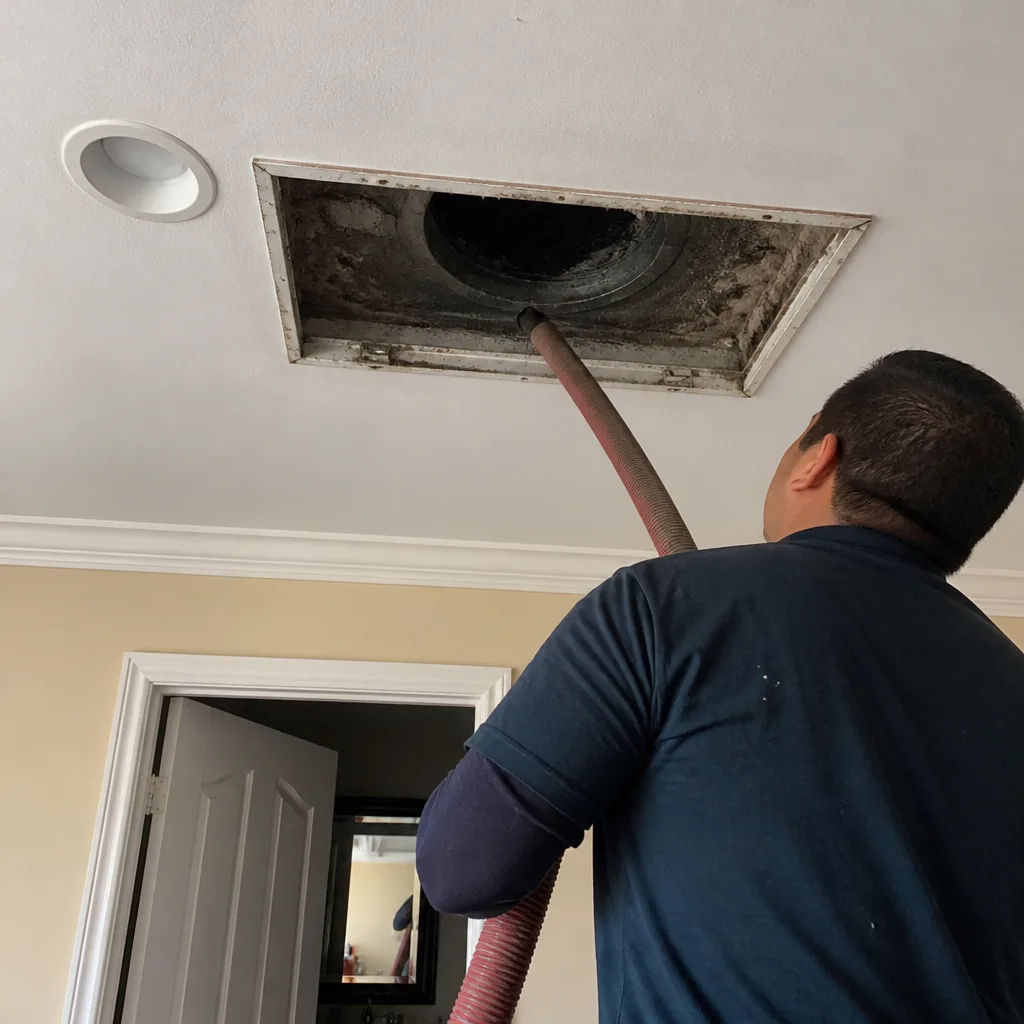 Before
 After
After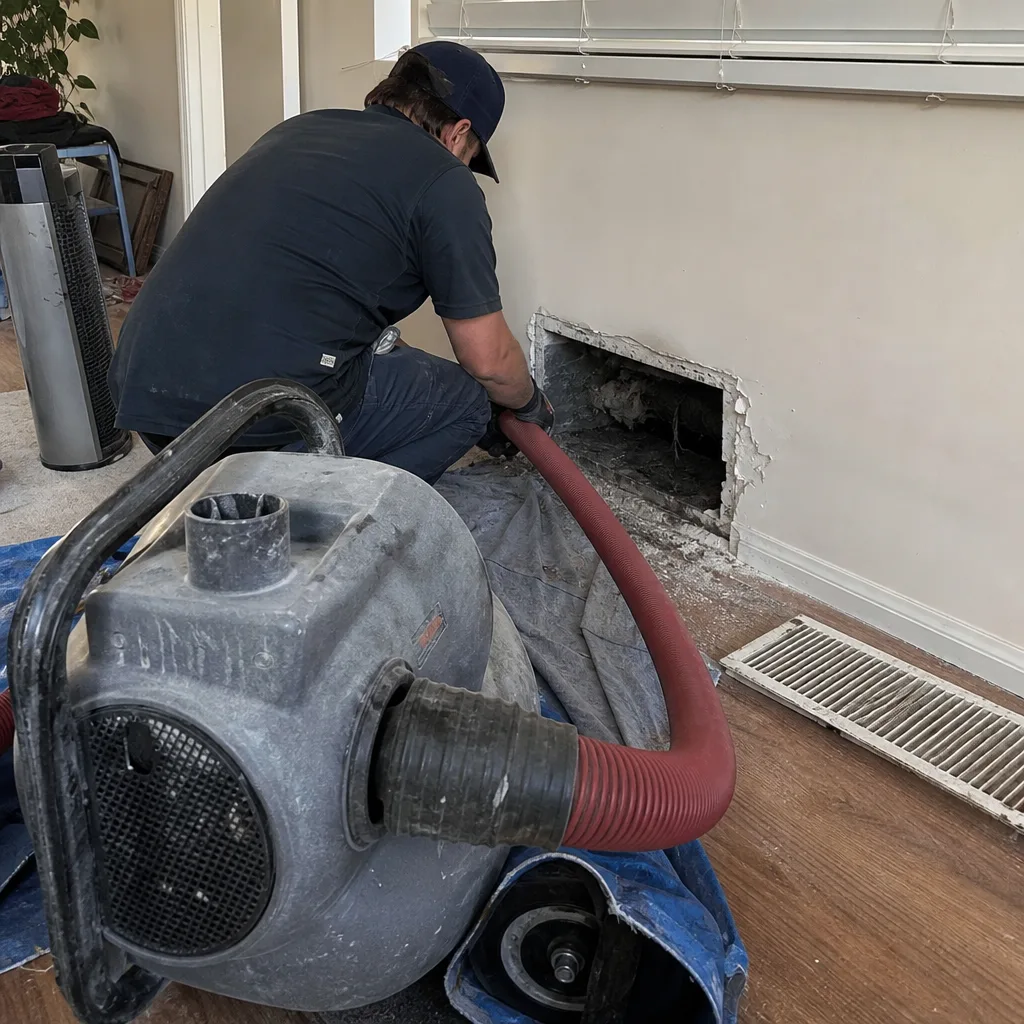 Before
 After
After