
Last updated October 15, 2026
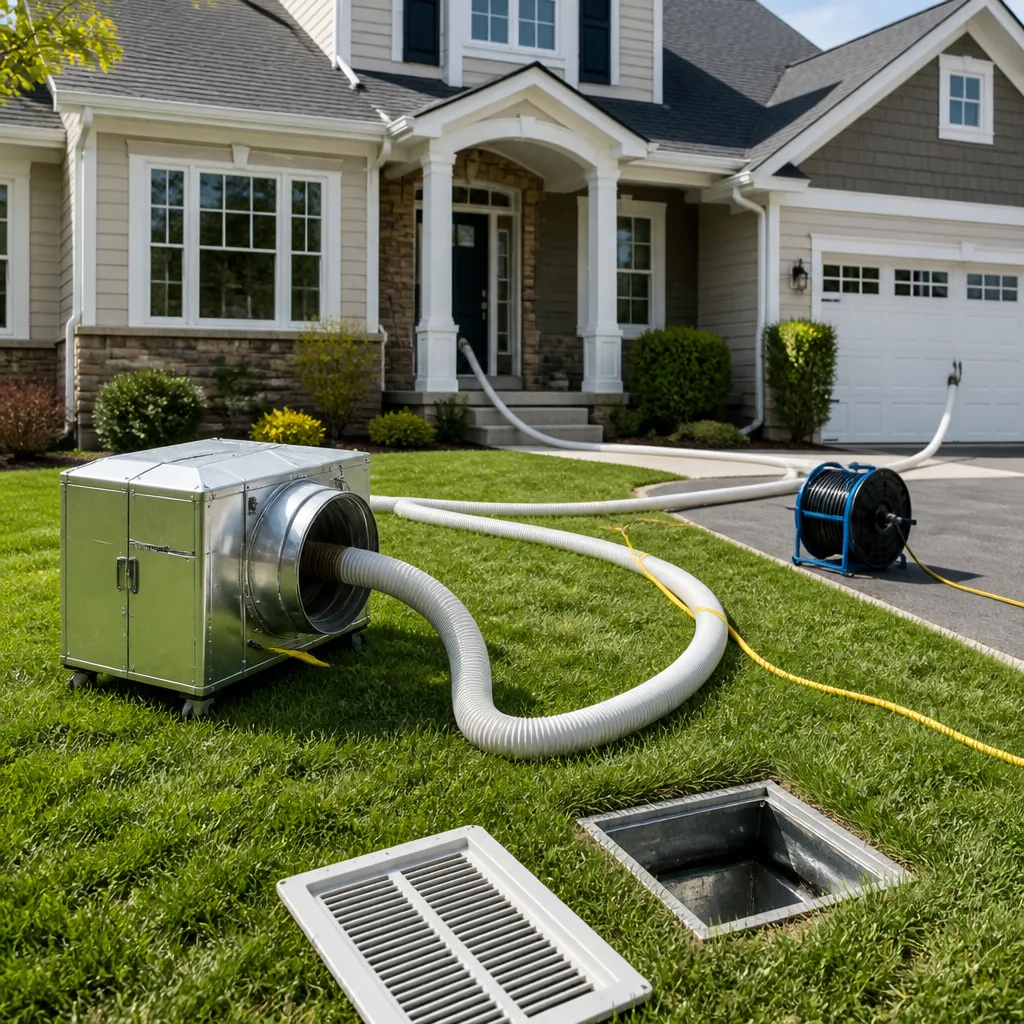 Whole-home duct cleaning
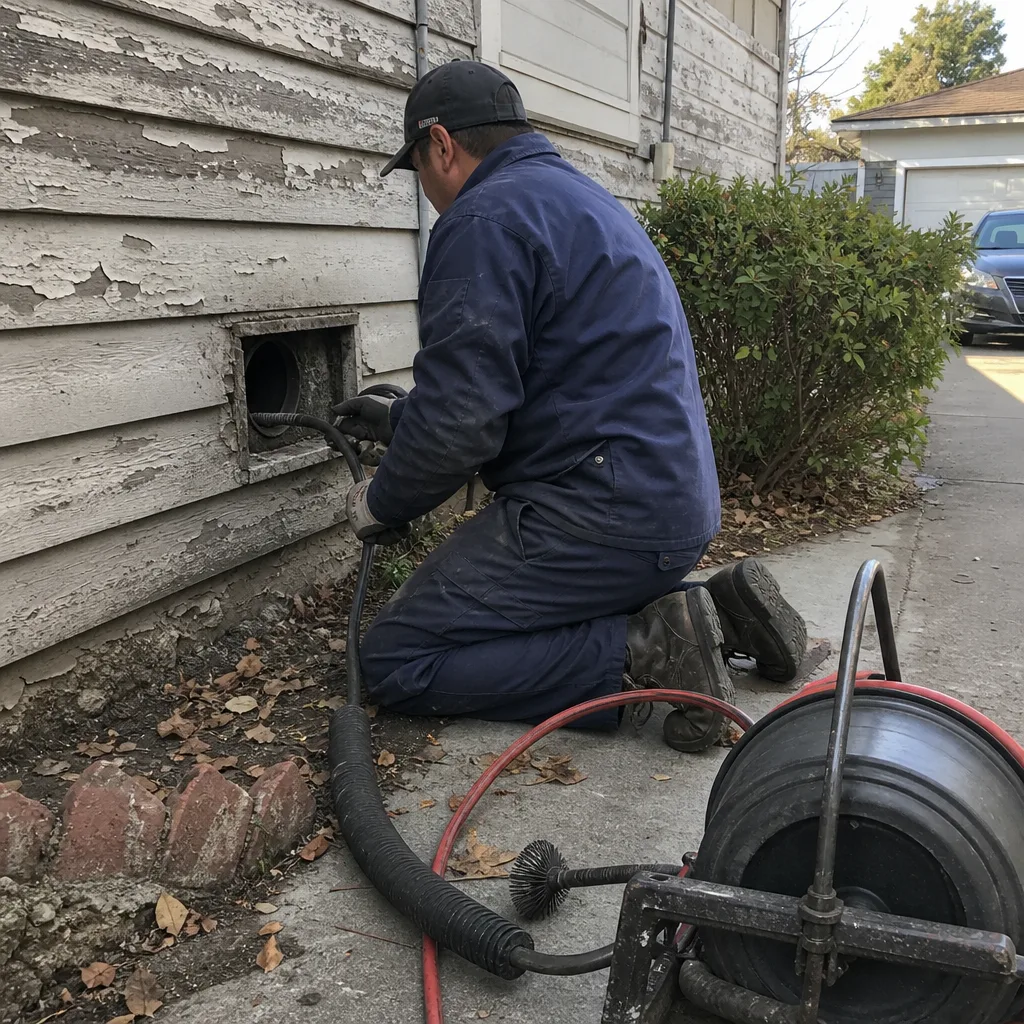
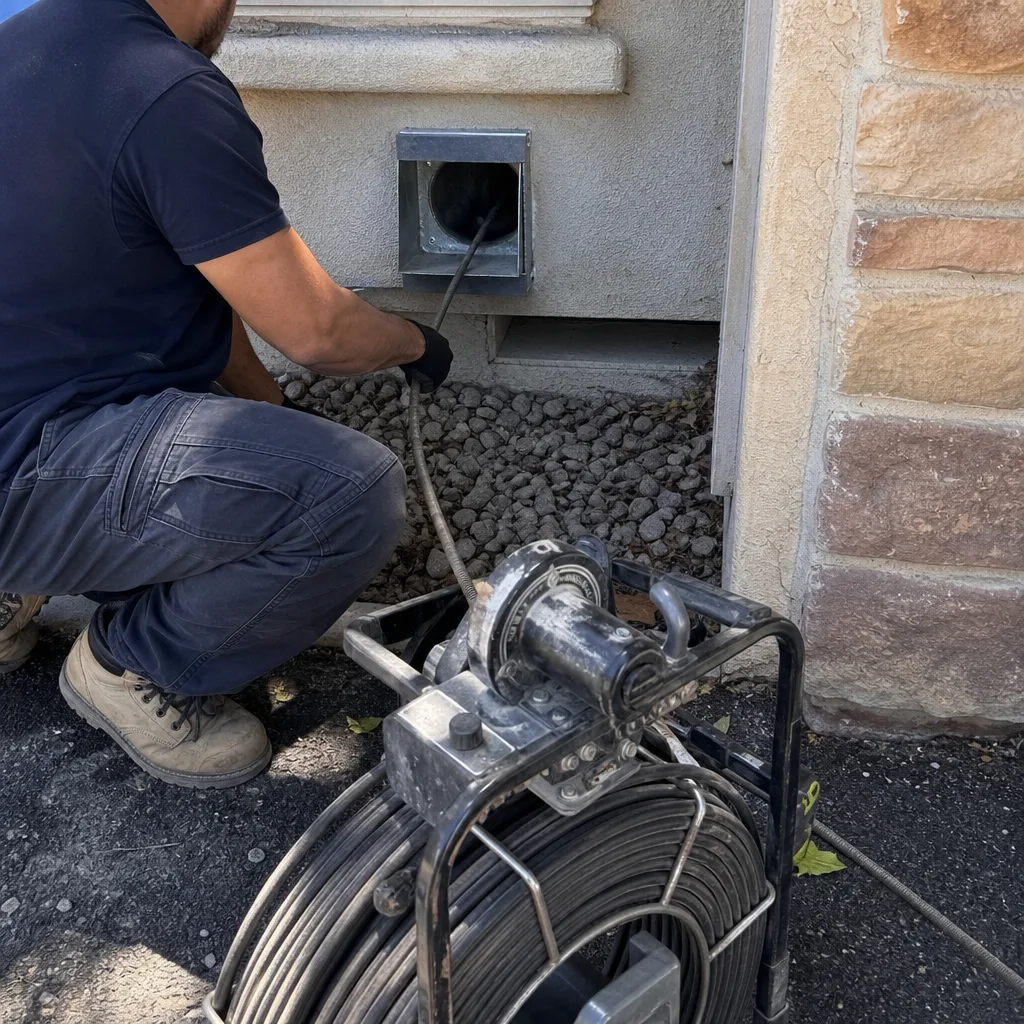
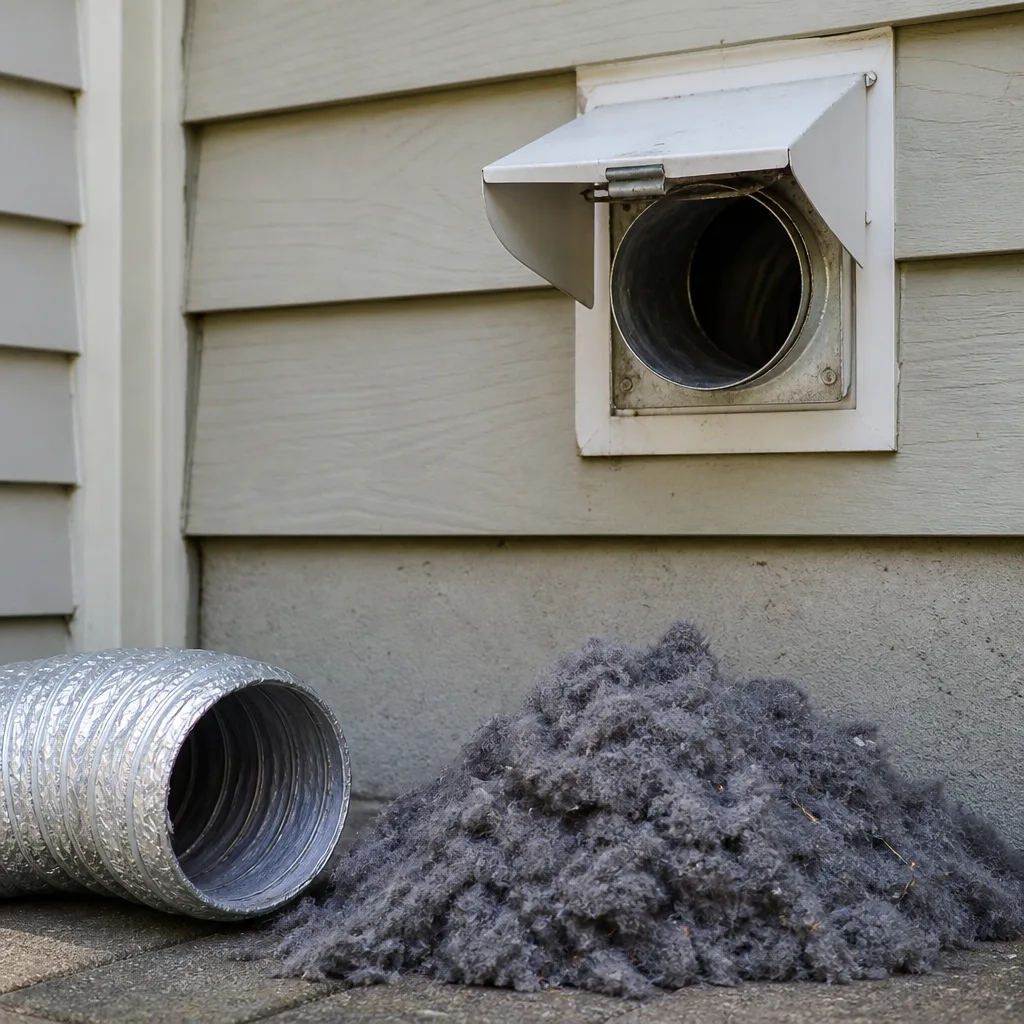 Dryer vent cleaning
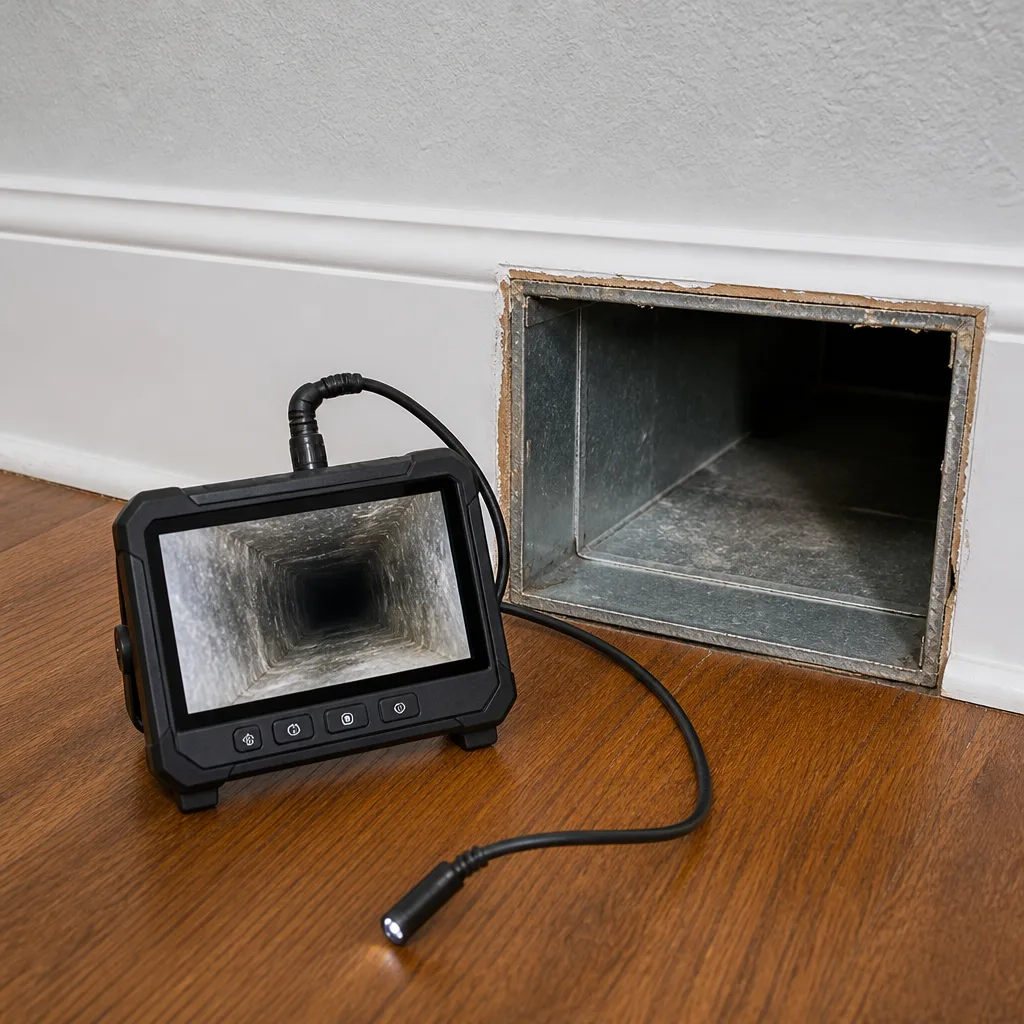 Camera inspection
 Sanitizing & deodorizing
Whole-system duct and dryer vent check with before-and-after photos - you see exactly what came out of your vents
That "$99 whole-house special" is a bait ad - the real number appears once they are in your hallway, or the "clean" is a shop-vac at the register. We photograph the inside of your ducts before and after instead.
How to Hire a Air Duct Cleaning Contractor in Santa Clarita: A Step-by-Step Guide
In California, anyone with a van and a shop vac can legally advertise as an air duct cleaning company. There is no state-issued duct cleaning license, no mandatory certification, and no required insurance specific to the work. That single fact changes everything about how a Santa Clarita homeowner should approach hiring. This guide gives you a structured interview process, a document checklist, and the specific red flags that appear before a technician ever touches your system. For professional Air Duct Cleaning services, knowing what to ask is half the battle. By the time you finish reading, you’ll know exactly how to separate a disciplined contractor from a low-bid outfit that can leave your ducts damaged and your indoor air worse than before.
Styles & brands we work with
Quick Answer
To hire an air duct cleaning contractor in Santa Clarita, request three documents before scheduling (a general liability certificate, workers’ comp confirmation, and a written scope of work), ask five pointed questions on the phone to expose teaser pricing, and verify the quote includes specific line items for the method, equipment, and post-job verification. A legitimate contractor writes the price down before work begins and stands behind it in writing for at least a year. Avoid any company that quotes per-vent pricing, refuses to provide proof of insurance, or can’t explain their cleaning method in plain English.
Table of Contents
- Why California’s Lack of Licensing Makes Your Vetting Process the Only Protection
- The Document Checklist: What to Request Before You Schedule
- Five Phone Questions That Expose Teaser Pricing Immediately
- How to Evaluate a Quote for Completeness
- What NADCA Membership Actually Means (and What It Doesn’t)
- The Post-Job Verification Checklist
- Common Mistakes to Avoid
- When to Call a Professional
- Frequently Asked Questions
- The Bottom Line
Why California’s Lack of Licensing Makes Your Vetting Process the Only Protection
California requires licenses for contractors who build, alter, or repair structures. But air duct cleaning falls into a regulatory gray area. The Contractors State License Board (CSLB) does not issue a specific “duct cleaning license,” and most duct cleaning work does not require a general contractor’s license. The result is a market where the barrier to entry is essentially the cost of a van and some equipment. In Santa Clarita, where summer temperatures push HVAC systems hard and dust from the surrounding hills accumulates quickly, this regulatory gap means homeowners are doing work that a licensing board would normally do for them.
We’ve seen what happens when that vetting doesn’t happen. Technicians show up with a Shop-Vac and a drill, punch a hole in the supply plenum, run a brush through one or two visible ducts, and call it done. The homeowner pays, the dust settles back into the system within weeks, and there’s no recourse because nothing was ever written down. That’s not a rare occurrence. It’s the default outcome when price is the only selection criterion.
The good news is that vetting a duct cleaning contractor is not complicated. It requires asking the right questions, requesting the right documents, and refusing to accept vague answers. The rest of this guide walks through exactly what to ask for and why each item matters.
The Document Checklist: What to Request Before You Schedule
Before you give any contractor a time slot, request three documents. Each one protects you from a specific failure mode. A legitimate company will provide all three without hesitation. A company that balks at any of them is telling you something important.
1. General Liability Insurance Certificate
This document proves the contractor carries insurance that covers damage to your property. In Santa Clarita, where homes range from tract houses in Valencia to custom builds in Sand Canyon, the cost of repairing a damaged duct run or a scratched hardwood floor can be significant. The certificate should list you, the homeowner, as the certificate holder and show coverage limits. If a technician accidentally punctures a wall, tears a boot, or drops equipment on your tile, this policy is what pays for the repair. Without it, you’re filing a claim against your own homeowner’s insurance, paying your deductible, and watching your premiums rise. Ask for a certificate issued by the insurance carrier, not a screenshot of a policy number. Verify it’s current by checking the coverage dates.
2. Workers’ Compensation Confirmation
If a technician gets injured in your home and the contractor doesn’t carry workers’ comp, you can be held liable for medical costs. That’s not a hypothetical. It’s how California’s workers’ compensation system works, and it applies to any work done on your property. Request written confirmation that the company carries workers’ compensation coverage for all employees who will be on site. A legitimate operation has this. A company running under-the-table labor does not, and that’s a liability you don’t want inside your house.
3. Written Scope of Work
This is the document that separates a real contractor from a price-at-the-door operation. The scope of work should describe exactly what will be done: the cleaning method, the equipment, the number of access points, the post-job verification step, and the total price. It should be provided before scheduling, not after the technician walks your home. A written scope of work does two things. First, it forces the contractor to commit to specifics before money changes hands. Second, it gives you a reference document if the work falls short. Both matter more than most homeowners realize.
Five Phone Questions That Expose Teaser Pricing Immediately
The phone call is where most homeowners get taken. A low teaser price is easy to quote, and once a technician is standing in your hallway, the price inevitably expands. But there are five questions that force a contractor to reveal their pricing model before they ever get near your house.
1. “Is your quote per vent or for the whole system?”
Per-vent pricing is the classic bait-and-switch mechanism. A contractor quotes $39, then arrives and counts 18 vents, adds a plenum charge, a return fee, and a filter upcharge, and suddenly the bill is $600. A legitimate contractor prices the entire system as one job. The price is the price. If the answer is per-vent, hang up.
2. “Does the price include the return side and the main trunk line?”
Some contractors quote a price that covers only the supply ducts, then “discover” that the return side needs cleaning too. The return side is half the system. If it’s not in the price, the quote is incomplete by design. Ask directly. Get the answer in writing.
3. “What equipment do you use?”
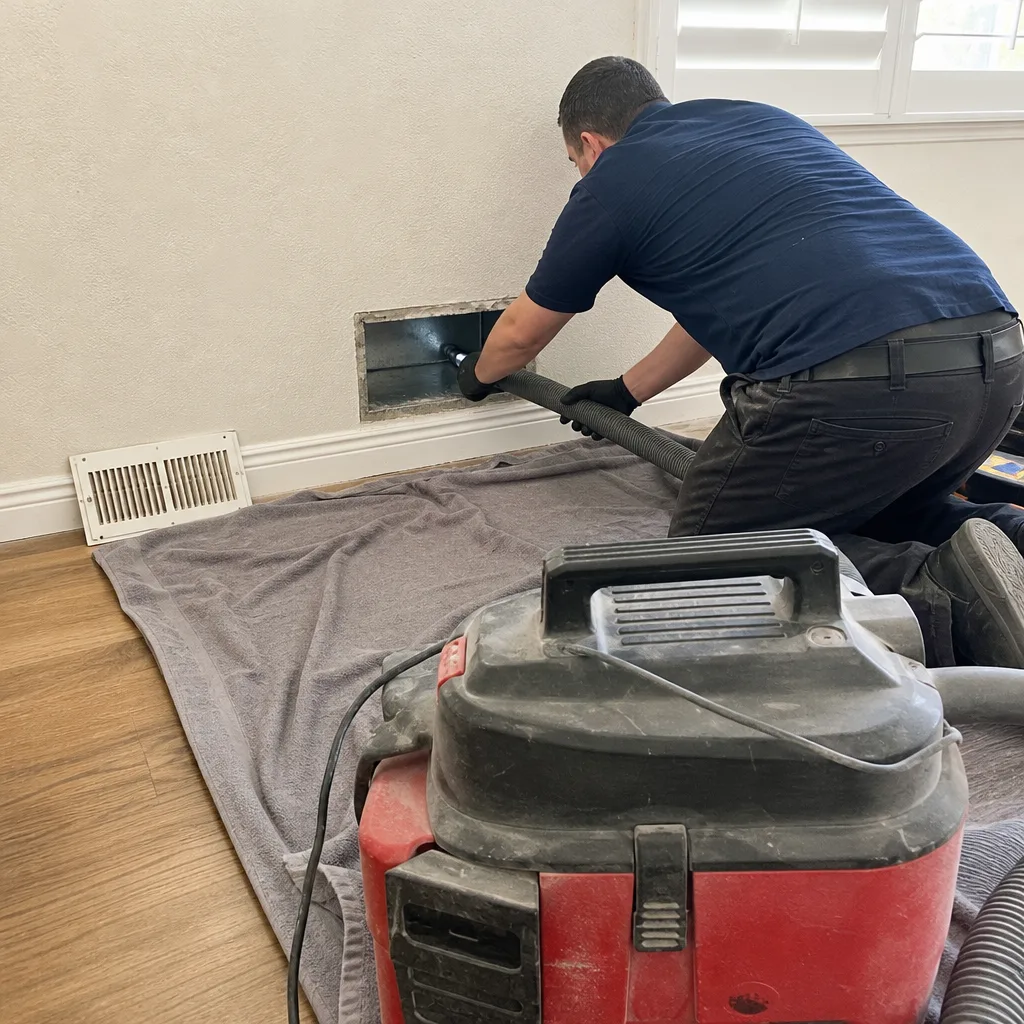
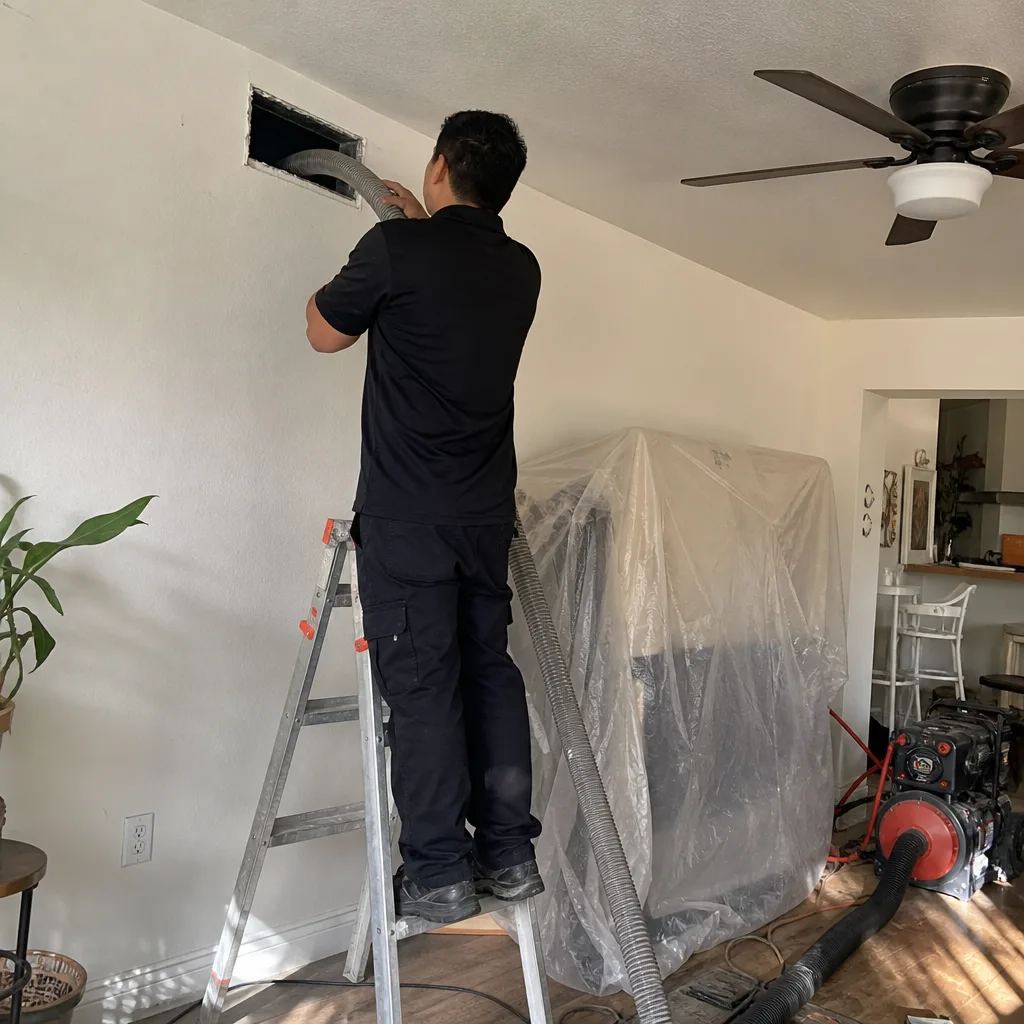
A legitimate air duct cleaning crew uses a negative-air machine, which creates suction on the entire duct system while a rotary brush or agitation device loosens debris inside the ducts. The debris is pulled into a HEPA-filtered collection unit, not blown into your living room. Some companies in Santa Clarita still use portable shop vacuums with a rotating brush attachment. That method cannot create enough negative pressure to clean the full duct run. Ask the question and listen for specifics. If the answer is vague, the equipment probably matches.
4. “Will you provide proof of insurance before the technician arrives?”
We covered this above, but it belongs on the phone list too. A company that says “yes, we’ll send it with the technician” is telling you they intend to control the information flow. A company that sends a certificate immediately has nothing to hide. Insist on it before scheduling.
5. “What does your written guarantee cover, and for how long?”
Most duct cleaning companies offer no written guarantee at all. If work is incomplete or damage occurs, you’re out of luck. A legitimate contractor writes the guarantee into the scope of work: what it covers, how long it lasts, and what happens if something fails. If the answer is “satisfaction guaranteed,” ask what that means in writing. If there’s no written document, there’s no guarantee.
How to Evaluate a Quote for Completeness
Once you have quotes in hand, the evaluation process is straightforward if you know what to look for. A complete quote includes specific line items. A vague quote hides behind language that sounds professional but commits to nothing. Here’s what a complete Air Duct Cleaning Cost Breakdown: The Santa Clarita Homeowner’s Reference for 2026 style quote should contain.
Line Items That Must Appear
- System scope: supply ducts, return ducts, main trunk line, plenums, and registers. If any of these are missing, the quote is incomplete.
- Cleaning method: “negative-air method with rotary brush agitation” or similar specific language. “Complete system cleaning” without a method description is not a method.
- Number of access points: how many openings will be cut or existing access points used. This determines whether the entire system is actually reached.
- Post-job verification: the specific step for confirming the work was done. Before-and-after photos are the standard in a credible operation.
- Total price with no conditions: the full cost, written, with no “additional charges may apply” language.
- Guarantee terms: duration, coverage, and remedy.
Language to Reject
- “Starting at” – this is a floor, not a quote.
- “Based on condition” – condition affects method, not an honest price for a standard cleaning.
- “Additional charges for access” – accessing the system is the job. If access costs extra, the price was never real.
- “Satisfaction guaranteed” with no document attached – this is a slogan, not a contract.
If a quote contains any of these vague phrases, ask for a revised, line-itemed version. If the contractor won’t provide one, move on.
What NADCA Membership Actually Means (and What It Doesn’t)
NADCA, the National Air Duct Cleaners Association, is the industry’s main trade organization. Membership signals that a company has access to industry standards, training resources, and a baseline code of conduct. It is a useful screen. It is not, however, a certification of quality on any specific job.
Here’s what NADCA membership does mean: the company uses equipment that meets the association’s performance standards, adheres to the current edition of the NADCA standard for assessment, cleaning, and restoration of HVAC systems, and has agreed to a code of ethics. That’s a meaningful baseline. Many low-bid operations are not members.
Here’s what NADCA membership does not mean: that the company will do a good job on your specific system, that the technician arriving at your house has been individually certified, or that the company stands behind its work in writing. Those things come from a company’s own operational standards, not from a trade association. In Santa Clarita, where summer temperatures routinely exceed 100 degrees and HVAC systems run for months without a break, the difference between a baseline company and a disciplined one shows up in how clearly the quote is written and how specifically the questions get answered.
The Post-Job Verification Checklist
The work is done. The technician is packing up. Before they leave your home, run through this checklist. It takes fifteen minutes and it’s the only way to confirm the job was actually done to scope.
- Ask to see the access points. There should be a visible opening at each point listed in the scope of work, properly capped and sealed when finished.
- Request before-and-after photos. A legitimate company documents the interior of the ducts before and after cleaning. The difference should be obvious. If the photos look the same, ask why.
- Check the registers. They should be clean, free of debris, and properly reattached. Loose registers are a sign of rushed work.
- Feel the airflow. Turn on the system and check airflow at several vents. It should feel stronger, not weaker. Reduced airflow can indicate dislodged debris blocking a run.
- Look for dust. A negative-air system should not blow dust into your home. If there’s a visible layer of dust on your furniture after the job, the containment failed.
- Confirm the guarantee in writing. The scope of work should be signed, with the guarantee terms stated, before the technician leaves.
If any of these checks fail, address it with the technician immediately. A company with a written guarantee will make it right. A company without one will be in the van and gone before you finish your sentence.
Common Mistakes to Avoid
- Choosing the lowest bid. In duct cleaning, a low bid usually means incomplete scope, inferior equipment, or a price that expands at the door. The cheapest quote is often the most expensive by the time the work is done.
- Skipping the document request. Failing to request insurance and workers’ comp confirmation before scheduling exposes you to liability that no savings can justify. This is the single most common mistake we see among Santa Clarita homeowners who call after a bad experience.
- Accepting vague quotes. “Full system cleaning” without a method, scope, and line items is a quote that commits to nothing. If the quote is vague, the work will be too.
- Assuming licensing exists. Many homeowners assume anyone advertising as a duct cleaning company must be licensed by the state. California doesn’t require it. That assumption is what allows low-bid operators to keep working.
- Not verifying NADCA membership. A company can claim membership without being listed. NADCA maintains a public member directory. Check it.
- Skipping the post-job walkthrough. Once the technician drives away, proving incomplete work becomes far harder. The fifteen-minute verification walkthrough is your leverage.
- Hiring without a written guarantee. If the guarantee isn’t in writing, it doesn’t exist. Oral promises are worthless when something goes wrong.
When to Call a Professional
You should call an air duct cleaning professional if you’ve lived in your Santa Clarita home for more than three to five years without a cleaning, if you’ve recently completed a remodel, if you have pets that shed heavily, or if anyone in your home suffers from allergies that worsen indoors. You should also call if you’ve never had the system cleaned and don’t know what’s inside it. Ducts accumulate dust, pet dander, construction debris, and sometimes rodent droppings. None of that belongs in the air you breathe. At Hollis Air Duct Santa Clarita, we provide free estimates in Santa Clarita with written pricing before any work begins. Call (661) 523-0295 to schedule an assessment. Our technicians are background-checked, uniformed, and equipped with professional-grade negative-air machines and rotary brush systems. Learn more about our Air Duct Cleaning in Santa Clarita service or visit the Hollis Air Duct Santa Clarita home page for a full overview.
Frequently Asked Questions
Air duct cleaning in Santa Clarita typically costs between $400 and $700 for a standard single-family home, depending on system size, number of access points, and the condition of the ducts. A legitimate quote is a single written price for the whole system, not a per-vent number that expands once the technician arrives. Systems with extensive contamination or inaccessible duct runs may fall outside that range, but those details should be in the written scope of work. Call (661) 523-0295 for an exact quote on your system.
You know the work was actually done by reviewing before-and-after photos of the interior of your ducts, verifying the access points match the scope of work, and checking that airflow at the registers feels stronger after the job. A legitimate company documents the work with photos and invites you to verify before the technician leaves. If a company can’t show you what they did, there’s a reason.
Some duct cleaning quotes are cheaper because they cover less: the return side may be excluded, the main trunk line may not be included, or the price is per vent designed to expand at the door. A low quote from an uninsured company with a shop-vac setup and no written guarantee is not a comparable bid to a negative-air cleaning with documentation. You’re comparing apples to a marketing strategy.
Seasonal Air Duct Cleaning Care for Santa Clarita: Year-Round Homeowner’s Guide recommends air duct cleaning every 3 to 5 years for most Santa Clarita homes, more frequently if you have heavy shedding pets, recent remodeling, or household members with significant allergies or asthma. The range depends on conditions specific to your home, not a universal calendar. A visual inspection confirms whether cleaning is warranted; call (661) 523-0295 to schedule one.
Yes, we provide Dryer Vent Cleaning in Santa Clarita as a core service. Clogged dryer vents are a fire hazard, and Santa Clarita’s dry climate increases the risk. We inspect and clean the full vent run from dryer to exterior, documenting the before-and-after condition.
Duct sealing is the process of closing leaks in ductwork using mastic or similar materials, which prevents conditioned air from escaping into attics and crawl spaces. In Santa Clarita’s hot summers, leaky ducts force your HVAC system to work harder, raising energy bills and reducing comfort. If air is escaping your ducts, Duct Sealing in Santa Clarita pays for itself over time in reduced cooling costs.
The Bottom Line
Hiring an air duct cleaning contractor in Santa Clarita comes down to one principle: get everything in writing before the work begins and verify everything before the technician leaves. There is no state licensing board that will catch a bad operator for you. The document checklist, the phone questions, the quote evaluation standards, and the post-job verification steps in this guide are the entire protection system. For more guides & resources, visit our blog. Use them. A legitimate contractor will pass every test without hesitation. An operator counting on homeowner ignorance will fail at the first question. Choose accordingly.
Written by Roy Castellanos, Owner at Hollis Air Duct Santa Clarita, serving Santa Clarita since 2004.
See the difference
 Before
 After
After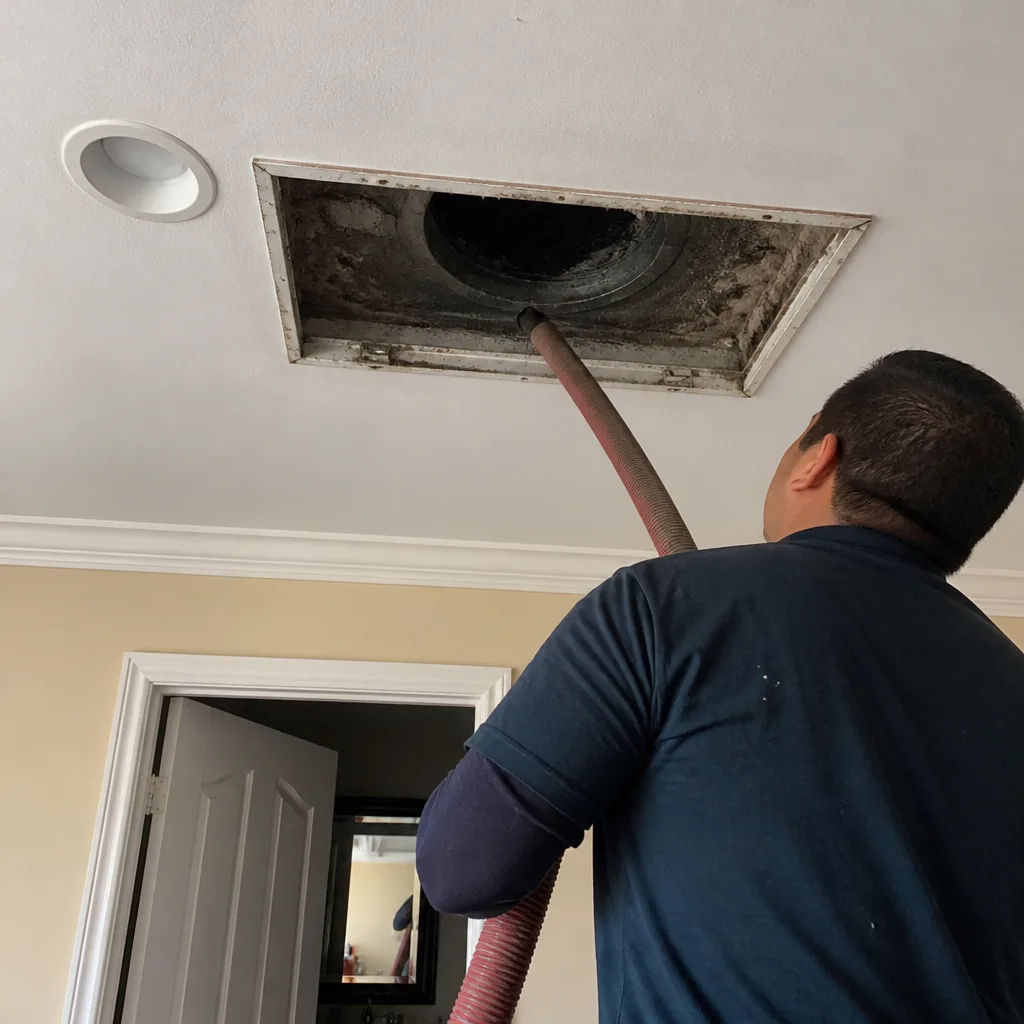 Before
 After
After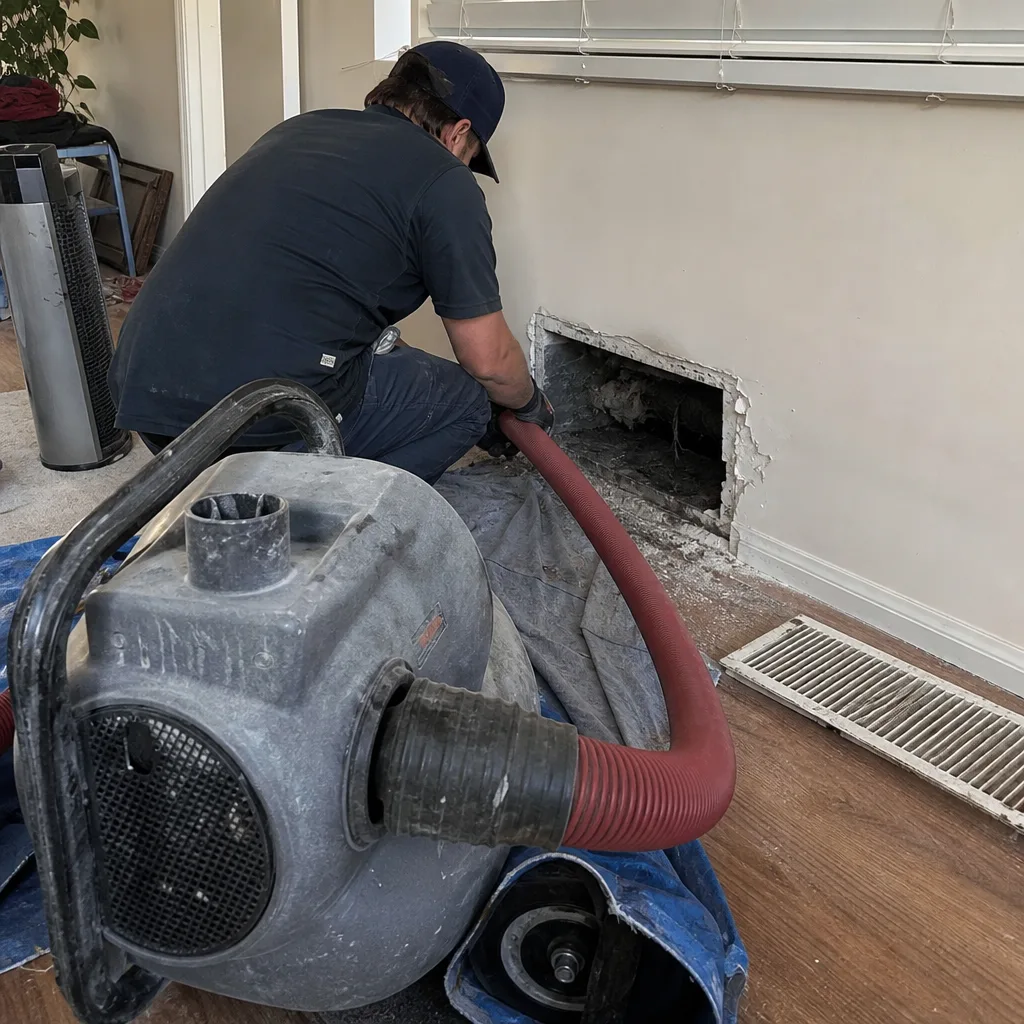 Before
 After
After