
Last updated October 15, 2026
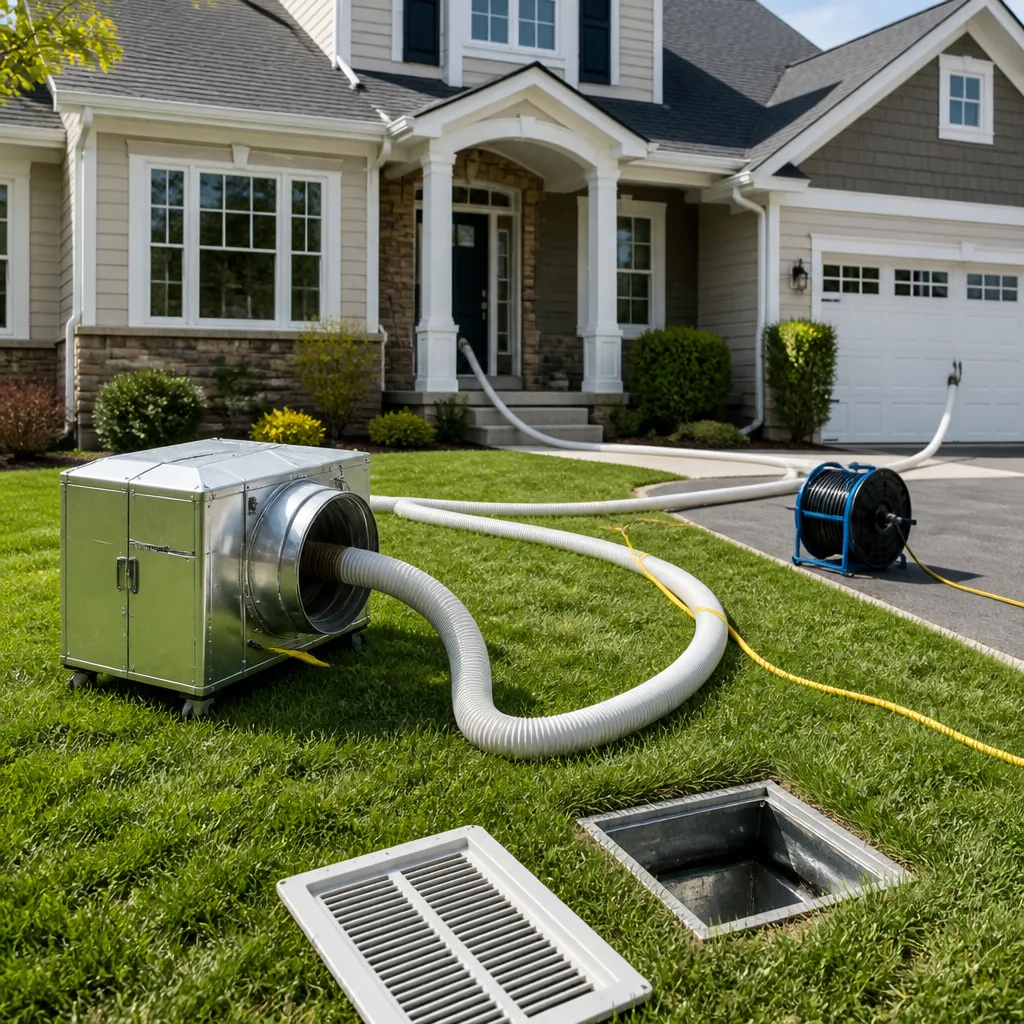 Whole-home duct cleaning
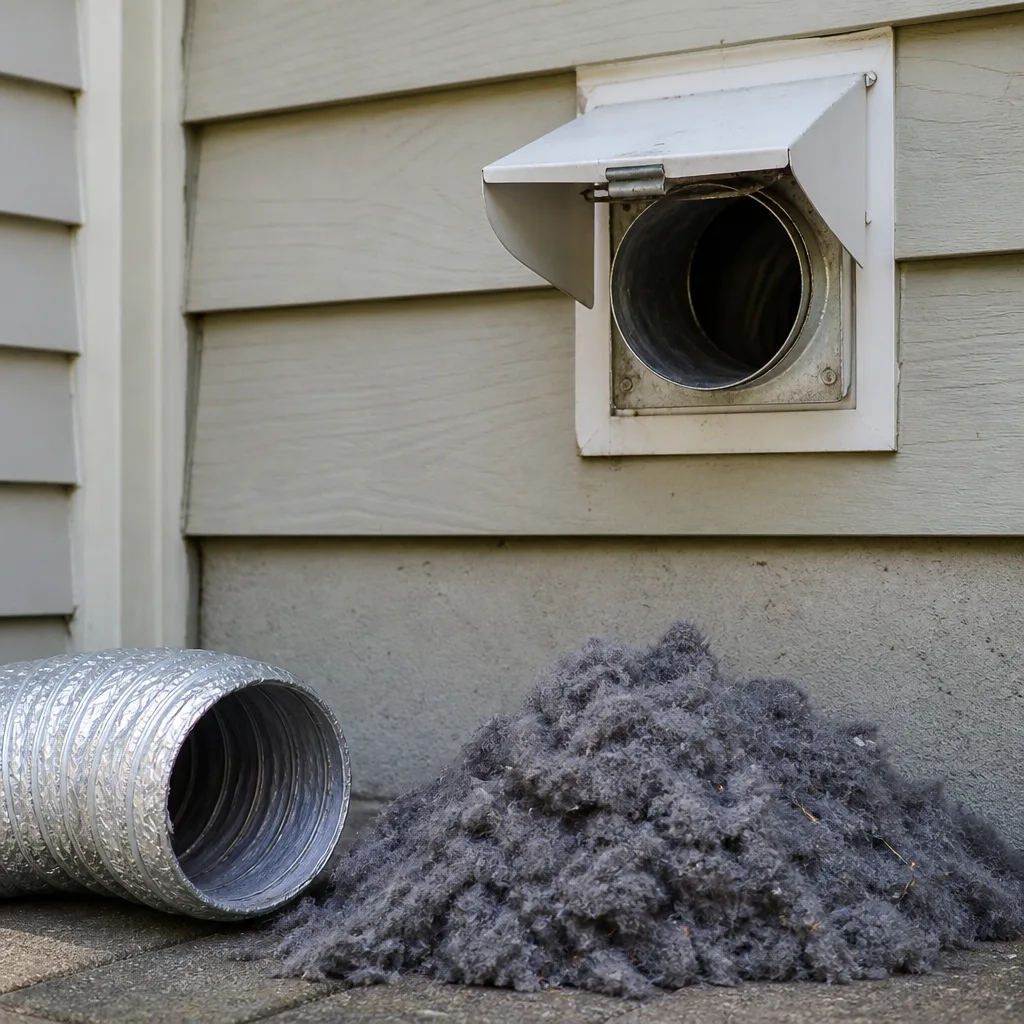 Dryer vent cleaning
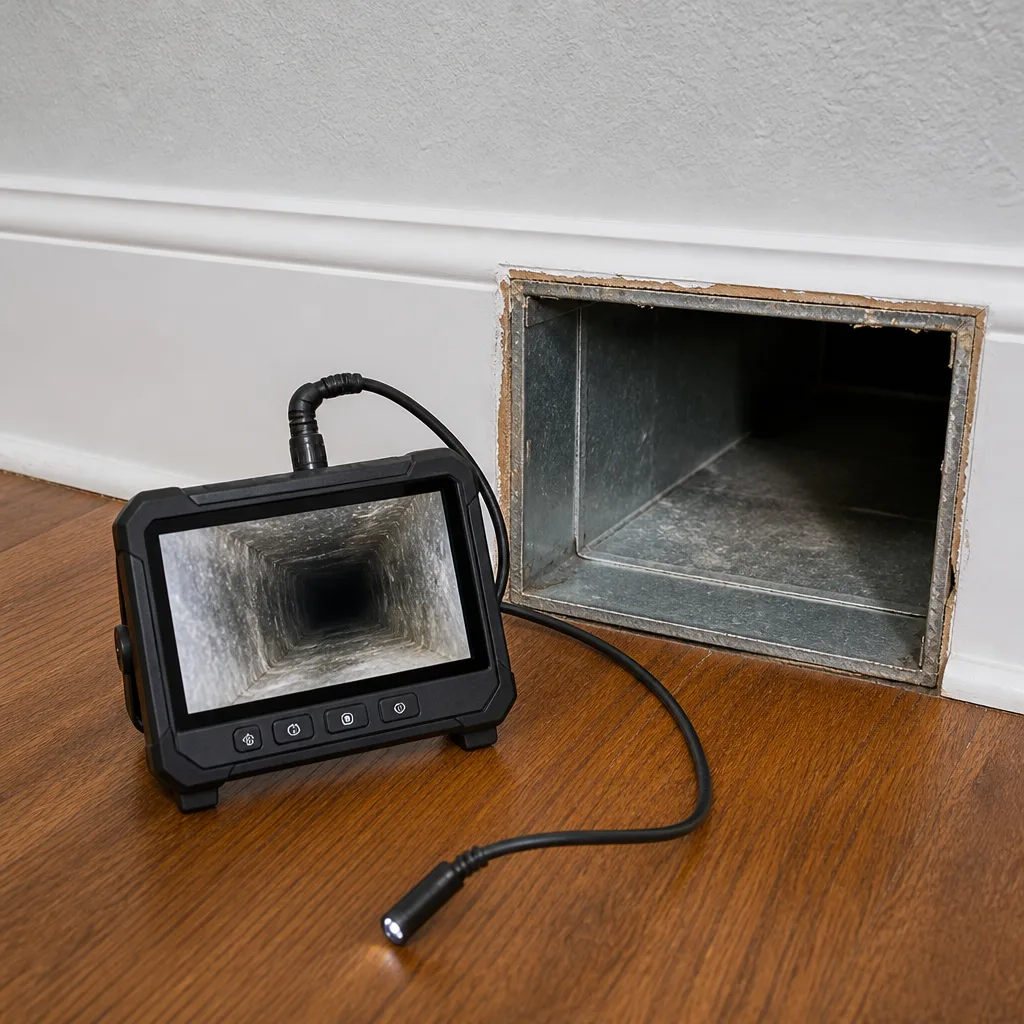 Camera inspection
 Sanitizing & deodorizing
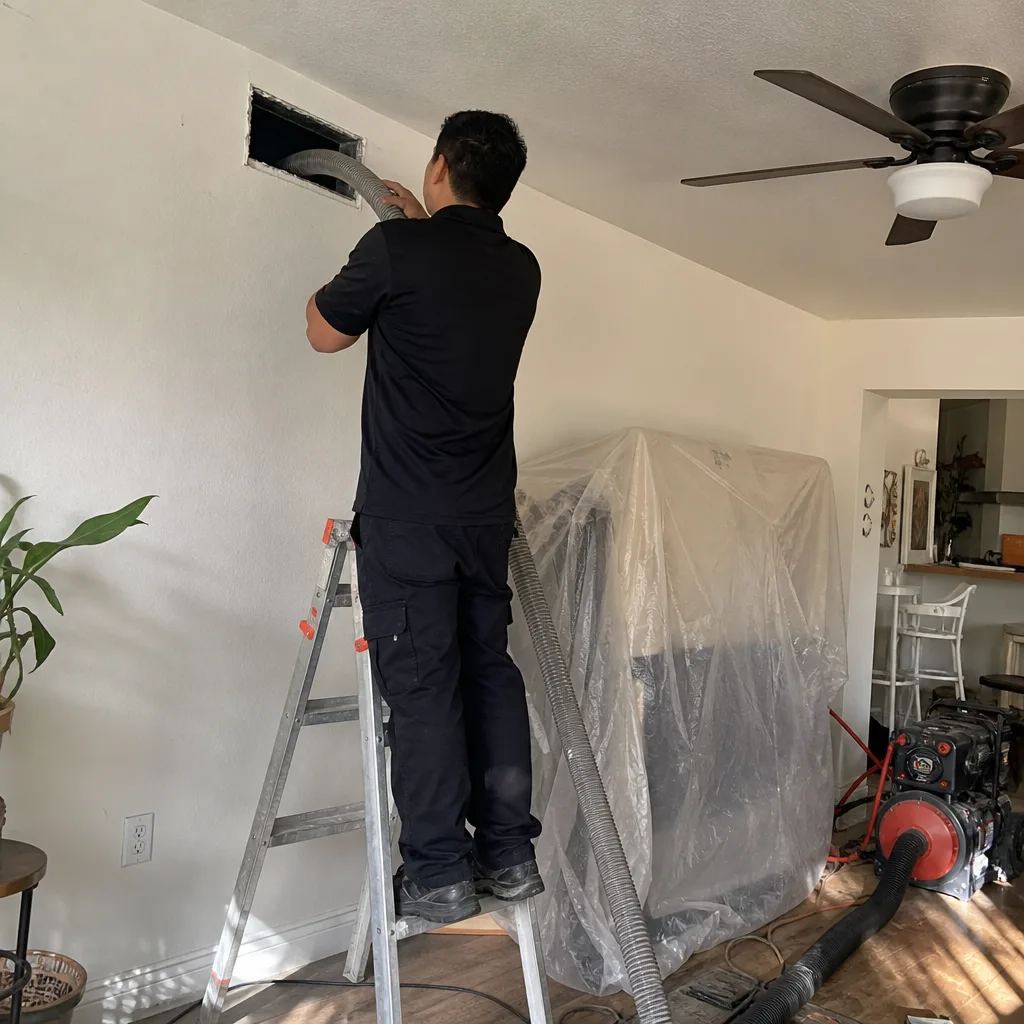
Whole-system duct and dryer vent check with before-and-after photos - you see exactly what came out of your vents
That "$99 whole-house special" is a bait ad - the real number appears once they are in your hallway, or the "clean" is a shop-vac at the register. We photograph the inside of your ducts before and after instead.
Air Duct Cleaning Warning Signs: A Santa Clarita Homeowner’s Reference Guide
Most Santa Clarita homeowners think the first sign of duct trouble is a layer of dust on the register. By the time you can see it, the contamination inside the system likely predates it by months or years. The air ducts in your Valencia, Canyon Country, Saugus, or Newhall home are a circulatory system, and like any circulatory system, they give off behavioral signals before visible symptoms appear. This guide teaches you to read those signals: how the system starts, how it smells in the first ninety seconds, how temperatures vary room to room, and what your energy bill is quietly telling you. If you know what to look for, you will catch duct contamination before it becomes a health problem or an efficiency tax on every cooling cycle. If you do not, you’ll pay for it in ways that never show up on the invoice from your HVAC tech.
Quick Answer
The clearest air duct cleaning warning signs in Santa Clarita homes are a musty smell when the AC first cycles on, visible dust buildup around supply registers, rooms that consistently run five or more degrees warmer than the rest of the house, and rising summer utility bills with no change in usage. Any one of these signals means the duct system needs inspection. Two or more means cleaning is overdue, and the problem is circulating through your living space every time the blower runs.
Styles & brands we work with
Table of Contents
- The Musty Smell That Comes and Goes: What It Actually Means
- Uneven Room Temperatures: The Duct Problem Hiding in Plain Sight
- Visible Dust at Registers: Why It’s a Lagging Indicator, Not a Warning
- Short-Cycling and HVAC Behavior Changes: Reading the System’s Signals
- Rising Utility Bills With No Usage Change: The Efficiency Tax
- The Health-Symptom Pattern That Points to Duct Contamination
- Triage: Which Warning Signs Need Immediate Action vs. Scheduled Service
The Musty Smell That Comes and Goes: What It Actually Means
A duct system that smells musty only when the AC first kicks on, then clears after a few minutes, is telling you something specific. There is biological growth on or near the evaporator coil or in the first few feet of the supply plenum. The smell clears not because the problem resolved, but because you’ve aerosolized the microbial material into your living space and your nose has adapted to it. The source remains. It will be back on the next startup cycle, and it will be slightly worse every month because the coil is cool and damp every time the system runs, which is exactly the environment growth needs to expand.
Santa Clarita’s climate makes this worse than it sounds. Our summers push systems to run for ten to fourteen hours a day, which means the coil is almost never fully dry between cycles in July and August. Compare that to a coastal market where systems cycle off for long stretches and the coil dries. Here, the coil stays wet, the dark plenum stays dark, and the biological material multiplies through the entire cooling season. What you smell on startup in June is a smaller problem than what you’re smelling by September.
This is the single most common early warning sign we see in Santa Clarita homes, and the one most often ignored because it’s intermittent. Homeowners get used to it. They tell themselves it’s just how the system smells. It is not. A properly functioning duct system should produce no detectable odor at startup, full stop. If yours does, call a professional to inspect the coil and the supply-side ducting. The air duct cleaning process we use in Santa Clarita includes source removal at the coil location, not just duct brushing, and that matters because brushing the ducts without addressing the coil is like cleaning the pipes but leaving the mold colony at the tap.
What to check:
- Does the smell appear only in the first 30 to 90 seconds of a cooling cycle?
- Is it stronger in specific rooms served by the same duct branch, or at the return grille?
- Does it return every time the system starts after being off for a while?
- Has anyone in the home developed sinus irritation or a cough that worsens during AC season?
If the answer to two or more of these is yes, the system needs source inspection. This is not a situation where you wait and see. The growth does not self-resolve, and the aerosolized spores are cycling through your air every single time the blower runs.
Uneven Room Temperatures: The Duct Problem Hiding in Plain Sight
Walk through your home on a hot afternoon in August. If one bedroom is five degrees warmer than the hallway, and the register in that room is pushing weak airflow while the register in the living room is blasting, you have a duct problem. It is not an AC capacity problem, it is not a thermostat problem, and closing vents in other rooms will not fix it. The most likely causes are disconnection at a duct joint, a collapsed flex-duct section, a damper that’s slipped or stuck, or airflow restriction from years of accumulated debris in that specific branch line.
Santa Clarita homes, especially those built during the Valencia and Saugus expansion years of the 1980s through early 2000s, were often built with flex duct rather than rigid sheet metal. Flex duct is more vulnerable to damage: rodents can chew through it in attics, installers sometimes kink it, and age causes the inner liner to separate and collapse inward. We see flex duct failures regularly in Canyon Country and Newhall attics, where summer attic temperatures can reach 140 degrees and accelerate liner degradation.
The diagnostic point for a homeowner is simple: a room that cannot hold temperature while the rest of the house is comfortable is a branch-line problem, and a branch-line problem is a duct problem. It will not get better on its own. It will, however, make your AC work harder to compensate, drive up your cooling costs, and eventually force the blower motor to strain against static pressure it was never designed for. That shortens the life of the furnace or air handler.
If you have one consistently warm room, note which room it is, and check whether that supply register is pushing noticeably less air than others in the house. That information is gold to a technician. It tells us which branch to inspect first, and it often turns a two-hour diagnostic into a thirty-minute one. The duct sealing services we perform in Santa Clarita address many branch-line failures at the joint or connection point, but any good tech will tell you the inspection step comes first, before any sealing or cleaning, because sealing a disconnected branch does nothing.
Visible Dust at Registers: Why It’s a Lagging Indicator, Not a Warning
Most homeowners treat visible dust around supply registers as the main signal that ducts need cleaning. It makes intuitive sense: if dust is coming out of the vent, the ducts must be dirty. The reality is more nuanced, and understanding it will save you from chasing the wrong problem.
Dust at the register is a lagging indicator. By the time debris has accumulated enough inside the duct to visibly deposit on the register face and surrounding wall or ceiling in the span of a few weeks, the system has been carrying significant particulate load for a long time. The duct walls are coated, the return side is pulling in more debris than it should, or the filter system is underperforming. Visible register dust means the condition is established and ongoing, not developing.
There is also a distinction Santa Clarita homeowners should understand. Some dust at registers comes from the room itself: ceiling fans stir up settled dust, open windows during our dry, windy Santa Ana periods carry fine particulate into the house, and the HVAC return grille pulls that room dust in and redistributes it. That is not a duct contamination issue. But when register dust appears during periods of late spring and early summer before peak heat, when windows are closed and the AC has been running, it points to the system itself, not the room. The dust is coming from inside the ductwork, not from the living space.
What visible dust at registers actually tells you:
- The return side of the system is likely pulling air from an unconditioned or dusty area, like an attic with degraded insulation or a crawlspace with exposed soil.
- The filter may be undersized, the wrong type for the system, or bypassing air around the frame.
- Debris has accumulated inside the supply plenum or branch lines and is being aerosolized during each blower cycle.
- The system has not been professionally cleaned in years, possibly since the home was built.
None of these are conditions you can see from the register. All of them are conditions a professional inspection will confirm quickly. The rule of thumb we apply: if you dust a room, run the AC for a day with windows closed, and see a new dust film on surfaces near the register within 24 to 48 hours, the source is the duct system. Call for an inspection rather than cleaning the register and hoping it stops.
Short-Cycling and HVAC Behavior Changes: Reading the System’s Signals
Short-cycling is the term for an HVAC system that starts, runs for a few minutes, shuts off, then starts again soon after. It is a common complaint in Santa Clarita during summer, and it is often blamed on the thermostat or the AC unit itself. Sometimes that blame is wrong. Duct problems cause short-cycling too, and recognizing the difference matters because it changes the fix.
Here is how a duct issue creates short-cycling. If return ducting is undersized, disconnected, or collapsed, the system cannot pull enough air back to the blower. Static pressure rises. The evaporator coil gets too cold because there’s not enough warm return air moving across it. Frost forms on the coil. The system’s safety limit switches then shut the unit down to protect the compressor. When the coil melts, the system restarts, and the cycle repeats. From the homeowner’s perspective, it looks like the AC is malfunctioning. But the root cause is often in the ductwork, not the condenser outside.
This behavior should never be ignored. Every short cycle is a start event, and start events are hard on compressors and blower motors. A system that short-cycles through a Santa Clarita summer is aging itself faster than a system that runs steady-state through the same conditions. The fix starts with a static pressure test and a duct inspection, not with replacing the thermostat and hoping.
Another behavior change to watch: the blower running but airflow at registers feeling weak across the whole house, not just one room. That points to a return-side restriction or a heavily loaded blower wheel, both of which are duct-system issues. When in doubt, note the pattern before you call. How long does the system run? How long does it stay off? Is the airflow weak everywhere or in specific rooms? That information shortens the diagnostic and gets a real fix in place sooner.
In our experience serving Santa Clarita homes since 2004, we’ve found that roughly a third of what homeowners believe are AC unit failures turn out to be duct-side problems. The ducts are the silent partner in the system, and behavior changes in how the system runs are often the ducts crying out first.
Rising Utility Bills With No Usage Change: The Efficiency Tax
Every Santa Clarita homeowner knows what their summer electric bill looks like. June through September, the AC runs, and the bill goes up. That is normal. What is not normal is when the bill rises year over year by 15 or 20 percent without a change in thermostat settings, occupancy, or household routines. That increase is an efficiency tax, and leaky or contaminated ducts are one of the most common causes.
The math is straightforward. The Department of Energy has long estimated that typical duct systems lose 20 to 30 percent of conditioned air through leaks, disconnections, and poorly sealed joints. Southern California Edison and other utilities cite similar figures. For a Santa Clarita home cooling 2,000 to 3,000 square feet through a summer where daytime highs routinely exceed 95 degrees, that loss is not theoretical. It is a measurable line item on your bill every single month.
Consider this example from a Canyon Country home we recently inspected. The homeowner’s July bill had jumped 22 percent over the same month the prior year, with the thermostat set identically at 78. The inspection found a supply duct that had separated at a joint in the attic, blowing fully conditioned air into a 130-degree attic space, while the system worked overtime to keep the house at temperature. The repair cost was modest. The ongoing cost of ignoring it would have been hundreds of dollars per summer, indefinitely.
How to spot the efficiency tax:
- Pull your electricity usage history for the same month over the past two or three years. Your utility’s website makes this easy.
- Compare the cooling months only, July through September, and adjust for any known change in occupancy, thermostat settings, or added appliances.
- If usage is up 15 percent or more with no behavioral explanation, suspect the HVAC system, and within that system, suspect the ducts before the unit.
- Schedule a duct inspection before replacing equipment. You might solve the problem for a fraction of the cost of a new condenser.
We have seen too many Santa Clarita homeowners replace a working AC unit because of high bills, only to see the high bills persist because the real problem was leaking ducts all along. The inspection is the cheap step. Skip it at your own cost.
The Health-Symptom Pattern That Points to Duct Contamination
This section requires care. We are not doctors, and we will not diagnose health conditions. What we can do is describe the environmental pattern that thousands of homeowners have reported, and that air quality professionals recognize as consistent with duct contamination. That pattern has a name: the away-home correlation.
Here is the pattern to watch:
- Symptoms appear when people are home and active in the living space: sinus congestion, scratchy throat, headache, mild fatigue, cough, or worsened allergy symptoms.
- Symptoms improve or disappear when the person leaves the home for several hours, such as a full day at work or a weekend away.
- Symptoms return within hours of coming home.
- In some homes, the symptoms are worse in specific rooms served by the same duct branch, and better in others.
The away-home correlation is the single most telling signal that something in the home’s air, not an underlying illness, is driving the symptoms. And when the pattern worsens in specific rooms, it points to the duct branch serving those rooms, not to a whole-house environmental issue like a cleaning product or a new carpet.
Duct contamination related to this pattern typically includes one or more of: accumulated dust and debris holding moisture from humidification cycles or coil condensation, biological growth on duct surfaces or the coil, rodent or pest activity inside ducting, or degraded duct liner particles becoming airborne. Any of these is an indoor air quality problem that lives in the duct system and exposes occupants on every blower cycle.
If this pattern matches your household, the first step is a professional duct and coil inspection. Do not start with air purifiers or filter upgrades. If the source is inside the ducts, no room purifier will out-clean the problem. Address the source first. Then improve filtration. We recommend filtration products from Honeywell and Aprilaire to Santa Clarita homeowners after source removal, because the cleaning works best when the air leaving the system is processed by a filter that actually captures what the cleaning removed.
Triage: Which Warning Signs Need Immediate Action vs. Scheduled Service
Not every warning sign is an emergency. The home services industry has a reputation problem because too many companies treat every condition as urgent and every price as negotiable on the drive to your house. We believe in telling homeowners the truth about urgency, because it builds the kind of trust that lasts longer than a single service call. Here is a simple triage framework for duct warning signs in Santa Clarita homes.
Immediate action, same day or next day:
- Burning smell when the heat runs. This may indicate debris near heat strips or inside a gas furnace cabinet, and that is a fire hazard. Shut the system down and call immediately.
- Visible mold growth on registers, return grilles, or inside the duct opening. This is consistently active biological contamination. The longer it runs, the wider the aerosolization.
- A sudden, loud banging or rattling sound from the ducts when the blower starts or stops. This can indicate a disconnected duct section swinging inside the attic space or a fallen damper.
- Water around the indoor unit or water stains on the ceiling below the attic unit. This may indicate a clogged condensate drain or a leaking coil pan, both of which create the moisture that makes duct contamination worse.
Scheduled service within two to four weeks:
- Musty smell on startup. Significant, but not an overnight hazard. It indicates growth that needs source removal, but the system is not at immediate risk of failure.
- Uneven room temperatures on one floor or in one or two rooms. A branch-line issue that should be fixed, but the house will not stop functioning while you schedule it.
- Visible dust at registers with no other symptoms. The system needs cleaning, but a few weeks will not change the outcome.
- Rising utility bills without other signs. Schedule the duct inspection and budget for potential sealing or repair work. The efficiency tax continues to accrue, but at a manageable rate.
The key difference between the two lists: anything that involves heat, active water, or visible biological growth moves to immediate. Everything else can be scheduled properly, with a written price agreed before any work begins. That is the standard. Any company that pressures you into same-day service for dust at a register is selling urgency, not service.
When you schedule, ask for a written price before work starts and a written guarantee after. The Hollis Air Duct Santa Clarita home standard includes both, because a price that moves after the tech arrives is not a price, it is an opening bid.
Common Mistakes to Avoid
- Ignoring the intermittent musty smell because it clears. The smell clearing means your nose adapted, not that the growth died. It comes back every cooling season and gets worse each year. In Santa Clarita’s long cooling season, that means hundreds of hours of exposure annually.
- Closing vents in unused rooms to save energy. This increases static pressure in the duct system, which can force leaks at joints, strain the blower motor, and create the short-cycling behavior described above. The savings are an illusion; the wear is real.
- Treating visible register dust as the one and only signal. By the time dust is visible on the register face, the internal contamination is well established. Early signals are behavioral: smells at startup, uneven temperatures, and bill changes.
- Assuming the AC unit is the problem when rooms are uneven. Replacing the condenser does nothing for a disconnected branch line in the attic. The unevenness will remain, and you’ll have spent thousands on the wrong fix.
- Hiring on price alone for duct cleaning. The duct cleaning industry has a well-earned reputation for bait-and-switch pricing and incomplete work. A low quote that balloons at the door is the most common version of this. Insist on a written price before work starts, and a written guarantee on the result.
- Cleaning ducts without checking the return side. If the return is pulling air from a contaminated attic or crawlspace, the supply side will be re-contaminated within months. The return is half the system. Ignore it at your own cost.
- Waiting until the smell is constant. The intermittent musty smell is your early warning, and early intervention is cheaper. By the time the odor is constant, the biological load is orders of magnitude larger, and the cleaning is more involved.
See the difference
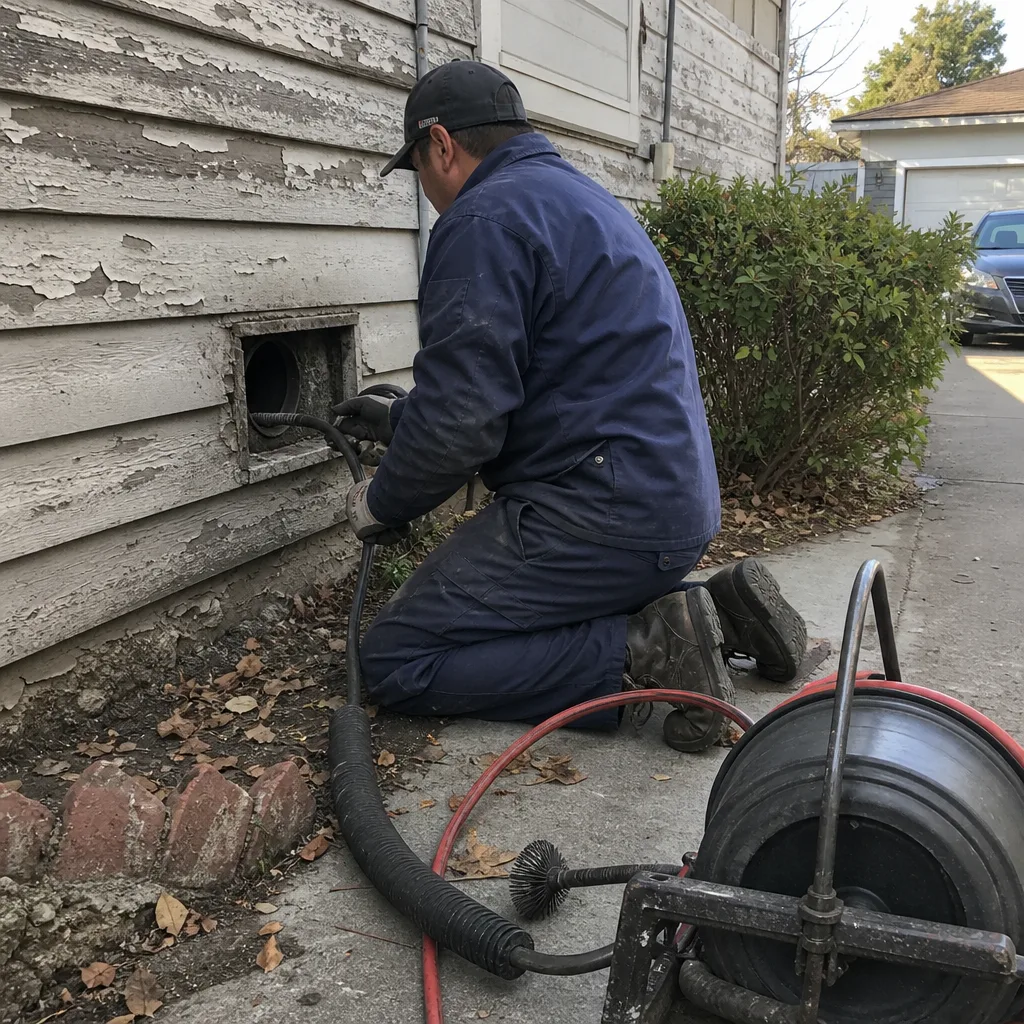 Before
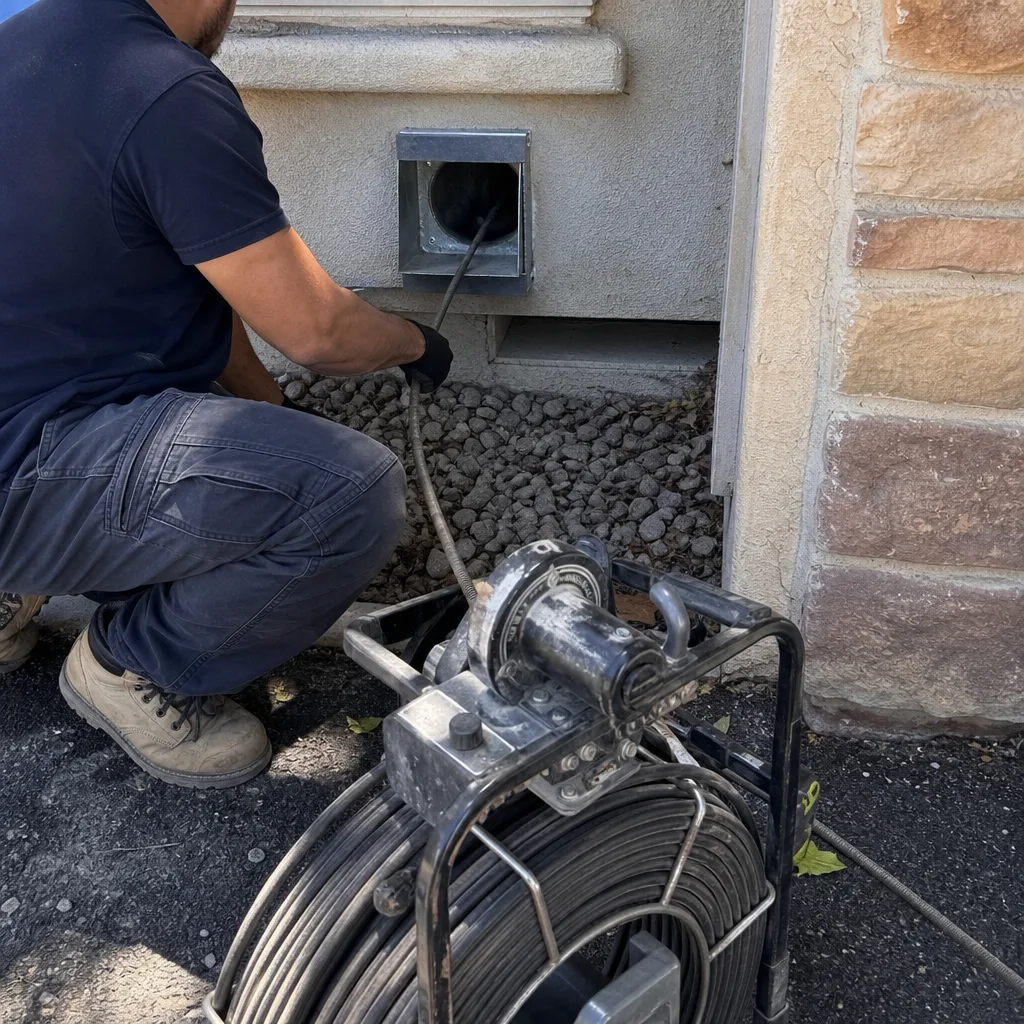 After
After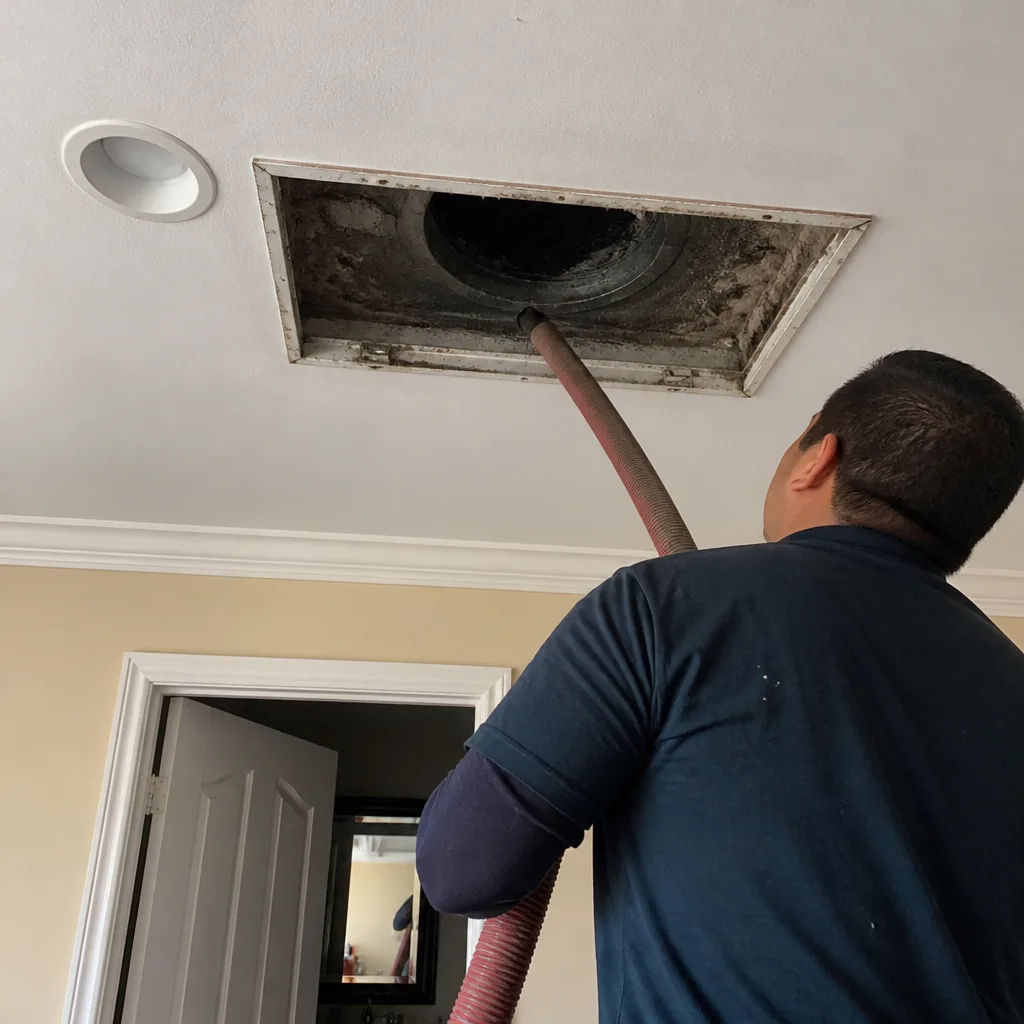 Before
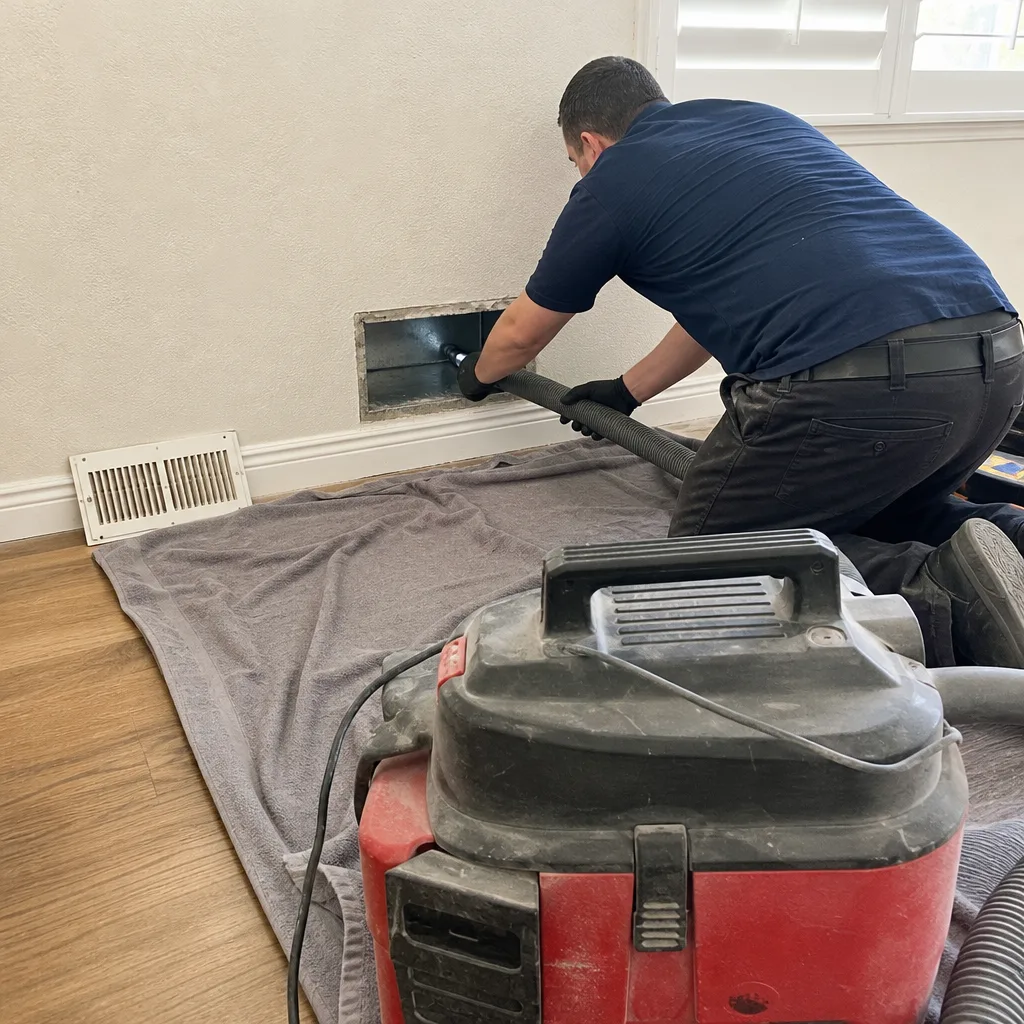 After
After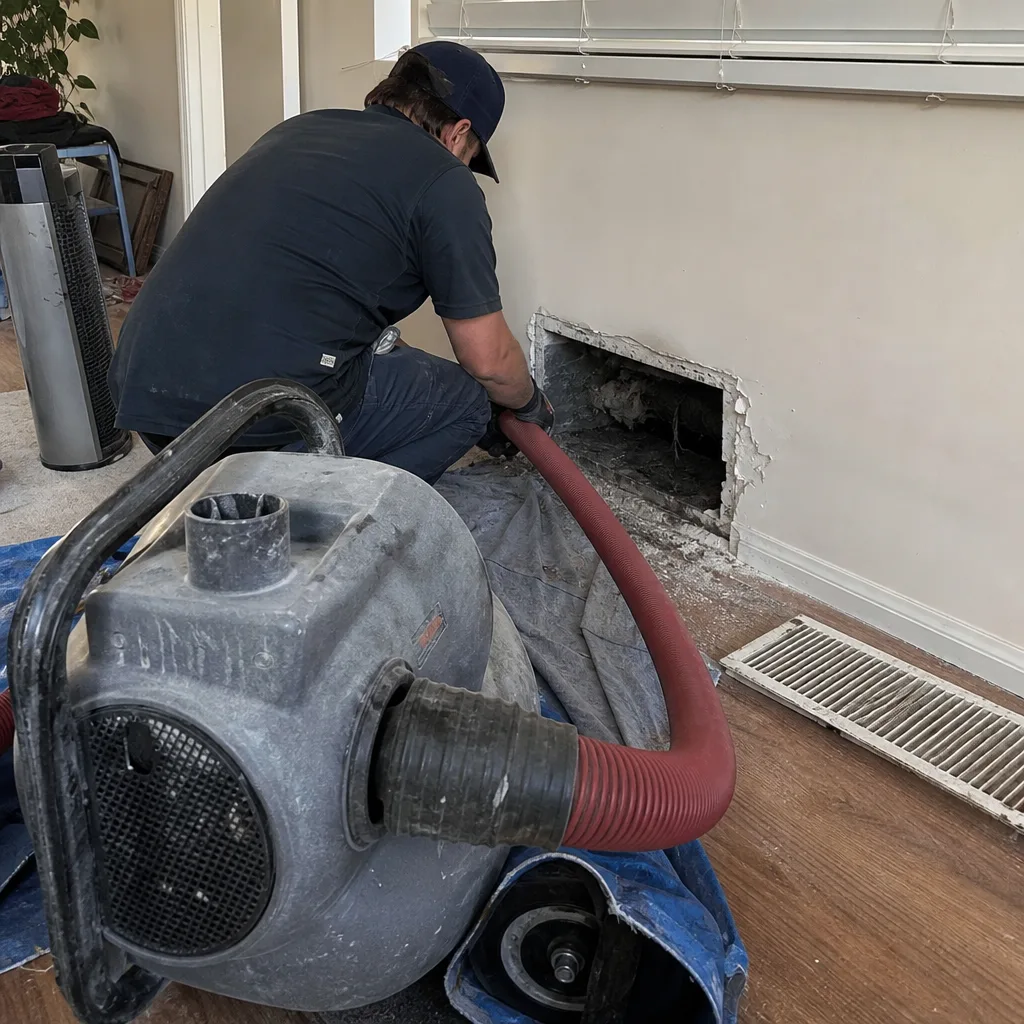 Before
 After
AfterWhen to Call a Professional
Call a professional when the warning signs appear, not after they’ve persisted for a season. The call is cheap, the inspection is straightforward, and the peace of knowing either way is worth more than another month of wondering. You should call when you notice the musty-on-startup odor, when one room will not hold temperature, when your July bill jumps without explanation, or when health symptoms track with time spent at home. Hollis Air Duct Santa Clarita offers free estimates and honest triage for Santa Clarita homeowners. Call (661) 523-0295 and you will talk to a live person, not a voicemail queue. We will ask about your symptoms, tell you what we think based on what you describe, and schedule an inspection if it makes sense. If it does not, we will tell you that too. That is the whole point of honest triage.
Frequently Asked Questions
The most common signs are a musty smell when the AC starts, visible dust accumulation around supply registers, rooms that run warmer than the rest of the house, and rising summer electric bills without a usage change. In Santa Clarita specifically, the long cooling season and dry, dusty climate accelerate duct contamination compared to many other markets.
Whole-system air duct cleaning in Santa Clarita typically runs between $400 and $900 depending on home size, number of systems, and the level of contamination. That price should include the supply and return sides, the main trunk lines, branch lines, and register cleaning, quoted in writing before work begins. Anyone offering a flat $99 special is selling a bait price that will not survive contact with your driveway. Call (661) 523-0295 for an exact quote on your system.
Cheaper quotes usually mean less work: fewer vents cleaned, the return side skipped, no source removal at the coil, or a “blow and go” job that stirs up debris without removing it. The trade’s real work involves negative-air containment with professional equipment like Rotobrush rotary brush systems and Nikro negative-air machines, and that equipment costs money to run properly. A professional job leaves the system measurably cleaner. A cheap job leaves it visually cleaner for a few weeks.
Every three to five years is a reasonable interval for most Santa Clarita homes, with shorter intervals for homes with pets that shed heavily, recent construction or renovation, or occupants with respiratory conditions. The dryer vent cleaning schedule for Santa Clarita homes is separate and typically annual, because dryer lint buildup is a fire hazard with different accumulation rates.
Dirty air ducts can distribute contaminants that trigger allergy symptoms, sinus irritation, and respiratory discomfort, especially in sensitive individuals. The clearest signal is the away-home pattern: symptoms that improve when you leave the house and return when you come home. That correlation points to something in the home’s air, and the ducts are a primary pathway. Source removal followed by better filtration with products from Aprilaire or Honeywell is the standard response.
Ask for before-and-after photos of your own ducts, including the return side, the supply plenum, and representative branch lines. A professional crew using professional equipment has no problem providing these, because the difference is visible. The Hollis Air Duct Cleaning approach in Santa Clarita includes this documentation along with a written 365-Day Done Right Promise. If clearance photos are not provided, you have no way to verify the work after the van leaves.
Filter changes help, but they only capture what passes through the filter. Debris already adhered to duct walls, contaminant growth on the coil, and accumulated dust in branch lines below the filter’s reach are untouched. Regular filter changes slow the accumulation rate but do not remove what is already there. After a professional cleaning, a quality filter from Guardsman or Aprilaire keeps the system cleaner longer, which is why we recommend upgrading filtration as part of the cleaning.
The Bottom Line
The air ducts in your Santa Clarita home speak early if you know how to listen. The musty smell at startup, the warm bedroom, the unexplained bill spike, the short-cycling: these are behavioral signals that appear long before visible dust, and they point to specific causes that are fixable when caught early. The alternative is years of exposure to whatever is growing in the plenum and an efficiency tax on every cooling cycle. For more guides & resources, written pricing, before-and-after proof, and a real guarantee are the standards that separate honest work from the bait-and-switch that plagues this trade. Call (661) 523-0295 for a free estimate and a straight answer about what your system is telling you.
Written by Roy Castellanos, Owner at Hollis Air Duct Santa Clarita, serving Santa Clarita since 2004.